How to Source Garments Suppliers in Vietnam: The 2026 Ultimate Garment Guide
The global manufacturing landscape is undergoing a massive shift. If you are a fashion brand or sourcing manager, you have likely felt the pressure of rising costs in China. This reality has led many businesses to ask a critical question: how to source for garments suppliers in Vietnam effectively?
The numbers tell a compelling story. Labor costs in China have risen to approximately $6.50 per hour, while Vietnam remains competitive at roughly $3.00 per hour. This cost advantage is a primary reason why major players like Nike and Samsung have shifted production here. However, for small and medium enterprises, the path is not always clear. Knowing how to source for garments suppliers in Vietnam is about more than just finding a factory name; it is about building a secure supply chain.
In the first seven months of 2025, Vietnam’s manufacturing sector attracted US$24.09 billion in Foreign Direct Investment (FDI). This influx of capital proves that the infrastructure is ready. Yet, finding the right partner remains a challenge. Many buyers struggle because they do not have a structured process.
This comprehensive guide is designed to solve that problem. We will move beyond basic advice and provide a deep dive into how to source for garments suppliers in Vietnam using proven strategies from iGreen Tex. By the end of this article, you will have a roadmap to navigate the market, vet factories, and manage production like an industry veteran.
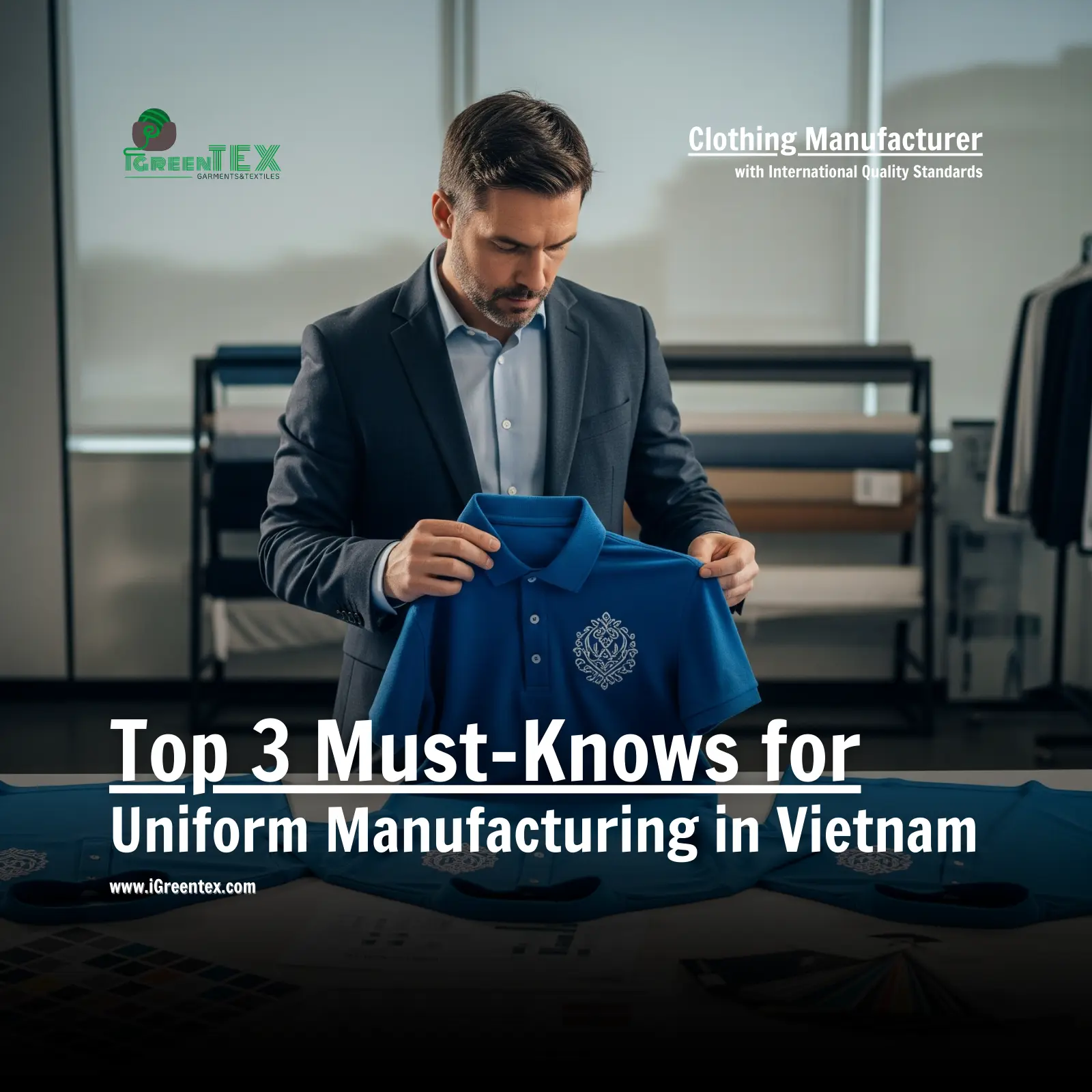
For a quick overview of essential tips, don’t miss our article on [Top 3 Must-Knows When Uniform Manufacturing in Vietnam].
Why Vietnam Apparel Makes Sense for Your Business in 2026
Before we detail the steps of how to source for garments suppliers in Vietnam, it is essential to understand the strategic value of this market. You are not just looking for a cheaper price; you are looking for stability and quality.
The Strategic “China Plus One” Move
Diversification is the key to survival. The “China Plus One” strategy is no longer a luxury; it is a necessity. Learning how to source for garments suppliers in Vietnam allows you to mitigate risks associated with trade wars and supply chain disruptions. Interestingly, the supply chain between China and Vietnam is highly integrated. With $163 billion in imports from China in 2024, Vietnam has easy access to raw materials while offering lower assembly costs.
Trade Agreements Protecting Your Margins
A major factor in apparel sourcing in Vietnam profitably involves leveraging Free Trade Agreements (FTAs).
- EVFTA: For European buyers, this agreement eliminates duties on most textile goods.
- CPTPP: This benefits buyers in Australia, Canada, and Japan.
Understanding these agreements is part of mastering how to source for garments suppliers in Vietnam, as they directly impact your landed cost.
Quality Beyond the Basics
There is a misconception that Vietnam is only for fast fashion basics. This is incorrect. Vietnam clothing manufacturers wholesale have evolved. Today, understanding how to source for garments suppliers in Vietnam means accessing factories capable of high-tech sportswear, complex outerwear, and premium knitwear. The workforce is skilled, young, and adaptable.
Before You Search: Preparation is Everything
You cannot successfully figure out how to source clothing market if you approach factories empty-handed. Professional manufacturers receive hundreds of emails daily. To stand out, you must be prepared.
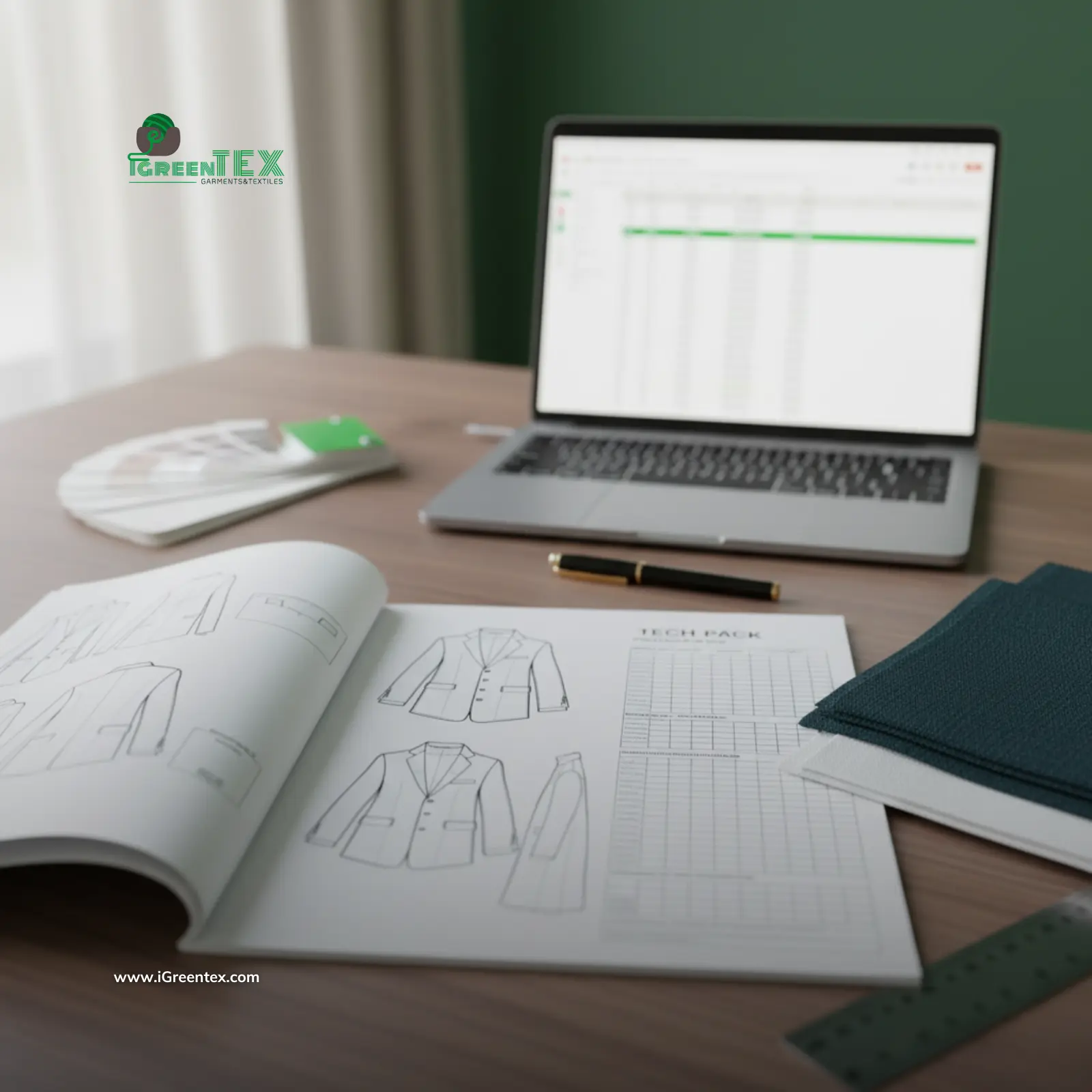
1. The Tech Pack Requirement
The first rule of how to source clothing market is: No Tech Pack, No Quote. A Tech Pack is the blueprint of your product. It must include:
- Flat sketches (Front/Back/Side).
- Complete measurement charts with grading.
- Bill of Materials (BOM) specifying fabric weight, buttons, and trims.
If you start your journey of how to source for garments suppliers in Vietnam without this document, factories will view you as a risk.
2. Know Your Target Price
Calculating your target FOB (Free On Board) price is a crucial step in how to source for garments suppliers in Vietnam. Work backward from your retail price. Be realistic. If you know your numbers, you can filter out factories that are too expensive or suspiciously cheap immediately.
3. Be Honest About Quantity (MOQ)
Volume dictates your strategy. A key nuance in how to source for garments suppliers in Vietnam is finding a factory that matches your scale. Big factories want big orders (10,000+ units). If you are a startup, look for flexible manufacturers like iGreen Tex. Being transparent about your numbers helps you master how to source for garments suppliers in Vietnam faster.
How to Find a Reliable Vietnam Garment Factory
Once prepared, where do you look? The process of how to source for garments suppliers in Vietnam involves using multiple channels to build your initial list.
Method 1: B2B Marketplaces to garment sourcing (Alibaba/Global Sources)
This is the most accessible starting point for those learning how to source for garments suppliers in Vietnam. However, be careful. Many listings are trading companies, not factories. Use filters like “Verified Manufacturer” to ensure you are dealing with the source.
Method 2: Trade Shows about Vietnam Clothing (The Gold Standard)
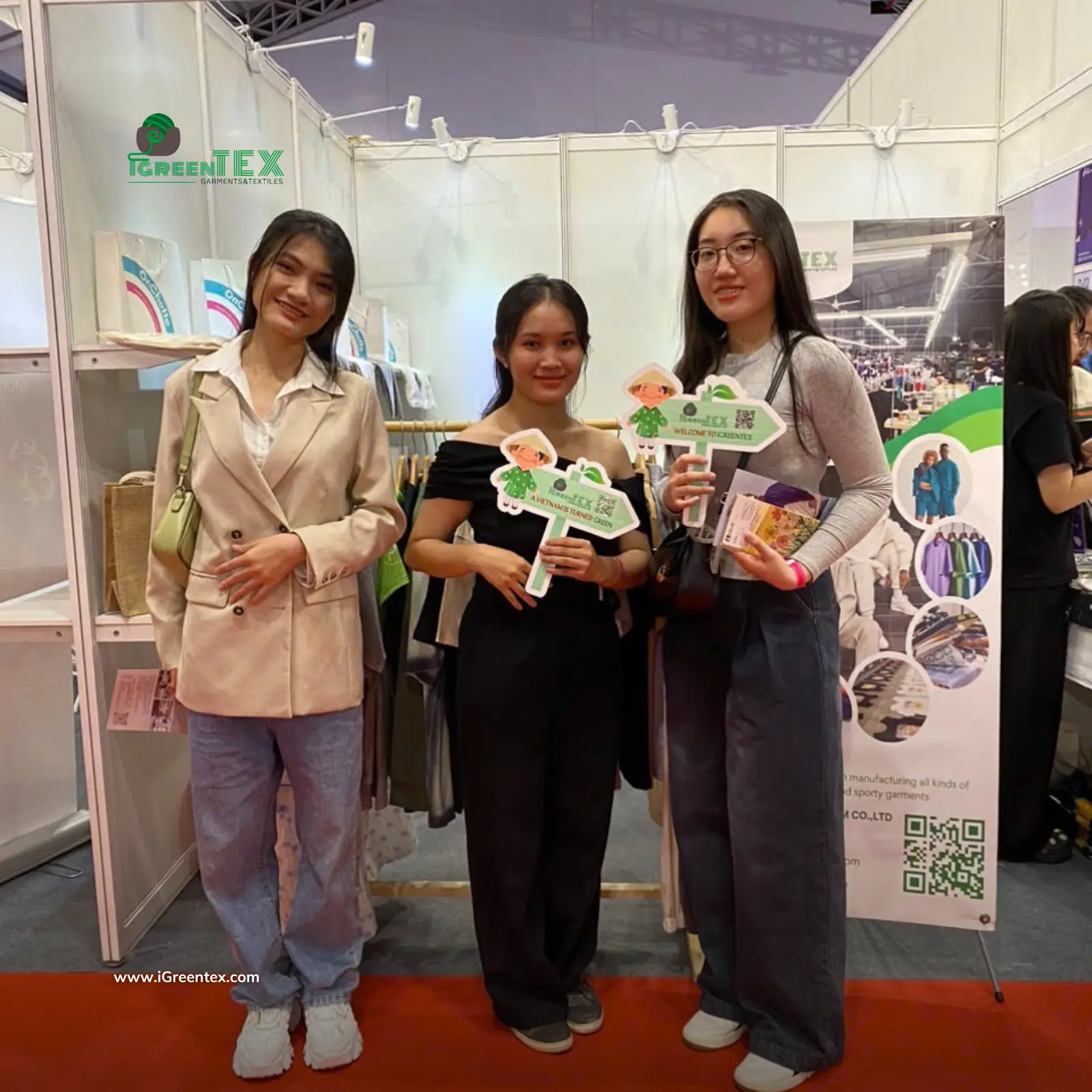
If you are serious about how to source for garments suppliers in Vietnam, attend exhibitions like the Vietnam International Textile & Garment Industry Exhibition. Meeting owners face-to-face builds trust, which is the currency of business in Vietnam.
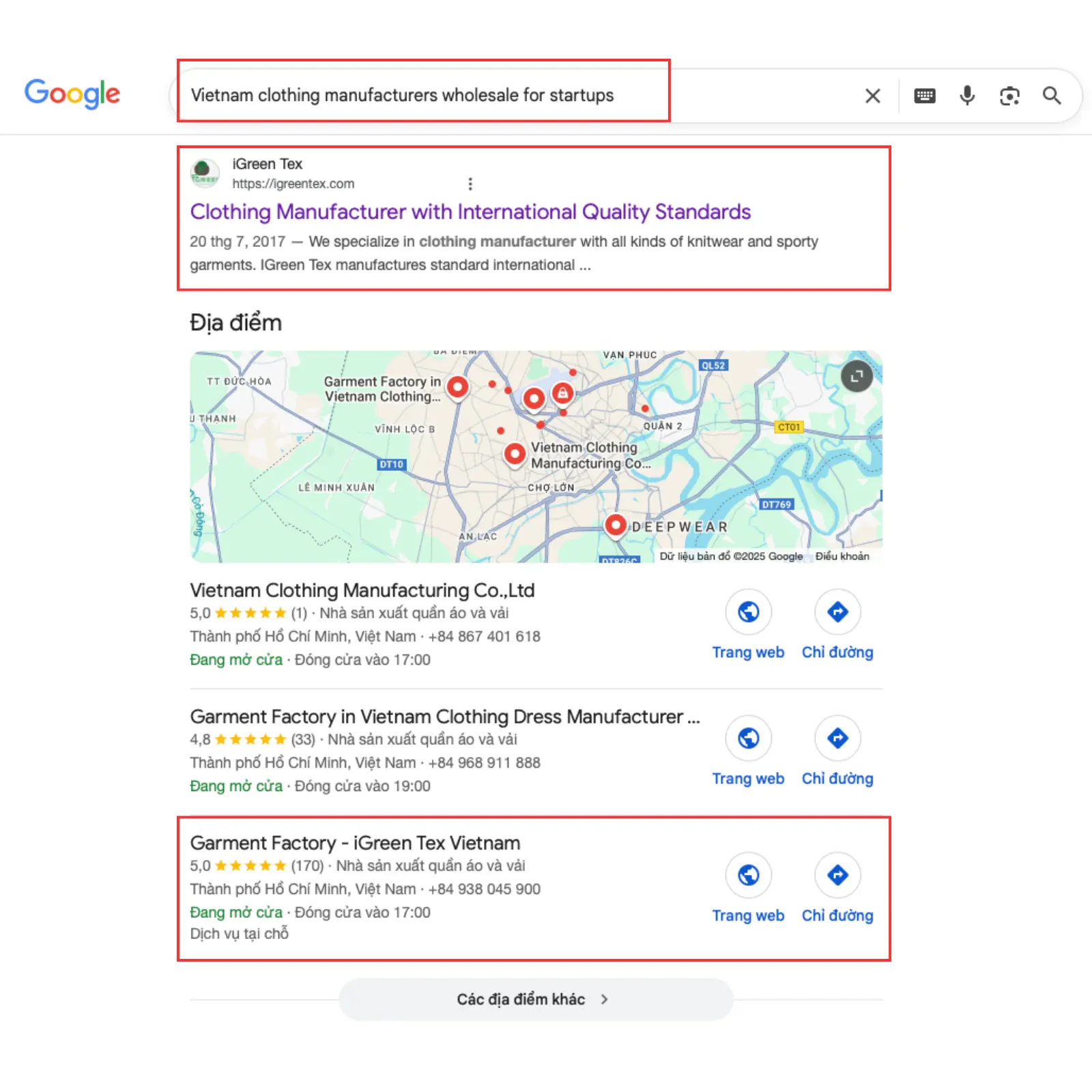
Method 3: Advanced Google Search Queries
To truly master how to source for garments suppliers in Vietnam, you must refine your search terms. Do not just type “factory.” Use specific queries:
- “How to source for garments suppliers in Vietnam for recycled polyester”
- “High-quality knitwear manufacturer Ho Chi Minh City”
- “Vietnam clothing manufacturers wholesale for startups”
Method 4: Sourcing Agents
For beginners, using an agent can simplify the learning curve of how to source for garments suppliers in Vietnam. They handle the legwork but charge a commission. Evaluate if this cost fits your margin.
Vetting Clothing Suppliers: Determining Quality and Trust
You have a list. Now, you must validate it. A critical component of how to source for garments suppliers in Vietnam is the vetting process.
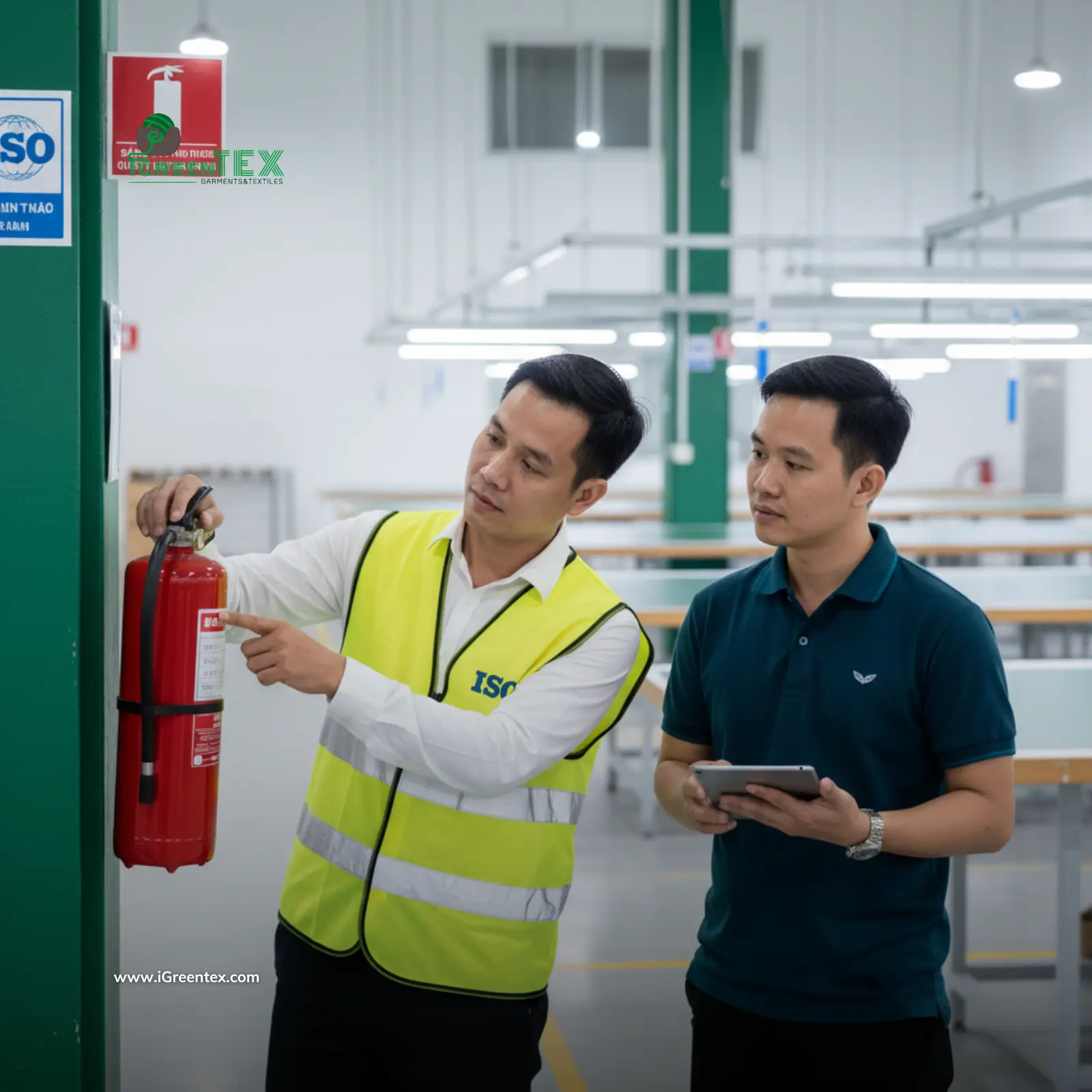
1. Verify Certifications
Certifications are your first filter for the international market. When asking how to source apparel suppliers in Vietnam, always request:
- ISO 9001 for quality management.
- WRAP or Better Work Vietnam for social compliance.
- Oeko-Tex for chemical safety.
A factory that cannot provide these may not be the right partner for a long-term strategy on how to source for garments suppliers in Vietnam.
2. The Factory Audit
You cannot fully understand how to source apparel suppliers in Vietnam without visiting the floor. If you cannot travel, hire a third-party inspection service (like SGS or Intertek). They verify if the factory actually has the machines and capacity they claim. This is a non-negotiable step in learning how to source for garments suppliers in Vietnam safely.
3. Ethical Standards
Modern consumers demand transparency. Understanding how to source garment suppliers in Vietnam requires you to check the Vietnamese clothing factory conditions. At iGreen Tex apparel manufacturers, we prioritize ethical labor standards because we know that fair working conditions lead to better product quality.
Understanding the Supply Chain: Fabric Sourcing
A common confusion when people ask how garment sourcing is the difference between garment factories and fabric mills. Most garment factories (CMT) do not weave their own fabric.
The Material Challenge
Vietnam’s fabric supply chain is growing but still relies on imports. A key part of how to Vietnam sourcing. You need to know if your factory can source the fabric locally or if it must be imported.
The iGreen Tex Advantage
We simplify the puzzle of how to source suppliers in Vietnam by handling the material sourcing for you. We have a network of local suppliers for:
- Organic Cotton (GOTS).
- Recycled Polyester.
- Technical Performance Fabrics.
By partnering with us, you solve the material sourcing issue immediately.
Common Challenges and Solutions
Even experts face hurdles. Mastering how to source for garments suppliers in Vietnam means anticipating these problems.
Language Barriers
Miscommunication is the enemy. A vital tip on how to source for garments suppliers in Vietnam is to use visual aids. Diagrams, photos, and physical samples communicate better than text.
The “Small Batch” Hurdle
Many factories reject small orders. If you are a startup asking how to source clothing suppliers, this is frustrating. The solution is to find mid-sized factories willing to grow with you, or pay a surcharge for small runs. With MOQs like iGreen Tex Vietnam is 500 – 1000/piece.
Step-by-Step Sourcing Process with iGreen Tex: From Concept to Container
To make this guide practical, we are sharing the exact operational workflow we use at iGreen Tex. This transparency eliminates the guesswork for clients asking Vietnamese manufacturers. We break the lifecycle down into four technical stages to ensure precision and accountability.
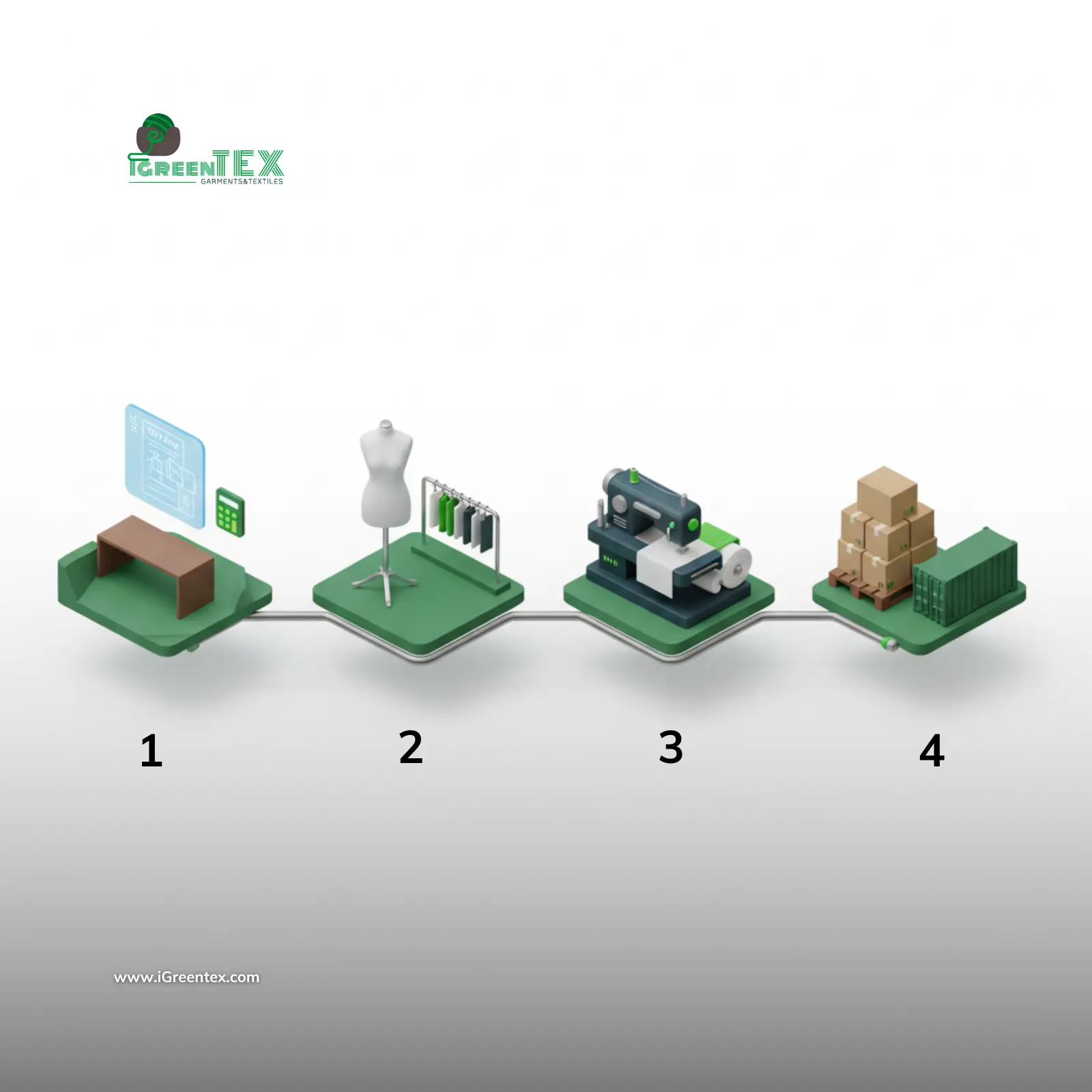
Step 1: Technical Consultation & Transparent Costing
The process begins before we quote. Simply sending a design file is not enough. To truly understand Vietnamese manufacturers effectively, we start with a feasibility analysis.
- Tech Pack Audit: Our merchandisers review your Tech Pack to identify potential production risks or high-cost features.
- Fabric Consumption Calculation: We calculate the exact fabric yield (consumption per garment) to minimize waste.
- Sourcing & Alternatives: If your target price is tight, we suggest alternative fabric blends that maintain quality but lower costs.
- The Quotation: Within 3-5 days, you receive a detailed FOB quote breaking down material, labor, and overheads.
Step 2: The Three-Stage Sampling Protocol
Sampling is where most errors are caught. A key part of learning sourcing is understanding that “one sample” is rarely enough. We follow a strict hierarchy:
- Lab Dips (3-5 Days): We send you small fabric swatches dyed to your Pantone colors for approval.
- Fit Sample (7-10 Days): Using available fabric, we create a garment solely to test the measurements, drape, and silhouette.
- Pre-Production (PP) Sample: This is the “Golden Sample.” It is made with the actual bulk fabric and all correct trims. You must sign off on this physical sample. It becomes the legal standard for the entire production run, ensuring your vision matches reality—a crucial checkpoint in how to source for garments suppliers in Vietnam.
Step 3: Mass Production & In-Line Management
Once the deposit is paid, the machines start running. However, active management is the secret to mastering how to source.
- Material Inspection: When fabric arrives from the mill, we inspect it for defects (holes, shading) using the 4-point system before cutting.
- Fabric Relaxation: We allow knit fabrics to “rest” for 24 hours to prevent shrinkage after cutting.
- Precision Cutting: We use automated laser or band knife cutters to ensure every panel matches the pattern exactly.
- Inline QC: We do not wait until the end. Our line leaders perform “traffic light” inspections during sewing to catch stitch issues immediately.
Step 4: Final AQL Inspection & Logistics
The final step of sourcing apparel from Vietnamese manufacturers involves rigorous quality assurance and shipping logistics.
Packing & Shipping: Whether you need individual polybags or specific carton markings for warehousing, we handle the packing list and coordinate directly with freight forwarders at Cat Lai Port or Tan Son Nhat Airport.
Finishing: Garments are trimmed, ironed, and folded.
AQL 2.5 Inspection: We perform a final random inspection based on the Acceptable Quality Limit (AQL) 2.5 standard. We check for measurements, aesthetics, and structural integrity.
Conclusion
The manufacturing shift to Vietnam is permanent. With the right strategy, you can lower costs and improve quality. This guide has outlined exactly how to source apparel suppliers in Vietnam by focusing on preparation, rigorous vetting, and understanding the local supply chain.
Do not let the complexity stop you. Whether you are a global brand or a startup, the answer to how to source apparel suppliers in Vietnam lies in finding a transparent partner.
Ready to start? Contact iGreen Tex today. We are your experts on how to source for garments suppliers in Vietnam effectively and ethically.