
Custom Garment Embroidery for Production
Embroidery based on your specifications, applied only within bulk garment manufacturing at iGreen Tex Vietnam.
- OEM/FOB production only
- MOQ from 500 pcs
- Consistent output
- 1:1 replacement policy
Embroidery Looks Good in Photos, But Not Always in Production
Many brands have worked with suppliers where embroidery looks clean at first, but problems appear later in real production.
Threads may loosen, logos lose shape, or stitching becomes inconsistent across sizes. In some cases, the result does not match the approved sample, and no one takes responsibility.
These issues usually don’t come from the design.
They come from how embroidery is executed at scale.
As an embroidery clothing manufacturer, we apply embroidery directly within the garment production process. We do not apply as a separate service.
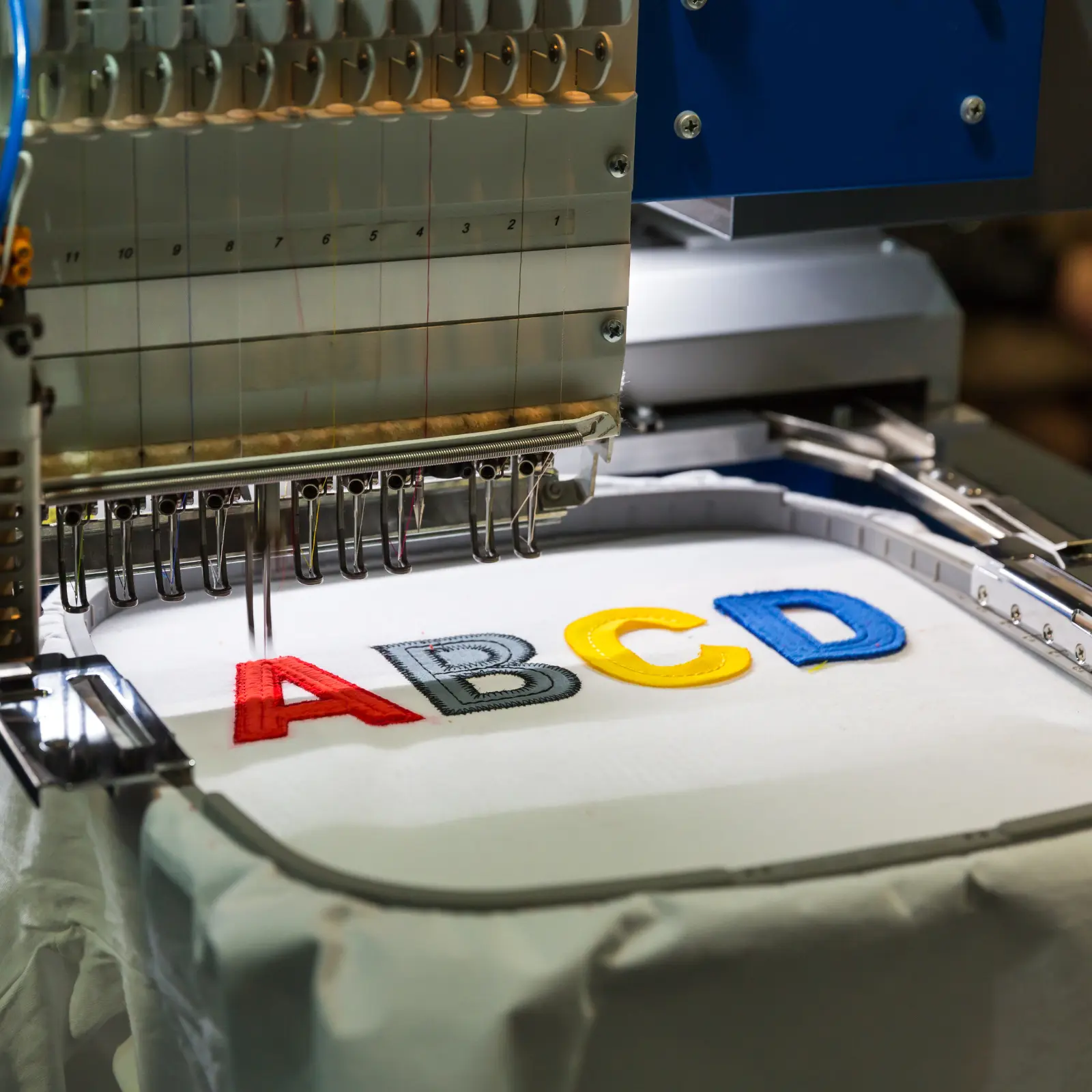
Embroidery Based on Your Requirements
- Logo / artwork
- Placement and size
- Thread color and style
- Embroidery setup aligned with your garment
- Production after your final sample approval
Avoid Embroidery Issues in Production
- OEM/FOB production only
- MOQ from 500 pcs
- Consistent output
- 1:1 replacement policy
Finding embroidery is easy.
Getting consistent results in bulk production is not.
Work with a bulk embroidery clothing manufacturer that executes based on real production conditions.
FAQ – Custom Garment Embroidery Service
Frequently Asked Questions
Quick Answers Before You Start Production
1. What is your 1:1 replacement policy for embroidery defects?
At iGreen Tex Vietnam, we understand that embroidery quality directly impacts your final product and brand image. That is why we apply a clear 1:1 replacement policy for manufacturing-related defects in custom garment embroidery.
If any issue is confirmed to come from the production process — such as loose stitching, broken threads, distorted logo shapes, or incorrect embroidery placement — we will replace the affected items accordingly. This policy typically applies within 1 to 3 months after delivery, depending on the product type and usage conditions.
However, this policy is not unconditional. Products must be used and maintained according to standard garment care instructions. Damage caused by improper washing, handling, or external factors is not covered.
As an embroidery clothing manufacturer, we treat this policy as part of our responsibility, not just a service add-on. It ensures that clients working with iGreen Tex Vietnam have a clear fallback in case of production issues.
For brands using custom embroidery for clothing brands, this provides an additional layer of security when scaling production. It is not just about making products — it is about standing behind what we produce.
2. What is custom embroidery and how is it used in garment production?
Custom garment embroidery refers to the process of stitching logos, graphics, or text directly onto garments based on specific design requirements. Unlike printing, embroidery uses threads to create a textured, durable, and premium visual effect.
In production, custom apparel embroidery is commonly used for branding elements such as logos on t-shirts, polos, hoodies, uniforms, or streetwear. It is especially valued for its long-lasting quality and resistance to washing compared to certain printing methods.
However, embroidery is not just about applying a design. It must be aligned with fabric type, garment construction, and production conditions. For example, thicker fabrics can support dense stitching, while lightweight fabrics may require adjustments to avoid distortion.
At iGreen Tex Vietnam, embroidery is executed within the full manufacturing process. As a bulk embroidery clothing manufacturer, we ensure that embroidery is consistent across all units, not just visually correct on a single sample.
For clients, this means that custom garment embroidery is not treated as an isolated service, but as part of a controlled production system designed to deliver stable and repeatable results.
3. How many types of embroidery are used on clothing products?
There are multiple embroidery techniques used in garment production, each suited for different design styles and product requirements. Common types include flat embroidery, 3D embroidery, appliqué embroidery, and patch embroidery.
Flat embroidery is the most widely used method, suitable for clean and simple logos. 3D embroidery creates a raised effect, often used for bold branding. Appliqué involves stitching fabric pieces onto garments, adding texture and contrast. Patch embroidery uses pre-made embroidered patches that are later attached to the garment.
Beyond these, additional techniques such as satin stitch, chain stitch, and layered embroidery can be applied depending on the design complexity. The choice of method depends on factors like fabric type, logo size, and production quantity.
We do not limit clients to a fixed method. Instead, we execute based on your specifications. As a custom garment embroidery provider, our role is to ensure that your selected technique can be applied consistently in production.
This is especially important for custom embroidery for clothing brands, where visual consistency across multiple units is critical for brand identity.
4. What information do I need to provide for custom garment embroidery?
To proceed with custom garment embroidery, you need to provide clear and detailed specifications. This is essential for both execution and accurate quotation.
At minimum, you should provide your logo or artwork file (preferably vector format), embroidery placement on the garment, size of the design, thread color references, and the type of embroidery you want. In addition, garment specifications such as fabric type, thickness, and color must also be defined.
Other important details include size breakdown, quantity per style, and any specific packaging or labeling requirements. These elements directly affect how embroidery is applied during production.
iGreen Tex Vietnam relies on this information to evaluate feasibility and ensure consistency. Without clear specifications, it is not possible to guarantee accurate results.
For clients planning custom apparel embroidery, preparing these details in advance helps avoid delays and ensures that the approved sample can be replicated correctly in bulk production.
5. Can I combine embroidery with other techniques in one product?
Yes, it is possible to combine custom garment embroidery with other decoration methods such as printing or patches within the same product. Many brands use this approach to create layered designs or achieve specific visual effects.
6. How do you ensure embroidery consistency in bulk production?
Consistency in custom garment embroidery is achieved through alignment between the approved sample and production conditions. The sample acts as the standard reference for all units.
During production, embroidery is applied using controlled machine settings, thread tension, and stitching parameters. These must remain stable across the entire order to avoid variation.
Fabric consistency also plays an important role. Differences in material batches can affect how stitches behave, which is why material selection and sourcing are carefully managed.
At iGreen Tex Vietnam, embroidery is not treated as an isolated step. As an embroidery clothing manufacturer, we integrate it into the full production process to maintain consistency.
For clients using custom apparel embroidery, this approach ensures that every product matches the approved standard as closely as possible, even at large volumes.
7. What are the most common embroidery issues in production?
Common embroidery issues include loose threads, uneven stitching, distorted logos, and inconsistent placement. These problems often appear during bulk production if conditions are not properly controlled.
One major cause is incorrect stitch density. Too dense can damage fabric, while too loose can reduce durability. Another issue is fabric incompatibility, where the material cannot support the selected embroidery style.
Misalignment can also occur if placement is not standardized across sizes. This becomes more noticeable in large production runs.
8. Is embroidery suitable for all types of garments?
Embroidery can be applied to many types of garments, but it is not always suitable for every product. The effectiveness of custom garment embroidery depends on fabric type, thickness, and intended use.
Heavier fabrics such as cotton fleece, denim, or structured materials are generally more suitable because they can support stitching without distortion. Lightweight or stretchy fabrics may require adjustments or may not be ideal for certain embroidery styles.
Placement is also important. Areas with seams, curves, or tension points may affect how the embroidery appears after production.
9. Is your embroidery service suitable for my project?
Our custom garment embroidery service is designed for clients who are planning bulk garment production. It is most suitable for brands, businesses, or organizations that require consistent embroidery across multiple units.
If you are developing a clothing line, producing uniforms, or scaling your product, working with a bulk embroidery clothing manufacturer ensures better control over quality and consistency.
However, this service is not suitable for small quantity orders or standalone embroidery requests. It also requires clear specifications to proceed effectively.
At iGreen Tex Vietnam, we focus on long-term production partnerships. As an embroidery clothing manufacturer, our goal is to support clients who need reliable manufacturing, not just one-time services.
If your project aligns with these conditions, custom garment embroidery within our production system will provide stable and predictable results.