Top 5 Vegan Silk Fabrics: Best Sustainable Alternatives to Silk
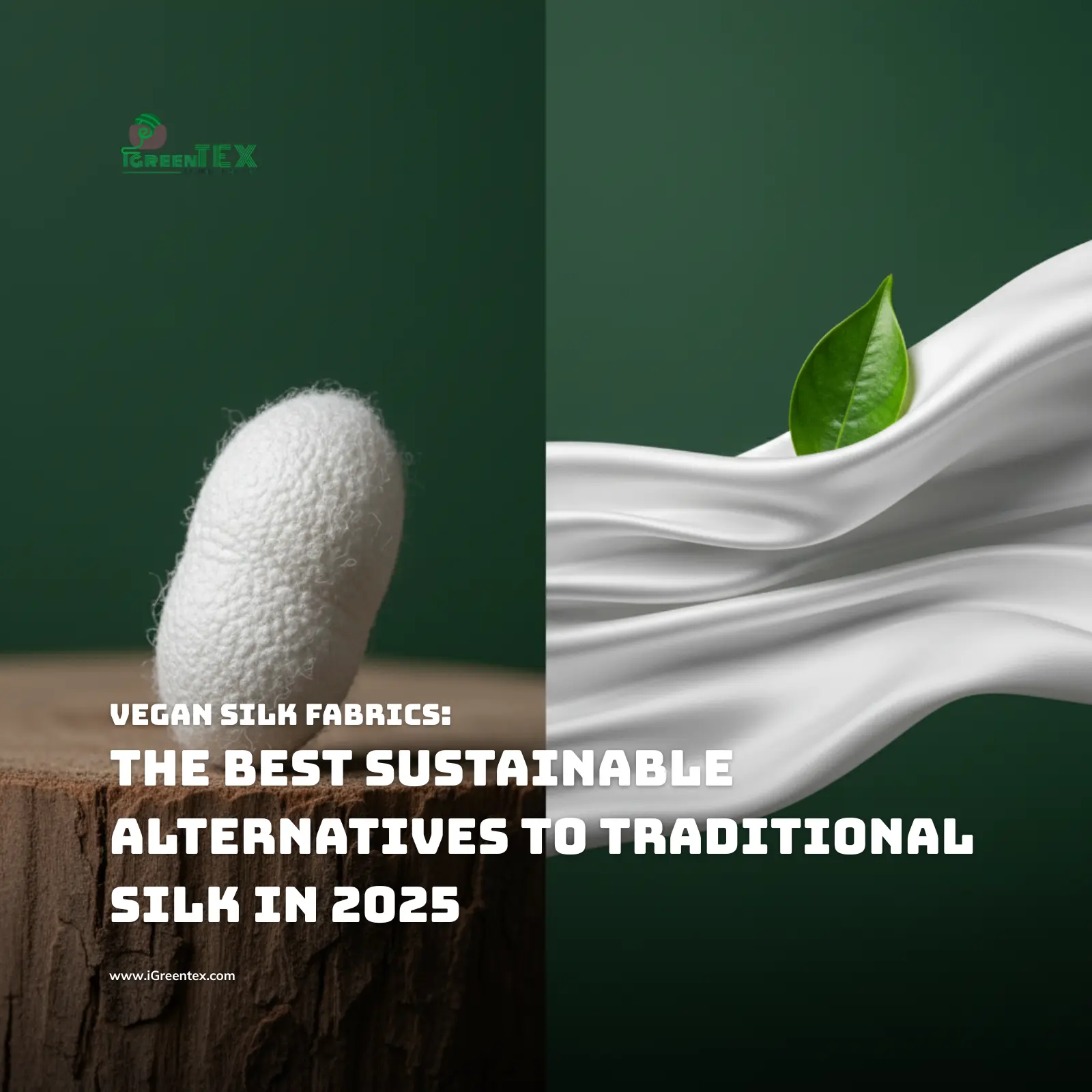
Silk has long been the queen of textiles. It is associated with royalty, luxury, and unmatched smoothness. However, the traditional silk industry has a dark side. To produce just one kilogram of silk, thousands of silkworms are boiled alive inside their cocoons. This ethical concern is driving a massive shift in the fashion industry.
Modern consumers are demanding “Cruelty-Free Luxury.” They want the elegance of silk without the suffering. This has led to the rise of Vegan Silk.
Vegan Silk is not a single fabric. It is a category of plant-based textiles that mimic the protein structure and hand-feel of animal silk. These fabrics are often more breathable, easier to care for, and better for the planet.
For fashion brands and startups, choosing the right alternative is critical. You need a material that looks premium but scales easily in production.
In this comprehensive guide, we analyze the Top 5 Sustainable Alternatives to Silk. We look at their production, feel, and viability for your next collection.
As an OEM/FOB manufacturer in Vietnam, iGreen Tex helps global brands source these next-generation materials. Let’s explore the future of ethical fashion.
Why Are Brands Switching to Vegan Silk?
Before we dive into the specific fabrics, we must understand the “Why.” The shift to Vegan Silk is driven by three main factors.
1. Ethical Manufacturing (Cruelty-Free)
The most obvious reason is animal welfare. PETA and other organizations have long criticized the sericulture (silk) industry. By using Vegan Silk, brands can market their products as 100% Cruelty-Free. This is a powerful selling point for Millennial and Gen Z consumers.
2. Environmental Sustainability
Traditional silk production has a surprisingly high carbon footprint. It requires vast amounts of water to grow mulberry trees. The processing stage uses high energy to boil cocoons. In contrast, many plant-based alternatives use “closed-loop” systems that recycle water and solvents.
3. Performance and Care
Let’s be honest: Silk is difficult to own. It stains easily, requires dry cleaning, and degrades in sunlight. Many Vegan Silk options are machine washable. They are durable and moisture-wicking. They offer luxury without the “high maintenance” headache.
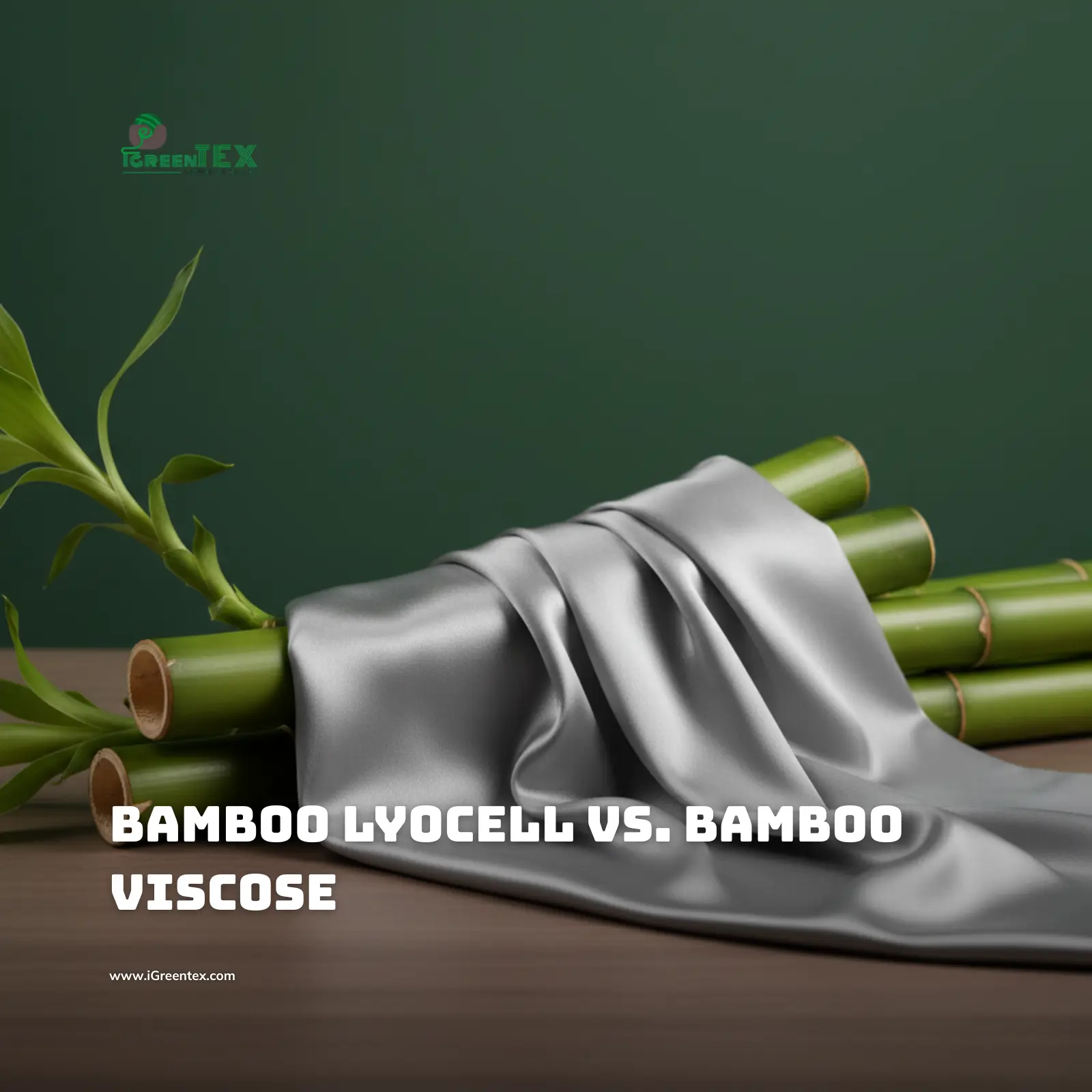
1. Bamboo Silk (Bamboo Lyocell)
The most popular and accessible entry into the world of Vegan Silk is Bamboo. However, not all bamboo fabric is created equal.
What is it?
There are two main types: Bamboo Viscose (chemically intensive) and Bamboo Lyocell (eco-friendly). When we speak of high-end Vegan Silk, we refer to Bamboo Lyocell. It is made by crushing bamboo grass and dissolving it with an organic enzyme.
The “Silk” Factor
Bamboo Lyocell is incredibly soft. It has a heavy drape that mimics the weight of silk charmsuse. It is naturally cool to the touch, making it excellent for bedding and summer dresses.
Pros and Cons
- Pros: Very fast-growing raw material (Bamboo). Highly breathable. Affordable price point for mid-range brands.
- Cons: It wrinkles easily. Lower quality bamboo viscose can pill (fuzz) over time if not finished correctly.
Verdict: A great scalable option for basics and mid-tier fashion lines.
2. Tencel™ (Lyocell)
If Bamboo is the popular choice, Tencel™ is the industry standard for sustainability. Produced by Lenzing AG in Austria, it is a branded form of Lyocell.
What is it?
Tencel is made from sustainably sourced wood pulp (usually Eucalyptus). It uses a closed-loop production process. This means 99% of the water and solvents used to break down the wood pulp are recovered and reused.
The “Silk” Factor
Tencel has a smooth surface that is very gentle on the skin. While it is slightly less “shiny” than traditional satin silk, it has a sophisticated matte luster. It absorbs moisture 50% better than cotton.
Pros and Cons
- Pros: Extremely durable. Certified sustainable origin. Biodegradable.
- Cons: It can be more expensive than bamboo. The aesthetic is often more “casual luxury” than “evening wear luxury.”
Verdict: The safest bet for eco-conscious everyday wear and activewear.
3. Rose Petal Fiber (The Premium Choice)
This is the breakout star of 2025. Rose Petal Fiber sits in the “Sweet Spot” between the accessibility of Bamboo and the ultra-luxury of traditional silk.
What is it?
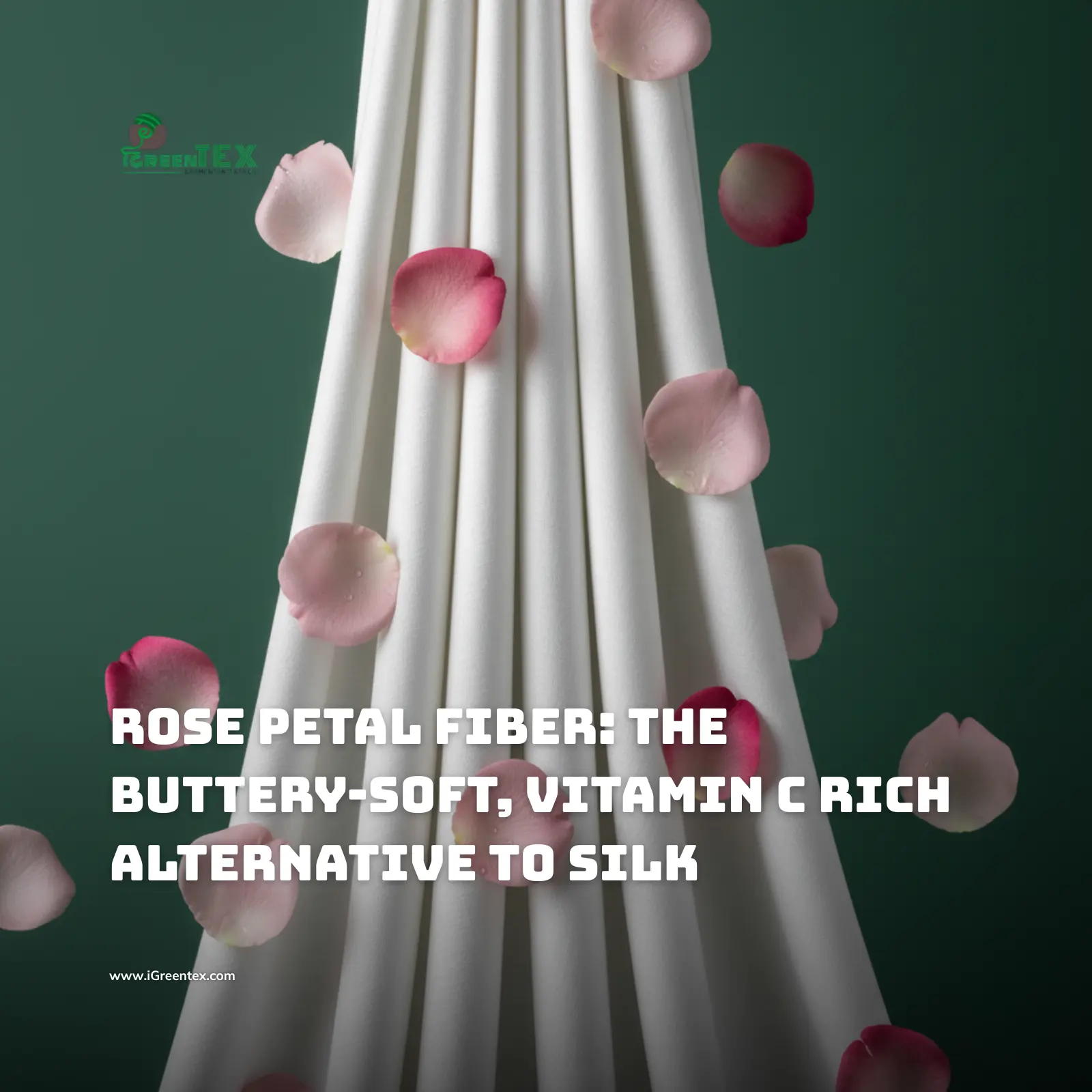
It is a regenerated cellulose fiber made from the waste of rose bushes and petals. It takes agricultural waste from the floral industry and turns it into a buttery-soft textile.
The “Silk” Factor
Rose Petal Fiber is the closest botanical match to Mulberry Silk. It has a natural shimmer and a “petaly” softness that feels incredible against bare skin. Unlike synthetic satin, it breathes.
Wellness Benefits
Uniquely, this fabric retains some natural properties of the rose plant. It contains natural phenols and is rich in Vitamin C. This makes it a “Wellness Fabric” that is actually good for the wearer’s skin.
Why Choose This?
If you want to position your brand as a luxury innovator, this is the material to use. It tells a romantic, circular-economy story that customers love.
- Deep Dive: Want to learn more about manufacturing this specific material? Read our comprehensive guide on Rose Petal Fiber Fabric to see specs and sourcing details.
4. Orange Fiber
Innovation often comes from unexpected places. In Italy, a company developed a way to make fabric from citrus juice byproducts.
What is it?
Orange Fiber is made from “pastazzo”—the leftover peels and pulp from the orange juice industry. Millions of tons of this waste are produced annually. The cellulose is extracted and spun into a silk-like yarn.
The “Silk” Factor
The resulting fabric is lightweight and silky. It can be shiny or matte depending on the spinning. It holds dye exceptionally well, allowing for vibrant, citrus-inspired prints.
Pros and Cons
- Pros: truly circular economy (using food waste). Very soft hand-feel.
- Cons: Supply chain is still niche. It can be harder to source in bulk outside of Europe compared to Bamboo or Rose Petal Fiber.
Verdict: fantastic for limited-edition capsule collections or storytelling pieces.
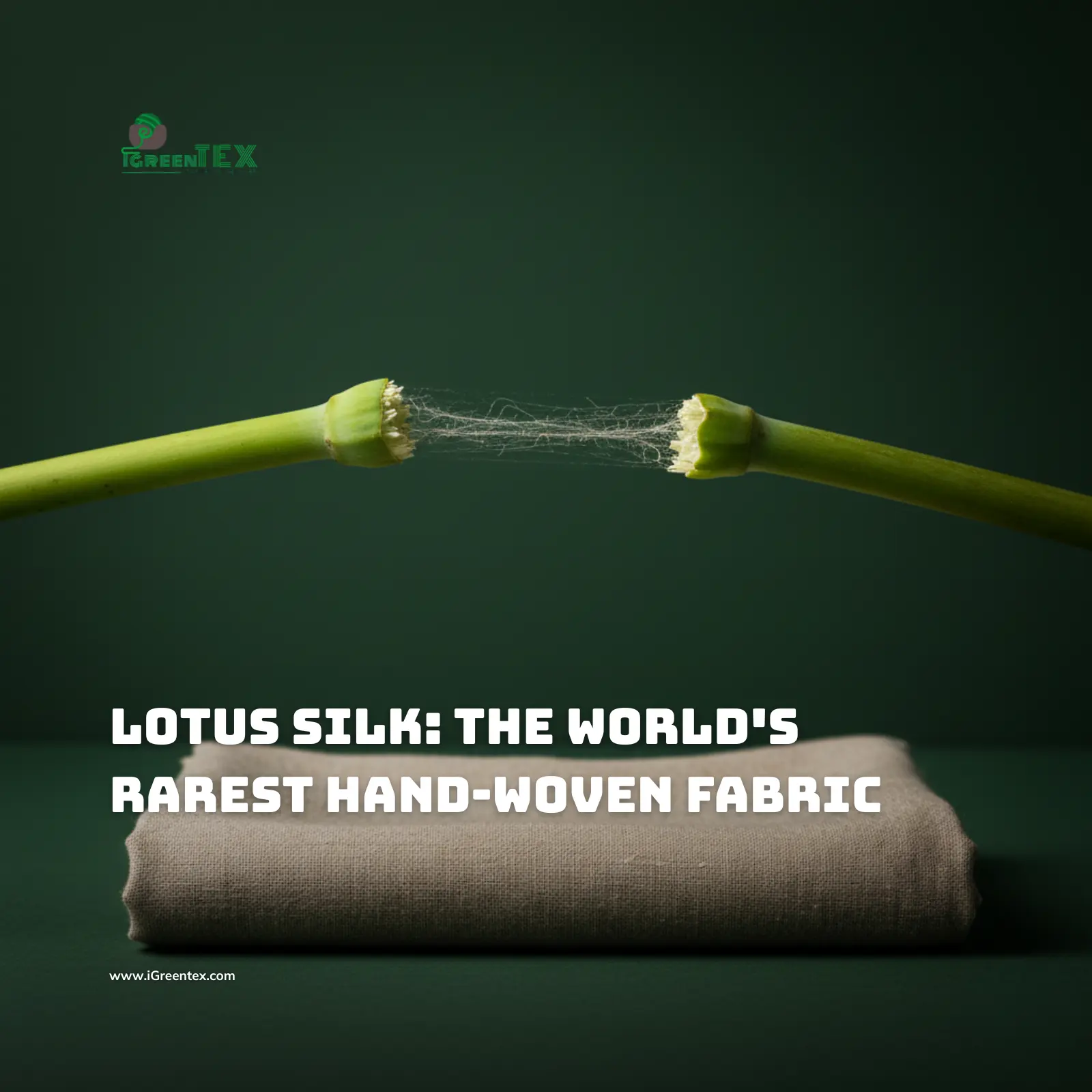
5. Lotus Silk (The Artisanal Luxury)
At the very top of the pyramid sits Lotus Silk. This is one of the rarest fabrics in the world.
What is it?
This is not a factory-made fiber. It is harvested by hand. Artisans in Vietnam and Cambodia extract the thin, sticky threads from the stems of lotus flowers. These threads are rolled together by hand to create yarn.
The “Silk” Factor
Lotus silk has a unique texture. It looks like a mix of raw silk and linen. It is naturally stain-resistant and waterproof. It is incredibly breathable and lightweight.
Pros and Cons
- Pros: The ultimate luxury story. 100% handmade. Zero machinery or electricity used in extraction.
- Cons: Extremely expensive (often 10x the price of regular silk). Low production volume. Not suitable for mass-market brands.
Verdict: Perfect for Haute Couture or ultra-luxury bespoke garments.
Comparative Analysis: Which Vegan Silk is Right for You?
As a brand owner, you need to balance cost, quality, and scalability. Use this table to compare the top Vegan Silk options.
| Feature | Bamboo Lyocell | Rose Petal Fiber | Tencel™ | Lotus Silk | Traditional Silk |
|---|---|---|---|---|---|
| Scalability | High | High/Medium | High | Very Low | High |
| Cost | $$ | $$$ | $$ | $$$$$ | $$$$ |
| Hand Feel | Heavy, cool, soft | Buttery, smooth | Smooth, matte | Textured, airy | Smooth, delicate |
| Durability | Medium | High | Very High | Medium | Low |
| Care | Machine Wash | Machine Wash | Machine Wash | Hand Wash | Dry Clean |
| Best For | Basics, Bedding | Lingerie, Dresses | Activewear | Couture | Evening Wear |
From this data, you can see why Rose Petal Fiber is gaining traction. It offers the luxury feel of high-end silk but is machine washable and scalable like Tencel.
Why Produce Vegan Silk in Vietnam?
Vietnam’s clothing manufacturers have transcended their reputation as merely a low-cost labor hub. Today, it stands as the premier destination for advanced, sustainable textile manufacturing (Eco-Manufacturing). For brands targeting the mid-to-high-end market, Vietnam offers a unique balance of technical sophistication and trade efficiency.
The “China Plus One” & Free Trade Advantage
Sourcing Vegan Silk from Vietnam is a strategic financial decision.
- Zero Tariff Benefits: Unlike many other manufacturing hubs, Vietnam holds powerful Free Trade Agreements (FTAs) such as the EVFTA (Europe) and CPTPP (Canada, Australia, Asia). This allows your luxury vegan silk garments to enter these markets at 0% import duty.
- Reduced Landed Cost: By eliminating the standard 12-20% tax barrier, you significantly lower your “Landed Cost,” allowing for higher profit margins or more competitive retail pricing.
Specialized Eco-Ecosystem
Producing Vegan Silk (like Rose, Bamboo, Tencel) requires a clean supply chain. Vietnam’s textile regions are increasingly integrated.
- Vertical Capabilities: We do not need to ship yarn from Country A to knit in Country B. We can source certified yarns, knit greige fabric, and dye it using Oeko-Tex certified houses—all within a 50km radius of Ho Chi Minh City. This drastically reduces the carbon footprint associated with logistics.
The iGreen Tex Technical Edge: Taming the “Slippery” Fabric
Vegan Silk fabrics are notorious in the manufacturing world. They are slippery, fluid, and difficult to handle. While many factories refuse these orders due to high defect rates, iGreen Tex has engineered a specific production protocol for them.
Here is how we control quality at every stage:
Precision Cutting (The Foundation)
The biggest risk with Vegan Silk is “fabric shifting.” If the layers slide during cutting, the sizing will be incorrect.
- Anti-Slip Paper Underlay: We utilize a specialized “sandwich” technique. We place friction-paper layers between the fabric plies. This locks the slippery silk in place, ensuring that a Size M is cut exactly to the pattern specs, with zero distortion.
- Automatic Spreading: We avoid manual pulling (which stretches the fabric) by using automatic spreading machines. This maintains the natural tension and drape of the fiber.
Specialized Sewing Techniques
Sewing Rose Fiber or Bamboo Silk requires more than just a straight stitch. Standard machines cause “puckering” (ugly wrinkles at the seam).
- Differential Feed Management: Our technicians adjust the differential feed ratio on our sewing machines to match the fabric’s fluidity. This ensures the seam lies perfectly flat.
- Micro-Needles & Fine Threads: We use ultra-fine ballpoint needles (Size 9-10) to part the fibers rather than piercing them. Combined with high-filament thread, this prevents the fabric from running or developing holes at the stress points.
The “4-Point” Quality Control System
Because Vegan Silk reflects light, even minor defects like oil spots or snagged yarns are highly visible.
- Lightbox Inspection: We do not just inspect on tables. We run fabrics over backlit inspection machines to detect microscopic knitting flaws before cutting.
- Shading Control: Natural fibers can have slight color variations. We strictly group garment parts from the same fabric roll to ensure perfect color continuity in the final product.
The Future of Fashion is Plant-Based
The era of boiling silkworms is ending. Technology has given us better options. Vegan Silk is no longer a compromise; it is an upgrade.
Whether you choose the accessibility of Bamboo, the durability of Tencel, or the premium wellness benefits of Rose Petal Fiber, you are making a choice for the future.
Your customers are looking for these stories. They want to wear clothes that align with their values.
Ready to Build Your Eco-Collection?
iGreen Tex is ready to be your manufacturing partner. We can send you swatches of these Vegan Silk fabrics so you can feel the difference yourself. You know? – Partner with a sustainable sleepwear manufacturer that helps you lead the market
Don’t just follow the trend—lead it.