Vietnam Custom Garment Manufacturing: How Global Brands Evaluate the Right Production Partner
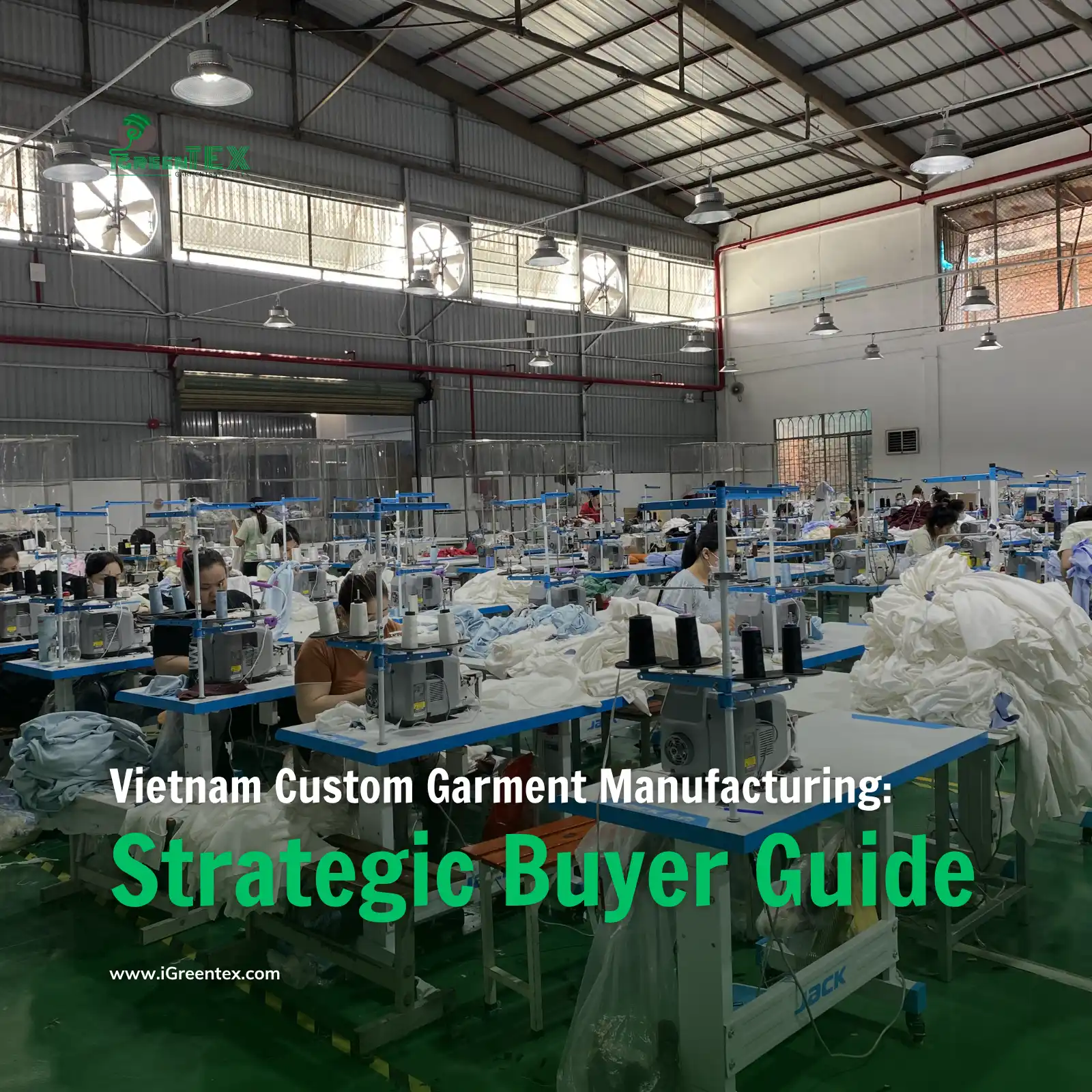
The global apparel landscape is undergoing a fundamental shift. Sourcing managers from North America and Europe are increasingly diversifying their supply chains. They are moving production volumes from traditional hubs toward Southeast Asia. Within this transition, Vietnam has emerged as a primary destination. At iGreen Tex, we observe that the challenge for international brands is no longer just finding a clothing manufacturer. The market is saturated with options, yet it lacks clarity.
For a professional apparel manufacturer, the goal is not merely to offer the lowest price. It is to provide a stable, scalable, and transparent ecosystem. Successful Vietnam custom garment manufacturing requires more than technical skill. It demands a deep alignment between the brand’s business model and the factory’s operational logic. Choosing the right partner for Vietnam custom garment manufacturing is a strategic decision. This article provides a decision framework for procurement teams to evaluate their potential partners in the Vietnamese market.
Why Choosing a Vietnam Custom Garment Manufacturing Partner Is Not About “The Best Factory”
In the world of high-volume apparel production, the concept of a “best factory” is a myth that often leads to sourcing failures. Every facility has a specific DNA—a combination of machinery, labor skill sets, and management styles. A factory that excels at high-volume, basic t-shirts for a mass-market retailer is often the wrong choice for a premium streetwear brand requiring complex garment dye and heavy-weight fleece.
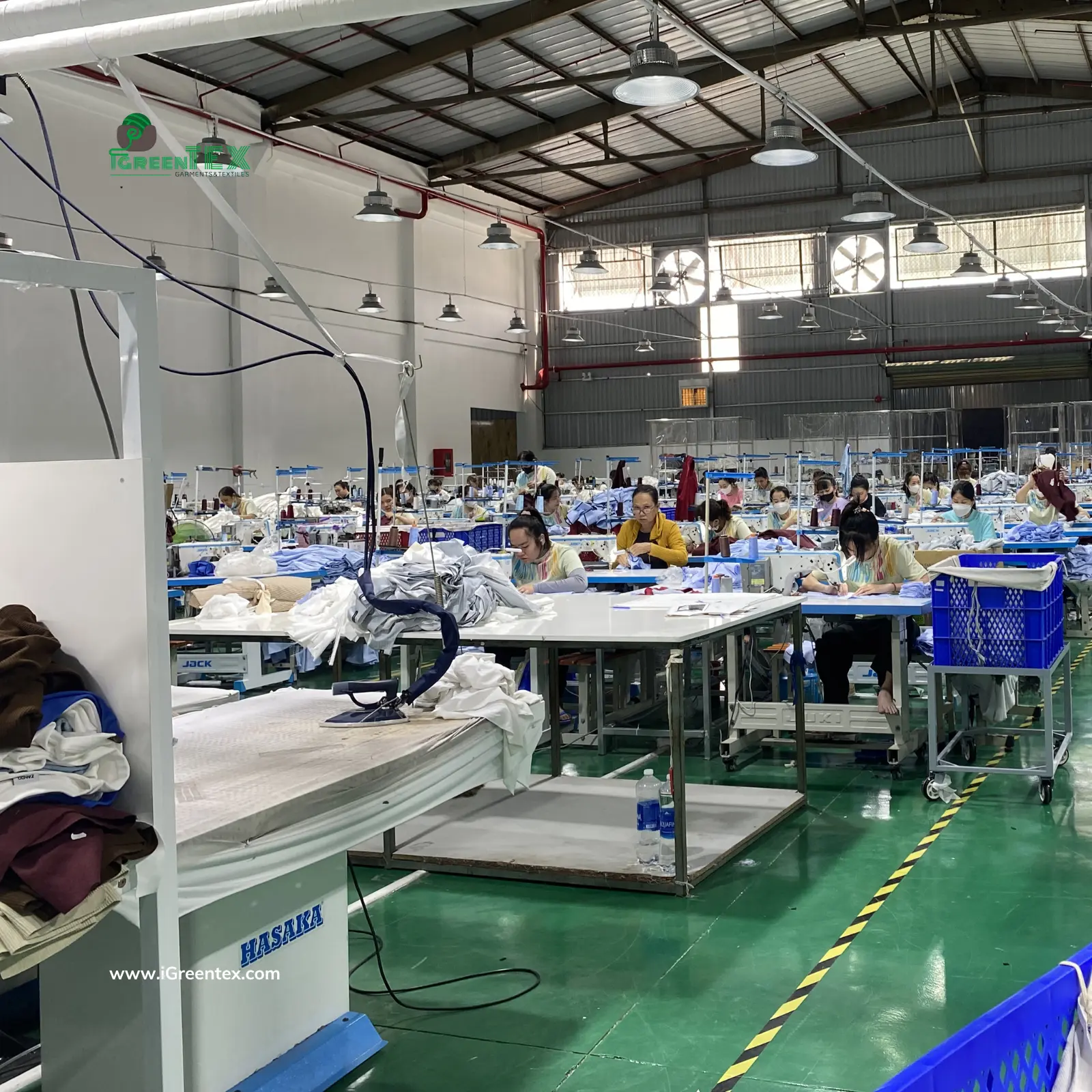
Strategic Vietnam custom garment manufacturing is about finding the “right fit.” Sourcing managers must evaluate potential partners based on three primary pillars: product complexity, production scale, and market positioning. If a brand owners’ requirements do not align with the factory’s core competency, the result is inevitably a breakdown in quality or a delay in delivery. The objective for supply chain managers is to move past generic listings and analyze the underlying systems that drive consistency.
The 6 Factors Global Brands Actually Evaluate
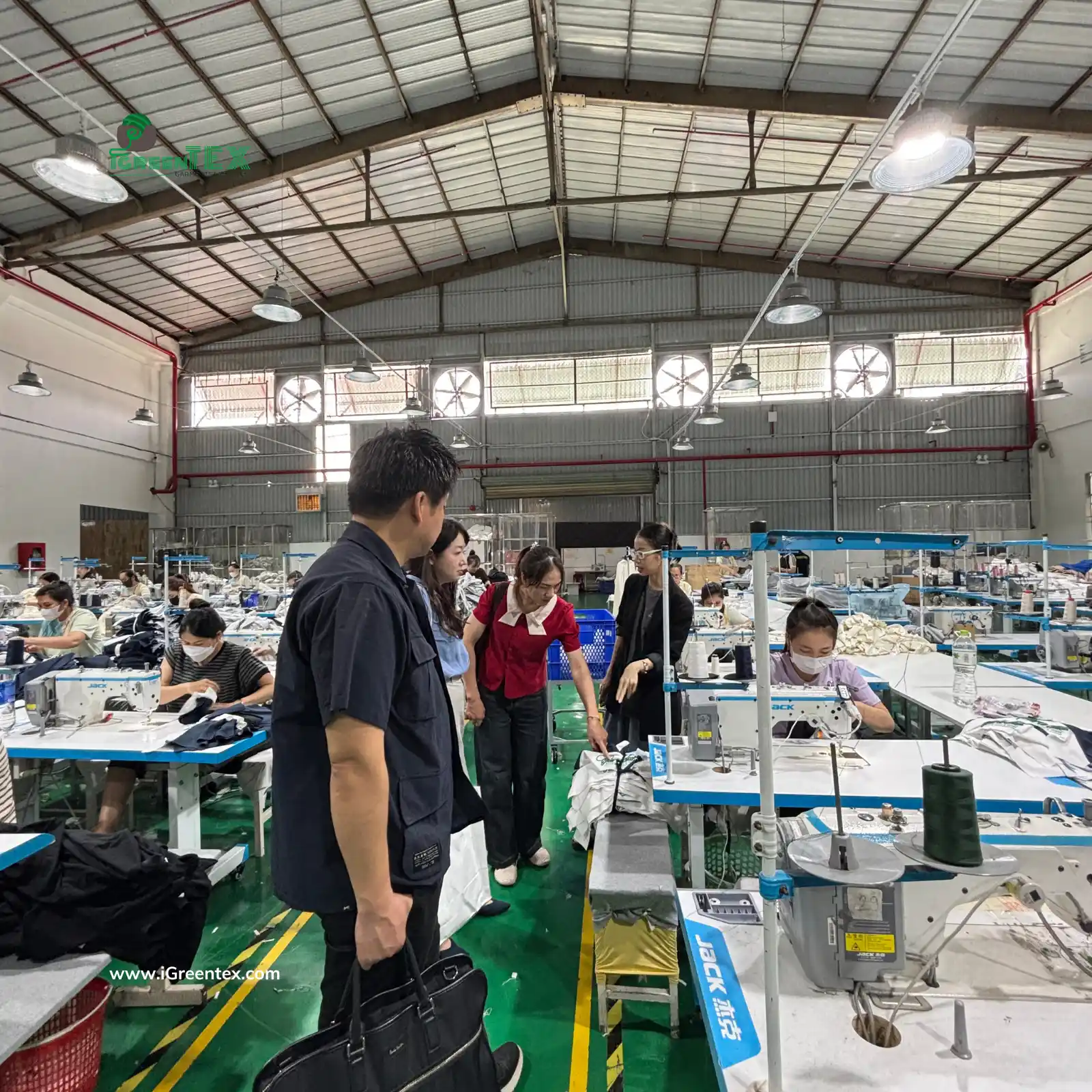
When conducting a factory audit or a preliminary vetting process, experienced procurement teams look beyond the showroom. They focus on the structural integrity of the partner’s operations.
Manufacturing Model Alignment
The first step in any Vietnam custom garment manufacturing strategy is determining which production model fits your brand’s evolution. Vietnam offers a spectrum of services, ranging from simple labor contracts to full-package solutions.
- CMT (Cut, Make, Trim): The brand provides all materials. The factory provides labor and machinery. This offers maximum control but requires a massive internal sourcing team.
- OEM / FOB (Free On Board): This is where most growing brands find success. As an OEM clothing manufacturer in Vietnam, the factory handles fabric sourcing, development, and production.
- ODM (Original Design Manufacturing): The factory provides the designs, and the brand adds their label.
| Feature | CMT Model | OEM / FOB Model | ODM Model |
|---|---|---|---|
| Material Control | Brand (100%) | Factory (Guided by Brand) | Factory (100%) |
| Operational Risk | High for Brand | Balanced | Low for Brand |
| Cost Transparency | High | Medium | Low |
| Suitability | Large Enterprises | Scaling Brands | Private Label / Wholesalers |
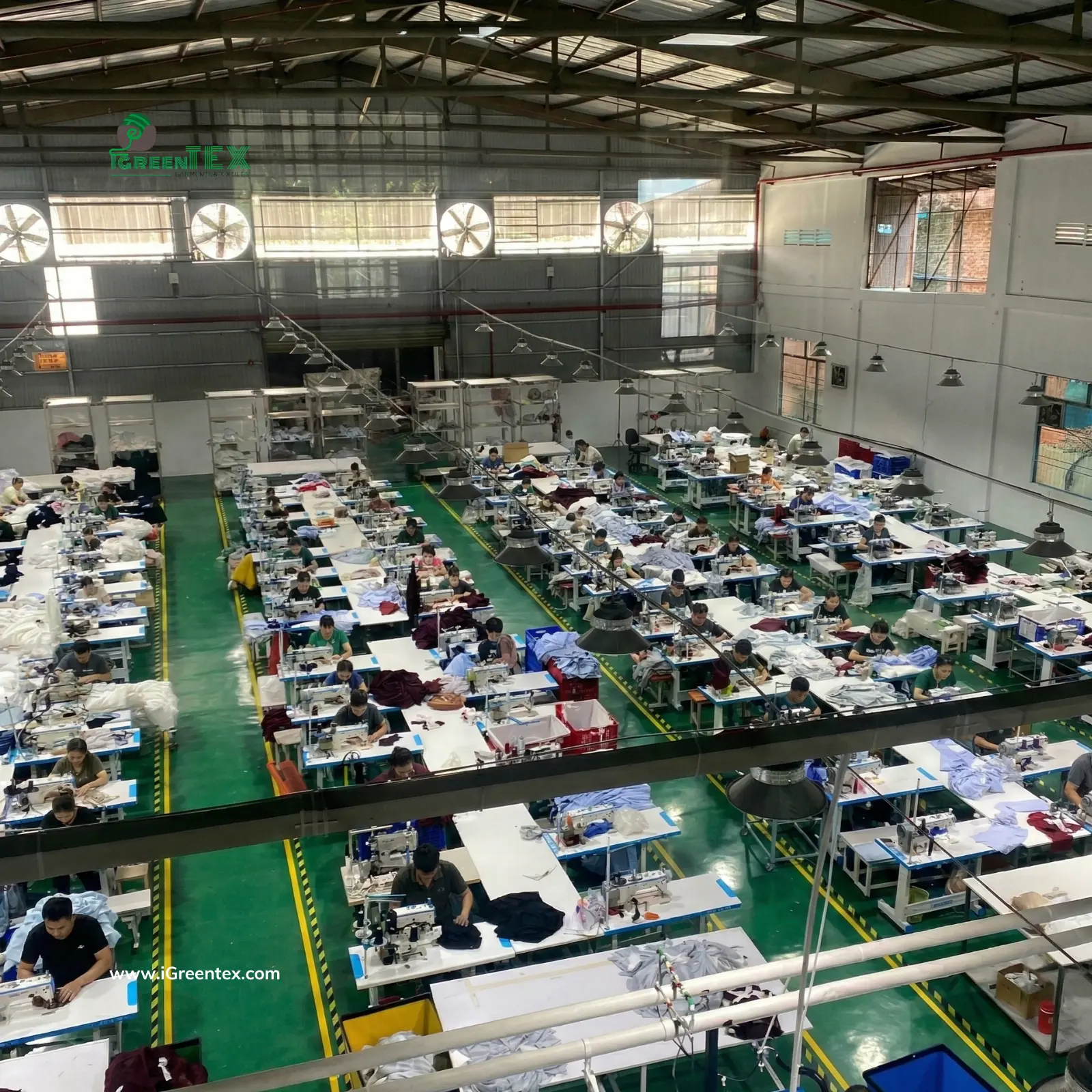
Understanding the apparel production workflow within these models is crucial. For instance, Vietnam custom clothing manufacturing partners specializing in FOB often have better relationships with local textile mills, potentially reducing the textile supply chain complexities that international buyers face in Vietnam.
-> See more: Garment Manufacturers in Vietnam List: Top 10 Picks
Cost Structure vs. Real Value
In B2B sourcing, the “unit price” is often a distraction. Sourcing managers must look at the garment production cost breakdown to understand the long-term viability of a partnership. A lower price often masks hidden costs in fabric wastage, poor compliance, or high rejection rates.
The total cost of ownership in Vietnam custom garment manufacturing includes:
- Material Sourcing: Does the factory have the leverage to secure high-quality yarns at competitive rates?
- Compliance Costs: Maintaining a BSCI compliant manufacturer status involves ongoing investment in safety and labor standards.
- Efficiency Losses: A factory with poor garment production process management will have higher waste, which is eventually passed to the buyer.
There is a direct trade-off between MOQ (Minimum Order Quantity) and cost. Lower MOQs typically result in a higher cost per unit due to the setup time required for machinery and the higher price of purchasing small fabric rolls.

-> See more: Vietnam Garment Manufacturing Cost: 2026 Price & Budget
Product Capability & Specialization
The diversity of the Vietnamese garment industry means that specialization is key. Vietnam custom apparel manufacturing covers everything from high-performance activewear to formal suiting.
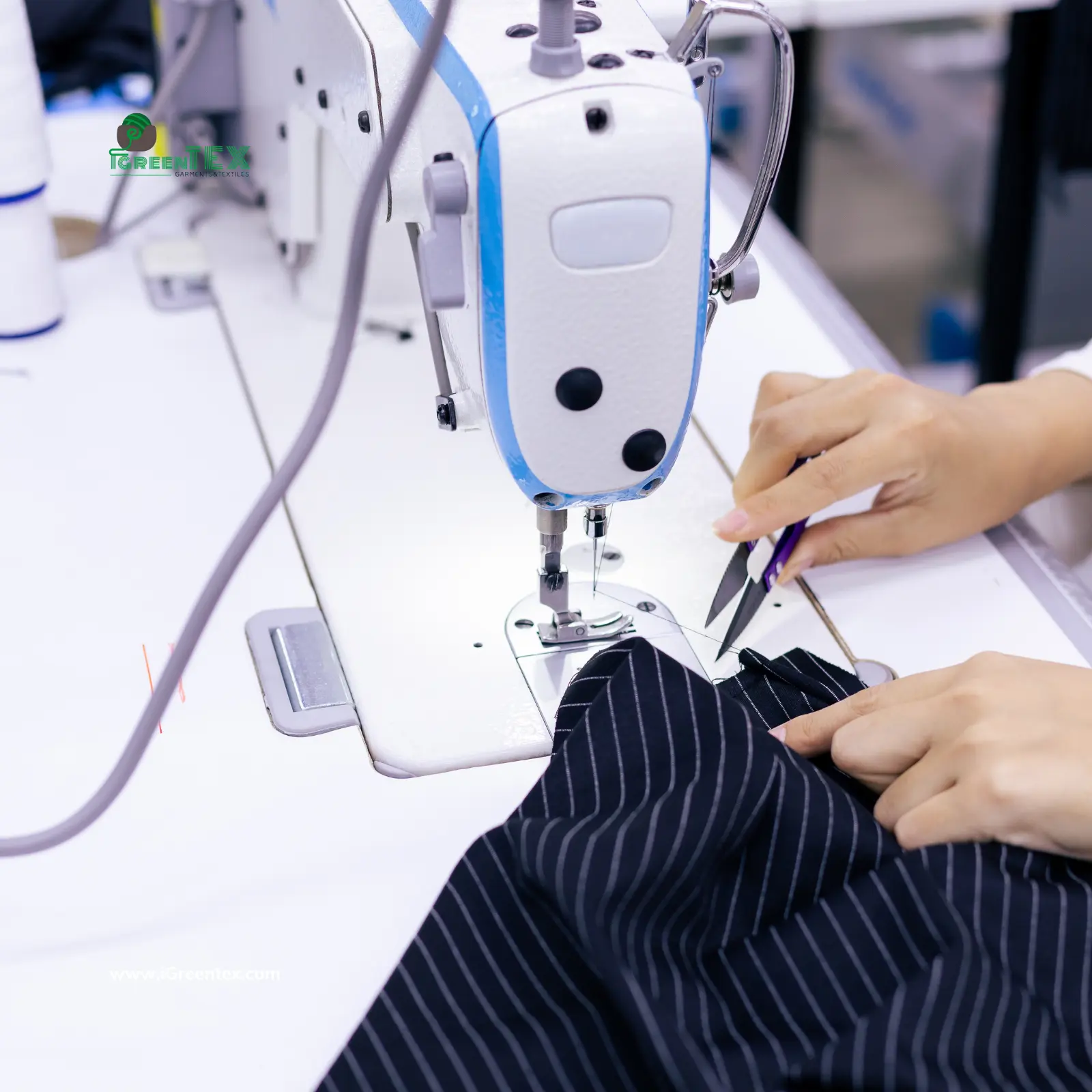
Sourcing managers must verify if the factory has the specific machinery for:
- Knitwear: Circular knitting machines, overlockers, and flatlock machines for hoodies and t-shirts.
- Woven: Specialized heavy-duty machines for denim or structured jackets.
- Activewear: Specific needles and threads for high-stretch fabrics.
Choosing a specialized export-ready apparel factory ensures that the technical nuances of your product—such as seam strength, dye migration, or shrinkage control—are managed by experts who understand that specific product category.
Quality Control & Consistency Systems
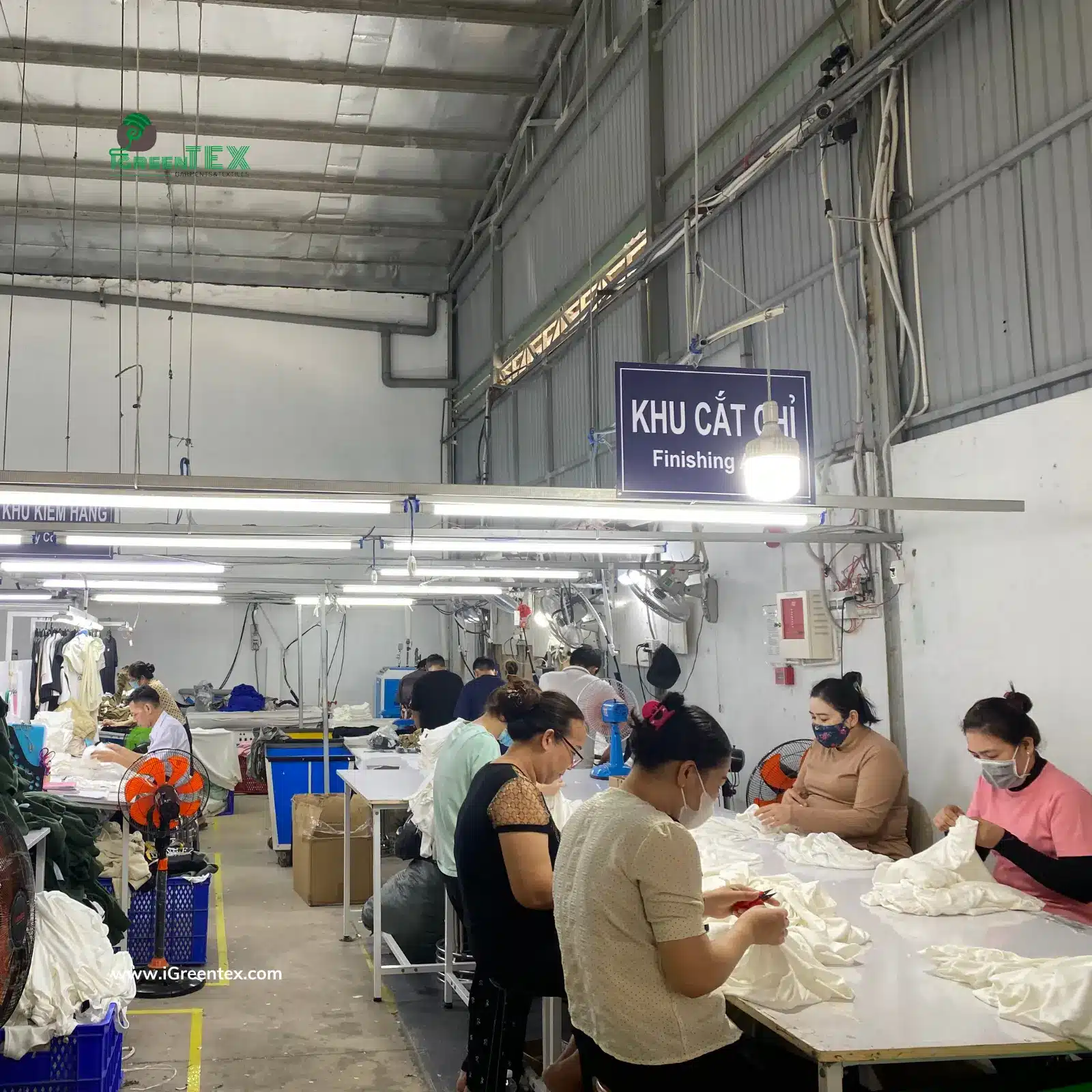
Quality is not an act; it is a system. For an audited garment manufacturer, quality control (QC) is integrated into every stage of the production cycle. Sourcing managers evaluate the garment quality control system based on the following checkpoints:
- Pre-production (PP) Meeting: Aligning on all specs before the first stitch is made.
- In-line Inspection: Catching errors while the garment is still on the sewing line.
- Final Inspection (AQL): Using the AQL (Acceptable Quality Limit) standard to determine if the batch meets international export requirements.
A reliable Vietnam custom garment manufacturing partner will provide transparent QC reports and allow for third-party inspections to verify the factory compliance standards.
Flexibility, MOQ & Lead Time
The modern fashion cycle is faster than ever. Brands are moving toward “small batch” production to test markets before committing to large volumes. However, low MOQ garment production in Vietnam requires a factory that is optimized for fast changeovers.
Standard lead times for Vietnam custom clothing manufacturing generally range from 60 to 90 days for the first order (including fabric sourcing) and 30 to 45 days for repeat orders. Flexibility in scheduling is a premium service; brands must understand that requesting shorter lead times often involves air-freight costs or expedited fabric surcharges.
Communication & Operational Reliability
Communication is the most undervalued risk factor in international sourcing. Misunderstandings regarding tech packs, color lab dips, or shipping documents can lead to catastrophic delays.
Reliable Vietnam custom garment manufacturing partners invest in professional merchandising teams who act as the bridge between the brand’s design office and the factory floor. They manage the apparel sourcing Vietnam logistics and ensure that the cut and sew manufacturing process stays on schedule. Reliability also means honesty—a factory that admits a delay early is far more valuable than one that hides it until the shipping date.
Trade-Offs in Vietnam Custom Garment Manufacturing
There is no “perfect” manufacturing scenario. Decision-makers must prioritize their needs based on the following common trade-offs found in the Vietnamese market:
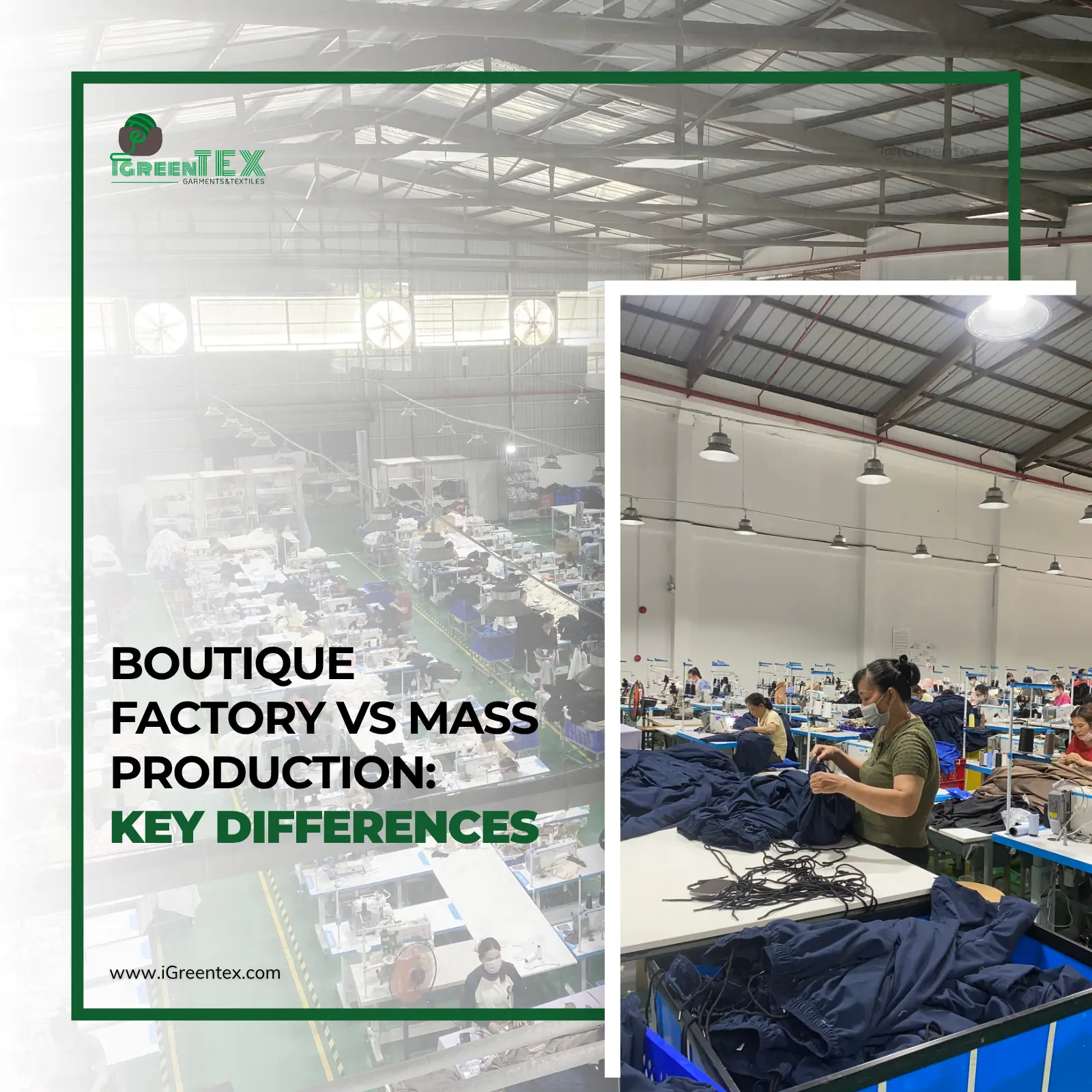
- Cost vs. Flexibility: Large-scale factories offer the lowest bulk apparel manufacturing cost but have rigid MOQs and long lead times. Smaller boutique factories offer flexibility but at a higher unit price.
- Quality vs. Speed: Rushing the garment production process often leads to skipped QC steps or rushed finishing. Brands must decide if they value “speed to market” over “flawless execution.”
- Innovation vs. Stability: Some factories are highly innovative with new fabrics but may have less stable production lines. Others are incredibly consistent but may struggle with highly experimental designs.
Where Vietnam Fits in Global Apparel Sourcing
Vietnam occupies a strategic position in the global supply chain, often described as a “sweet spot” for diversified production. It offers a significantly higher level of technical proficiency and industrial infrastructure compared to regional competitors like Bangladesh or Cambodia. Simultaneously, the country maintains a more competitive cost structure than China, particularly for mid-to-high complexity apparel categories. This makes Vietnam custom garment manufacturing an essential component for brands looking to mitigate geopolitical risks without sacrificing quality.
-> See more: Vietnam vs China Manufacturing Cost 2026: Who Wins?
The core strength of Vietnam custom garment manufacturing lies in its unique balance between cost efficiency and technical capability. It serves as a sophisticated hub where ISO certified garment factory standards are integrated with a highly skilled and disciplined workforce. Furthermore, for US apparel importers, Vietnam provides a favorable trade environment with established logistics networks. These networks are increasingly optimized for trans-pacific shipping, reducing lead times and improving the predictability of the supply chain in a volatile global market.
Choosing the Right Type of Vietnam Custom Garment Manufacturing Partner
To make a final decision, categorize your brand’s current stage and needs:
- Startup & Emerging Brands: Focus on partners offering low MOQ garment production and strong consultation capabilities to help refine tech packs.
- Growing & Scaling Brands: Prioritize an OEM / FOB partner like iGreen Tex who can handle the complexity of scaling production while maintaining quality consistency.
- Established Premium Brands: Look for a WRAP certified factory or a BSCI compliant manufacturer with a proven track record in high-end technical apparel.
Before signing a contract, it is essential to perform due diligence. You should consult a guide on how to verify garment factory in Vietnam to ensure your partner is legitimate and capable.
About iGreen Tex Vietnam
At iGreen Tex, we don’t just see ourselves as a factory; we are a strategic manufacturing partner for global brands. Specializing in Vietnam custom garment manufacturing, we provide full-package OEM/FOB services with a focus on quality, transparency, and reliable export timelines.
Our facility is an ISO certified garment factory and a BSCI compliant manufacturer, ensuring that your production meets the highest international standards for ethics and quality. Whether you are a sourcing manager for a major retailer or a brand owner looking to scale, our team provides the technical expertise and operational stability needed to succeed in today’s competitive market.
Ready to discuss your next production run? Contact our team today to receive a technical consultation and a detailed quote for your project.