OEM vs ODM Clothing Manufacturing: Which Model Fits Your Brand?
When evaluating OEM vs ODM clothing manufacturing, you often face a critical and complex choice. This is especially important in the Vietnamese garment industry. Many new apparel brand owners misunderstand these terms. A wrong choice can cause you to lose design control. It can increase costs. It can also delay your product launch.
This article does not just explain basic definitions. It provides a strategic OEM and ODM comparison. We will help you determine which model aligns with your brand goals. Understanding the difference between OEM and ODM is vital. It impacts your supply chain management in apparel directly. Let us dive into the details.
OEM vs ODM Clothing Manufacturing at a Glance
Apparel product development requires a clear operational strategy. Before comparing them deeply, you must grasp the core concepts.
What Is OEM Clothing Manufacturing?
OEM stands for Original Equipment Manufacturer. In this model, you provide the design, and the factory produces it. The manufacturer strictly follows your specifications. You own the intellectual property.
The core characteristic is total design freedom. The level of product customization is incredibly high. You dictate every detail, from fabric to stitching.
What Is ODM Clothing Manufacturing?
ODM stands for Original Design Manufacturer. Often called private label clothing, the factory provides pre-existing designs. You select a design and add your branding.
The core characteristic is speed and convenience. The factory owns the design. Product customization is usually limited to colors, tags, and packaging.
The Biggest Difference Between OEM and ODM
What is the difference between OEM and ODM clothing manufacturing? Here is the answer in five clear points:
- Design Ownership: You own OEM designs. The factory owns ODM designs.
- Time to Market: ODM is faster. OEM requires a longer development phase.
- R&D Investment: OEM needs heavy research and development. ODM requires almost none.
- Unique Branding: OEM guarantees a unique product. ODM products might look like competitors’ items.
- Control: OEM offers full control over the technical package (Tech Pack). ODM offers minimal control.
OEM vs ODM Manufacturing Process
Understanding the clothing manufacturing process helps you manage expectations. Here is an OEM and ODM comparison regarding daily operations and production workflow.
Typical OEM Workflow
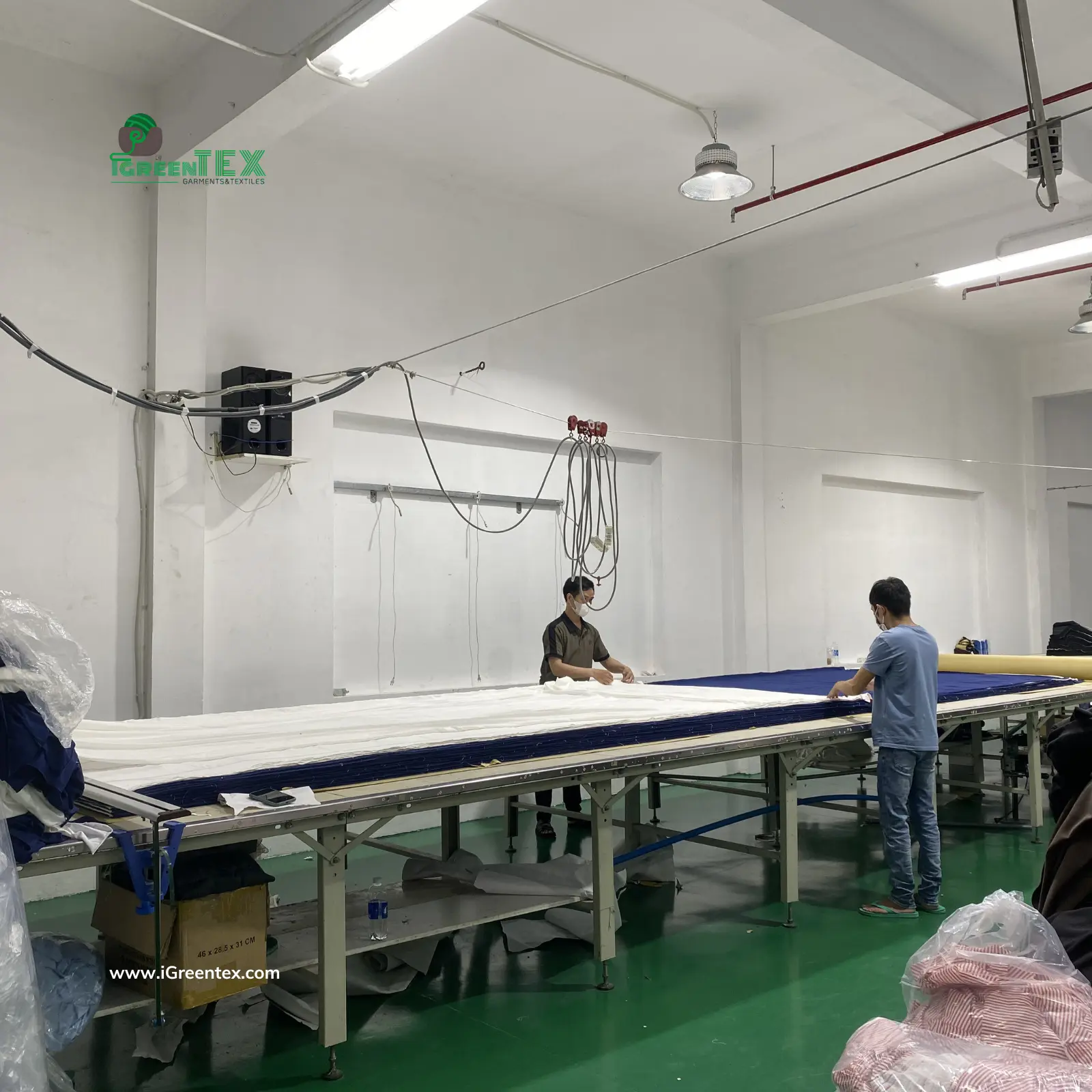
The OEM process is highly detailed. It requires constant communication.
- Buyer submits a detailed Tech Pack.
- Factory reviews and quotes the price.
- Factory sources custom fabrics and trims.
- Factory creates the first prototype.
- Buyer reviews, revises, and approves the sample.
- Factory proceeds with pattern grading.
- Bulk production begins.
- Final Garment Quality Control and shipping.
Typical ODM Workflow
The ODM process is streamlined and fast.
- Buyer browses the factory’s existing catalog.
- Buyer selects a preferred design.
- Buyer requests minor color or branding changes.
- Factory provides a quick sample with the new logo.
- Buyer approves the sample.
- Bulk production begins.
- Final quality check and shipping.
Where the Two Processes Start to Differ
The major difference between OEM and ODM lies in the first three steps. OEM focuses heavily on R&D and custom sourcing. ODM clothing manufacturing skips R&D entirely and moves straight to sample customization.
OEM vs ODM Comparison: Side-by-Side
This is the most crucial part of any OEM vs ODM manufacturing analysis. Sourcing managers must weigh these factors carefully.
Product Design Ownership
Who owns the design? In OEM, the apparel brand owners retain full legal rights. You develop the product entirely. You have total freedom to modify the design later.
In ODM, the factory owns the base design. They developed the product. Your ability to edit the design is highly restricted. You cannot claim the silhouette as your unique intellectual property.
Product Customization
Product customization heavily influences your apparel sourcing strategy. OEM offers limitless personalization. You can create unique fits, select rare fabrics, and apply complex prints. This flexibility builds strong brand differentiation.
ODM offers rigid customization. You can usually only change the logo, neck label, and perhaps the fabric color. It does not allow for structural garment changes. This limits your ability to stand out.
Manufacturing Cost
Cost structures differ significantly. Which is cheaper, OEM or ODM manufacturing?
OEM has high upfront development costs. You pay for pattern making, sampling, and custom molds. However, the unit cost can be lower at high volumes.
ODM has very low development costs. The factory has already paid for the R&D. However, the long-term unit cost might be slightly higher. You are paying for the convenience of a ready-made design.
Minimum Order Quantity (MOQ)
MOQ stands for Minimum Order Quantity. It is a critical factor for procurement teams.
OEM MOQ is generally higher. Factories must buy custom fabric rolls. They must set up new production lines. A typical OEM MOQ is 500 to 1,000 pieces per style.
ODM MOQ is much lower. The factory uses stock fabric and existing patterns. You can often start with just 100 to 300 pieces. This explains why startups often lean toward ODM initially.
Lead Time
Lead time dictates how fast you can sell. OEM lead times are long. Developing a prototype sample takes weeks. Sourcing custom materials takes time. The whole process can take 3 to 6 months.
ODM lead times are short. The design is ready. The factory might even have blank garments in stock. You can often bring an ODM product to market in 4 to 8 weeks.
Brand Control
Brand control is vital for US apparel importers. With OEM, you control the Bill of Materials (BOM). You control the exact fabric sourcing process. You control the quality standards at every step.
With ODM, you surrender control. The factory chooses the materials. They dictate the supply chain. You only control the final branding elements. This lack of control can be a risk for premium brands.
Summary: OEM vs ODM Side-by-Side
To help procurement teams make a quick assessment, here is a summary of the six critical factors discussed above:
| Comparison Factor | OEM Clothing Manufacturing | ODM Clothing Manufacturing |
|---|---|---|
| Design Ownership | Apparel brand owner retains full rights | Factory owns the base design |
| Customization | Limitless (fits, fabrics, prints) | Rigid (logos, neck labels, basic colors) |
| Development Cost | High upfront (pattern making, sampling) | Very low (factory has paid for R&D) |
| MOQ Level | Higher (typically 500 – 1,000 pieces) | Lower (typically 100 – 300 pieces) |
| Lead Time | 3 to 6 months | 4 to 8 weeks |
| Supply Chain Control | Full control (BOM, exact materials) | Minimal control (factory dictates materials) |
Still looking for the right manufacturer? Explore our guide to the Top 7 Clothing Manufacturers in Vietnam, featuring a curated list of factories categorized by their specialties and production models to help you choose the right partner.
Read more: Top 7 Clothing Manufacturers in Vietnam
Pros and Cons of OEM vs ODM Manufacturing
Every business model has trade-offs. Let us look at the practical realities. To help sourcing managers evaluate quickly, here is a direct breakdown of the advantages and disadvantages.
Advantages of OEM Clothing Manufacturing
OEM maximizes product uniqueness. It protects your brand identity. It allows for strict garment production planning. You can optimize profit margins at scale. It perfectly supports complex design requirements.
Disadvantages of OEM Clothing Manufacturing
The primary drawback is the high barrier to entry. You need significant capital for the sample development process. You must have a strong design team. The long lead times require accurate market forecasting.
Advantages of ODM Clothing Manufacturing
ODM allows for rapid market entry. It requires minimal upfront investment. You do not need technical design skills. It is excellent for testing new product categories quickly.
Disadvantages of ODM Clothing Manufacturing
Your products will look generic. You face intense competition from similar items. You cannot patent the design. It is difficult to scale a premium brand using only ODM products.
| Business Model | Pros (Advantages) | Cons (Disadvantages) |
|---|---|---|
| OEM Clothing Manufacturing | – Maximizes product uniqueness. – Protects brand identity and IP. – Optimizes profit margins at scale. – Supports complex design requirements. | – High barrier to entry (capital). – Long sample development process. – Requires technical design skills. – Vulnerable to market forecast errors. |
| ODM Clothing Manufacturing | – Enables rapid market entry. – Requires minimal upfront investment. – No technical design team needed. – Excellent for testing new niches. | – Products look generic. – Intense competition from similar items. – Cannot patent or own the design. – Difficult to scale a premium brand. |
Which Brands Should Choose OEM or ODM?
How do you choose between OEM vs ODM apparel manufacturing? It depends entirely on your business model, especially when you manufacture clothing in Vietnam, where factories offer a wide range of OEM and ODM capabilities.
Brands That Benefit Most from OEM
OEM is the best choice if you prioritize exclusivity. A reliable clothing manufacturer in Vietnam often prefers this model for long-term partnerships. This model suits:
- Established fashion brands with unique aesthetics.
- Premium brands requiring exact material specifications.
- Sustainable brands needing full supply chain transparency.
- Companies with an in-house product design team.
Brands That Benefit Most from ODM
Should startups choose OEM or ODM clothing manufacturing? ODM is often safer for beginners. This model suits:
- Early-stage startups with limited budgets.
- Retail chains needing fast inventory turnover.
- Online sellers (like Amazon FBA) testing new niches.
- Merchandisers who need to launch a collection rapidly.
Decision Checklist
Use this quick checklist to guide your procurement team:
If you want absolute design control, strict material choices, and unique branding. → Choose OEM.
If you need low MOQ, fast market entry, and minimal R&D costs. → Choose ODM.
OEM vs ODM Product Quality Comparison
Quality is a major concern for sourcing managers. Let us clarify a common industry misunderstanding.
Does OEM Always Produce Better Quality?
Does OEM offer better product quality than ODM? Not necessarily. An honest OEM and ODM comparison shows that the manufacturing model itself does not dictate quality. A poor factory will produce bad OEM garments. A great factory will produce excellent ODM garments.
What Really Determines Product Quality?
Many brand owners navigating OEM vs ODM clothing manufacturing realize a core truth. Quality depends entirely on the factory production capability. It relies on four main pillars:
- Factory Equipment: Modern machinery ensures precision.
- Quality Assurance System: Strict internal protocols prevent errors.
- Raw Materials: High-quality yarn and fabric yield better results.
- Management: Experienced supervisors maintain consistency.
Quality Risks in OEM and ODM
What are the risks of choosing OEM vs ODM manufacturing?
In OEM, the risk is miscommunication. If your Product Specification is unclear, the factory will make mistakes. In ODM, the risk is material substitution. The factory might secretly use cheaper fabric for bulk production to save costs.
To mitigate risks, always insist on a strict AQL Inspection before shipment.
OEM or ODM: Which Model Is Better for Long-Term Brand Growth?
Which manufacturing model is best for building a long-term clothing brand? Strategic decision-makers must look beyond immediate costs.
If Your Goal Is Building a Unique Brand
OEM is mandatory for true brand building. Consumers demand unique value. You cannot build strong brand loyalty selling generic designs. OEM allows you to innovate. It helps you justify premium pricing. It builds a defensible market position.
If Your Goal Is Testing the Market Quickly
ODM is a valid short-term strategy. It allows you to validate market demand. You can generate cash flow quickly. You can test your marketing funnels without huge inventory risks.
If You Plan to Scale Over the Next 3–5 Years
A robust OEM vs ODM clothing manufacturing strategy must account for future volume. For long-term scaling, OEM is vastly superior. As volume increases, OEM unit costs drop significantly. You also build a valuable asset: your own intellectual property. This is vital if you ever plan to sell your company.
Can Brands Switch from ODM to OEM Later?
Can I switch from ODM to OEM later? Yes, absolutely. Understanding the real difference between OEM and ODM allows brands to pivot smartly. Many successful brands start with ODM. Once they secure capital and understand their audience, they transition to OEM. This hybrid approach minimizes early risks while enabling future growth.
Hidden Factors Buyers Often Overlook Before Choosing OEM or ODM
Many procurement managers focus only on unit price. This is a dangerous mistake. You must evaluate these hidden factors.
Before deciding between OEM and ODM, sourcing teams should also evaluate how they identify manufacturing partners. Many international buyers compare Alibaba vs trade fairs when searching for clothing manufacturers in Vietnam. However, regardless of the sourcing channel, production capability, communication, quality management systems, and technical expertise remain the key factors when selecting a long-term manufacturing partner.
Intellectual Property Ownership
Who owns the product design in OEM and ODM manufacturing? We mentioned this earlier, but it is critical. If you use ODM, your competitor can legally buy the exact same jacket from the same factory. You have no legal recourse.
Tech Pack Readiness
A complete Tech Pack ensures your OEM vs ODM manufacturing journey starts smoothly. Is a Tech Pack required for OEM clothing manufacturing? Yes. If you do not have a professional Tech Pack, you are not ready for OEM. The factory needs precise measurements, fabric codes, and construction details. Without it, production will fail.
Supplier Development Capability
Does the factory have true product development skills? Some factories claim to be OEM but lack technical designers. A strong clothing manufacturing partner will actively improve your design. They will suggest better stitching techniques or stronger fabrics.
Cost Beyond Unit Price
What are the hidden costs of OEM vs ODM apparel manufacturing? Unit price is just one metric. You must calculate total landed cost.
OEM includes costs for multiple sample revisions. It involves custom dye lot minimums. It requires higher logistics costs if sourcing specialized trims. Always factor these into your budget.
Future Scalability
Can the factory grow with you? A small ODM factory might struggle if your orders jump from 500 to 5,000 pieces. You must assess the factory’s capacity limits. Ensure they have the financial stability to handle large textile industry orders.
Communication and Project Management
This is where many partnerships fail. OEM requires intense daily communication. Does the factory speak fluent English? Do they use modern project management tools? Poor communication will destroy even the best production quality control systems.
Final Comparison: OEM vs ODM at a Glance
This table summarizes the core OEM vs ODM manufacturing differences. It helps category buyers make fast decisions.
| Feature | OEM Manufacturing | ODM Manufacturing |
|---|---|---|
| Design Ownership | Buyer | Factory |
| Customization | Unlimited | Limited (Colors, Logos) |
| MOQ Level | High (500-1000+ pcs) | Low (100-300 pcs) |
| Lead Time | Long (3-6 months) | Short (1-2 months) |
| R&D Cost | High | Low to None |
| Product Uniqueness | High | Low |
| QC Control | Very High | Moderate |
| Supply Chain Control | Full Control | Limited Control |
| Scalability | Excellent | Moderate |
| Best For | Established Brands, Custom Designs | Startups, Fast Retailers |
Conclusion
Navigating the landscape of OEM vs ODM apparel manufacturing requires careful strategic planning. There is no absolute winner in the OEM vs ODM clothing manufacturing debate. The right choice depends entirely on your current business stage and strategic goals.
OEM is the superior choice for building a unique, defensible brand. It offers total control over design and quality. ODM is excellent for speed, low budgets, and testing new markets quickly. Your decision should always align with your long-term vision, not just the cheapest unit price.
If you are an apparel brand owner seeking a reliable, high-quality OEM partner, iGreen Tex Vietnam is ready to assist. We are not just a factory; we are a strategic manufacturing partner. We specialize in full-package production with strict international quality standards. We ensure your designs are executed flawlessly.
Are you ready to scale your apparel brand with absolute confidence? Contact our garment factory in Vietnam today to discuss your next production run. Let us navigate the complexities of OEM vs ODM clothing manufacturing together.