Vietnam Garment Industry: Market Overview, Export Trends, Manufacturing Capacity & Future Outlook (2025–2026)
Evaluating the Vietnam garment industry in 2025–2026 requires objective data for strategic planning. As a global manufacturing hub, Vietnam currently serves thousands of sourcing managers and procurement teams primarily from the United States, the European Union, and Japan. This comprehensive guide provides an objective overview of market trends, manufacturing capacities, and future projections, helping apparel brand founders determine if shifting production to this region aligns with their long-term scalability and quality requirements.
What Is the Vietnam Garment Industry Today?
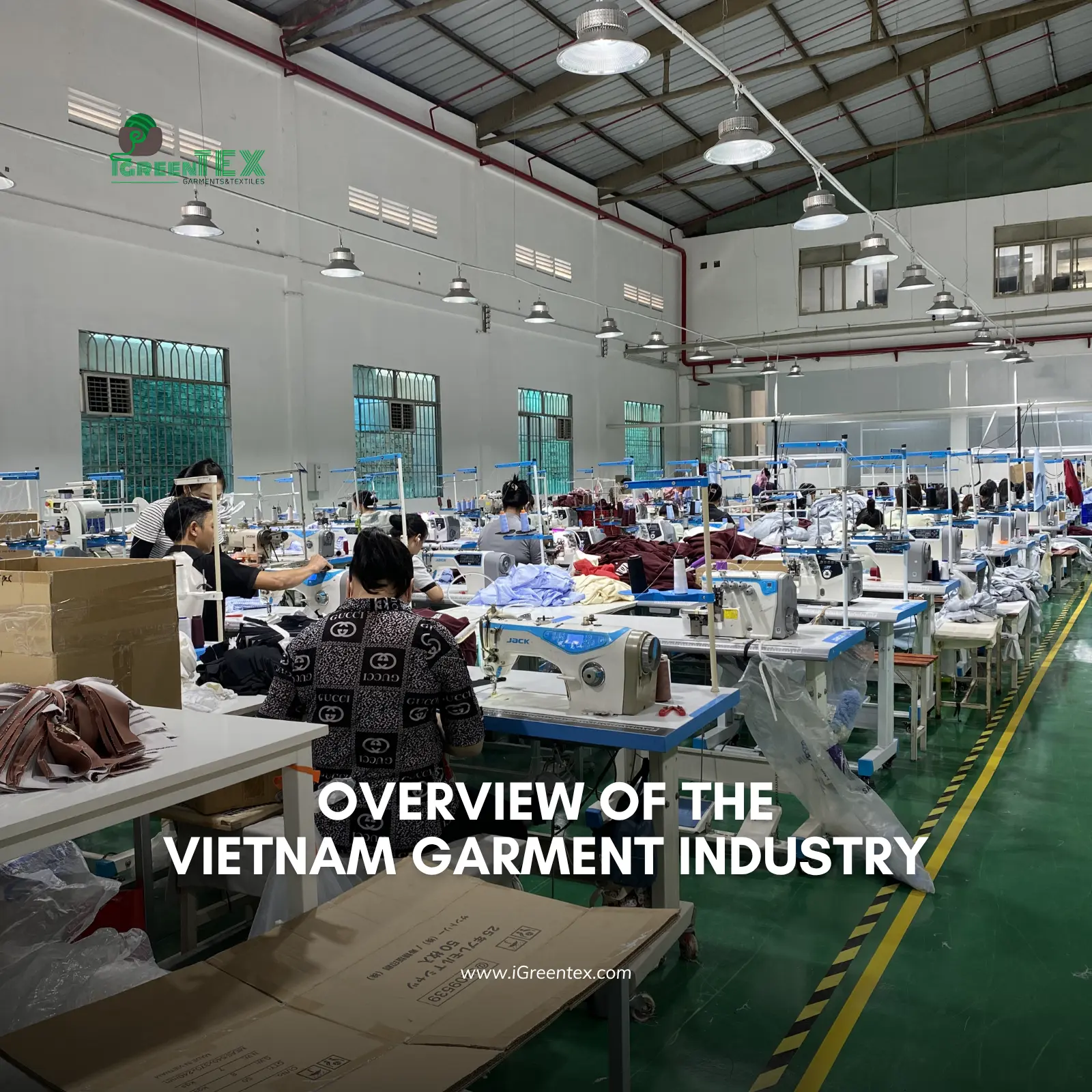
Overview of the Vietnam garment industry
The evolution of the Vietnam garment industry from traditional textile crafts into a highly industrialized powerhouse over the past three decades is remarkable. Its role in the national economy is foundational, providing millions of jobs and acting as a primary driver of foreign direct investment. Today, the nation stands proudly as one of the top three apparel exporting countries globally. By contributing significantly to both national GDP and overall export turnover, the infrastructure here has proven its reliability to global supply chain managers.
Key statistics of the Vietnam garment market in 2025–2026
Data for the Vietnam garment market indicates robust resilience. The export value for 2025 is projected to reach approximately 46 billion USD, representing a 5–6% growth compared to 2024. Looking ahead, the export target for 2026 is set at 49 billion USD.
- Number of enterprises: Over 6,000 active textile and apparel companies.
- Labor force: Employing nearly 3 million skilled workers, representing a highly disciplined and specialized workforce.
- Export share: Accounts for a double-digit percentage of the country’s total export turnover.
- Geographical Distribution:
- Northern Region (Hanoi, Nam Dinh, Hai Phong): Historically specialized in heavy outerwear, formal wear, and woven products, leveraging its close proximity to Chinese fabric and accessory hubs.
- Southern Region (Ho Chi Minh City, Binh Duong, Dong Nai): Highly entrepreneurial cluster known for fast turnaround times, specializing in activewear, knits, and streetwear, supported by excellent logistics networks through Cai Mep port.
Why Global Brands Are Moving And Manufacturing Clothing in Vietnam
Competitive labor costs
While no longer the absolute cheapest in the world, the labor cost here offers an optimal balance between price, high skill levels, and productivity, making the Vietnam clothing industry highly attractive to operations managers looking for value rather than just bottom-barrel pricing. Unlike ultra-low-cost regions, Vietnamese technicians excel at complex sewing operations, minimizing defect rates and reducing costly reworks.
Strong manufacturing ecosystem
From raw material sourcing networks to advanced logistics, the ecosystem supports seamless end-to-end production. Procurement managers can easily find auxiliary suppliers for trims, packaging, and specialized wash processes. The co-location of embroidery, fabric printing, and testing laboratories ensures that secondary and tertiary processes are handled without shifting materials long distances.
Strategic location in Asia
Bordering major raw material suppliers and featuring deep-water ports, the geographic positioning drastically reduces lead times for raw material imports and finished goods exports. As the Vietnam garment industry matures, its connectivity to regional shipping lanes becomes an outstanding competitive advantage. Major ports like Lach Huyen in the North and Cai Mep in the South connect directly to Europe and the Americas, eliminating transshipment hubs.
Extensive free trade agreements (FTA)
The Vietnam apparel industry benefits immensely from deep global integration. Key agreements include:
- EVFTA: Opening tariff-free pathways to European clothing brands, provided they comply with the “double transformation” rule of origin (fabric-forward rule, requiring the weaving/knitting and sewing to be done within Vietnam or the EU).
- CPTPP: Facilitating trade with Canada, Australia, and Japan. This agreement utilizes a strict “yarn-forward” rule, pushing Vietnamese mills to vertically integrate their spinning and knitting operations to secure zero-tariff benefits.
- RCEP: Enhancing supply chain connectivity across the Asia-Pacific by allowing regional accumulation of materials.
Supply chain diversification away from China
For many brand owners, mitigating risk is paramount. The shift away from over-reliance on China has positioned this region as the primary beneficiary of the “China Plus One” strategy. Importers and wholesalers are aggressively reallocating production orders here to bypass geopolitical tensions and leverage the aforementioned FTAs.
Vietnam Apparel Industry Export Performance
Export growth from 2020–2026
The Vietnam apparel industry has shown consistent upward momentum, recovering strongly from global disruptions.
| Year | Export Value (USD) | Key Drivers & Structural Factors |
|---|---|---|
| 2020 | 35.2 Billion | Supply chain disruptions, temporary factory closures. |
| 2021 | 39.0 Billion | Gradual recovery, massive shift toward essential and casual knitwear. |
| 2022 | 44.0 Billion | Post-pandemic demand surge, inventory restocking by major brands. |
| 2023 | 40.3 Billion | Global inflation, high retail inventories in Western markets, order reductions. |
| 2024 | 43.5 Billion | Inventory normalization, stabilization of global demand, diversification. |
| 2025 | 46.0 Billion | Broad recovery, increased adoption of recycled and eco-friendly garments. |
| 2026 Target | 49.0 Billion | Integration of high-tech automation and expansion of high-value exports. |
Top export destinations
Sourcing agents working with international brands recognize that the export portfolio is highly diversified, minimizing reliance on any single economic zone.
Which Countries Import the Most Clothing from Vietnam?
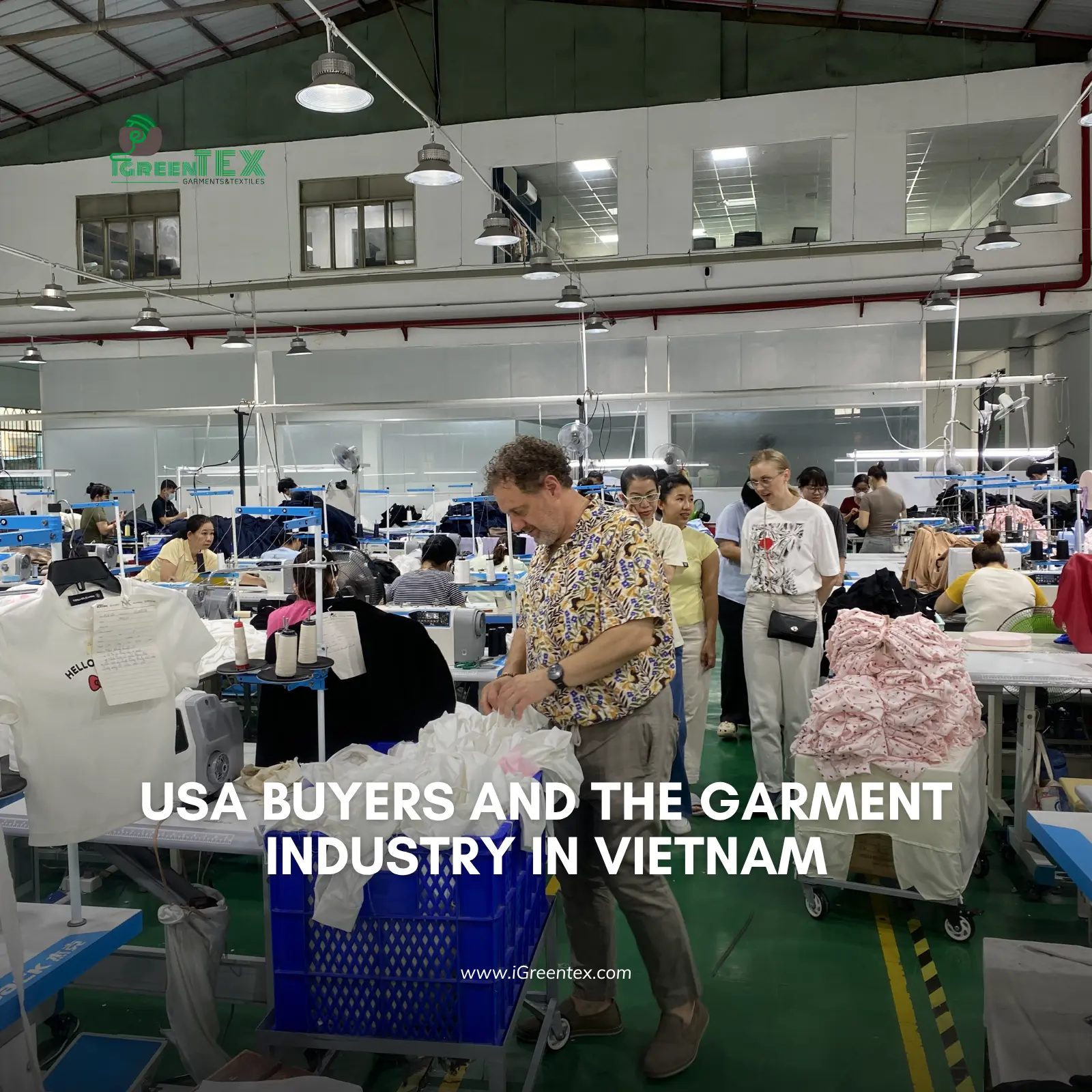
Global sourcing managers must understand that each target market maintains distinct regulatory demands and consumer behaviors. Vietnam’s factories have adapted systematically to these varied market standards:
United States
The US remains the absolute largest market, driven by US apparel importers seeking reliable volume production within the dynamic Vietnam apparel industry.
- Key Characteristics: High volume requirements, standardized sizing, and highly strict adherence to shipment timelines.
- Compliance Demands: Major US retailers require third-party audits such as WRAP, BSCI, or SMETA. Children’s wear requires rigorous CPSIA compliance (strict limitations on lead and phthalates). Flammability testing (16 CFR Part 1610) is a baseline requirement.
- Vietnam’s Capability: Highly automated production lines and massive capacity in Southern and Northern hubs allow Vietnam to execute millions of pieces of basic knits and wovens efficiently.
European Union
Driven by the EVFTA, European procurement teams are increasing their sourcing footprint here, particularly for high-value and sustainable garments.
- Key Characteristics: Focus on premium quality, highly specific design details, and smaller but highly diverse order structures.
- Compliance Demands: Compliance with REACH regulations (prohibiting toxic azo dyes, heavy metals, and nickel). Sourcing managers are increasingly demanding OEKO-TEX Standard 100, GOTS (Global Organic Textile Standard), and GRS (Global Recycled Standard) certifications.
- Vietnam’s Capability: Many mid-to-large-scale factories are heavily investing in LEED-certified facilities, biomass boilers, and solar installations to align with Europe’s circular economy targets.
Japan
Focusing heavily on intricate details and rigorous quality control, Japanese product managers are major buyers.
- Key Characteristics: Zero tolerance for visual defects, uneven stitching, or soil marks. Extreme focus on physical presentation and shelf-ready packaging.
- Compliance Demands: Strict metal-detection protocols (using specialized conveyor-belt needle detectors) are mandatory. Compliance with formalin limits for toddler clothing (no detected levels) is absolute.
- Vietnam’s Capability: Due to long-term Japanese FDI and training programs, several dedicated factories in Vietnam feature independent, Japanese-standard inspection zones (Kentei rooms) to achieve zero-defect shipments.
South Korea
Benefiting from close geographical and cultural business ties, South Korea is a massive consumer of knitwear and fashion apparel.
- Key Characteristics: Fast-fashion cycles, highly dynamic design updates, and highly seasonal volume fluctuations.
- Compliance Demands: Strict KC (Korea Certification) compliance regarding chemical safety and physical construction.
- Vietnam’s Capability: Many Korean-owned garment conglomerates operate mega-factories in Vietnam (Binh Duong, Dong Nai), creating a direct, seamless communication pipeline for Seoul-based brand operations.
Canada
The CPTPP has made this a rapidly growing market for winter wear and activewear.
- Key Characteristics: High demand for technical outdoor apparel, heavy jackets, and functional performance fabrics.
- Compliance Demands: Technical performance testing for water resistance, breathability, and thermal ratings.
- Vietnam’s Capability: Vietnam is highly regarded for its mastery in producing seam-sealed, waterproof, and multi-layered technical jackets.
Australia
Another CPTPP beneficiary, with strong demand for summer apparel and workwear.
- Key Characteristics: Strong emphasis on UV-protective fabrics (UPF rating requirements), cotton-rich casual blends, and highly durable utility garments.
- Compliance Demands: APVMA and localized Australian Standards for industrial protective clothing (AS/NZS 4602.1).
- Vietnam’s Capability: Highly efficient processing of heavy-duty fabrics and canvas-woven materials for industrial workwear.
United Kingdom
Post-Brexit bilateral agreements have kept the UK as a steady and lucrative destination.
- Key Characteristics: Strong focus on mid-to-high-end fashion, high demand for tailoring, and rapid digital fashion integrations.
- Compliance Demands: Transitioning to UKCA mark compliance and adhering to strict chemical standards aligned with EU baselines.
- Vietnam’s Capability: Versatile CMT and FOB factories that can handle mid-sized production runs with premium stitching.
What Products Drive the Vietnam Clothing Industry?
While finding any general clothing manufacturer in Vietnam is relatively easy, finding specialists in specific product categories is what truly matters to category buyers. The Vietnam clothing industry excels in several core areas:
T-shirts
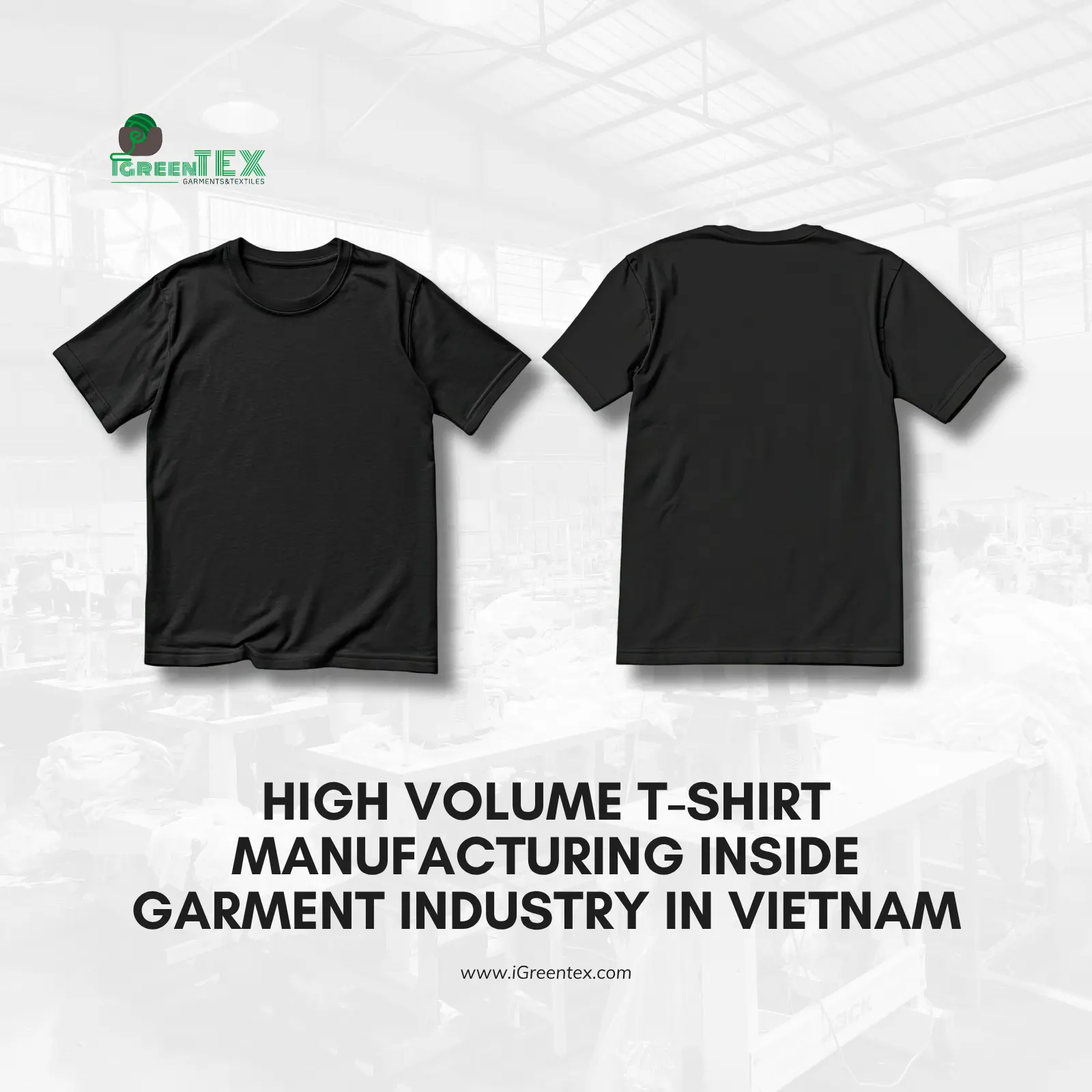
A staple of the sector, demanding efficient CMT (Cut, Make, Trim) and scalable lines. Brands looking for a dedicated t-shirt manufacturer often find exceptional quality here, supported by various fabric options from 100% combed cotton, CVC, TC, to specialized organic yarn.
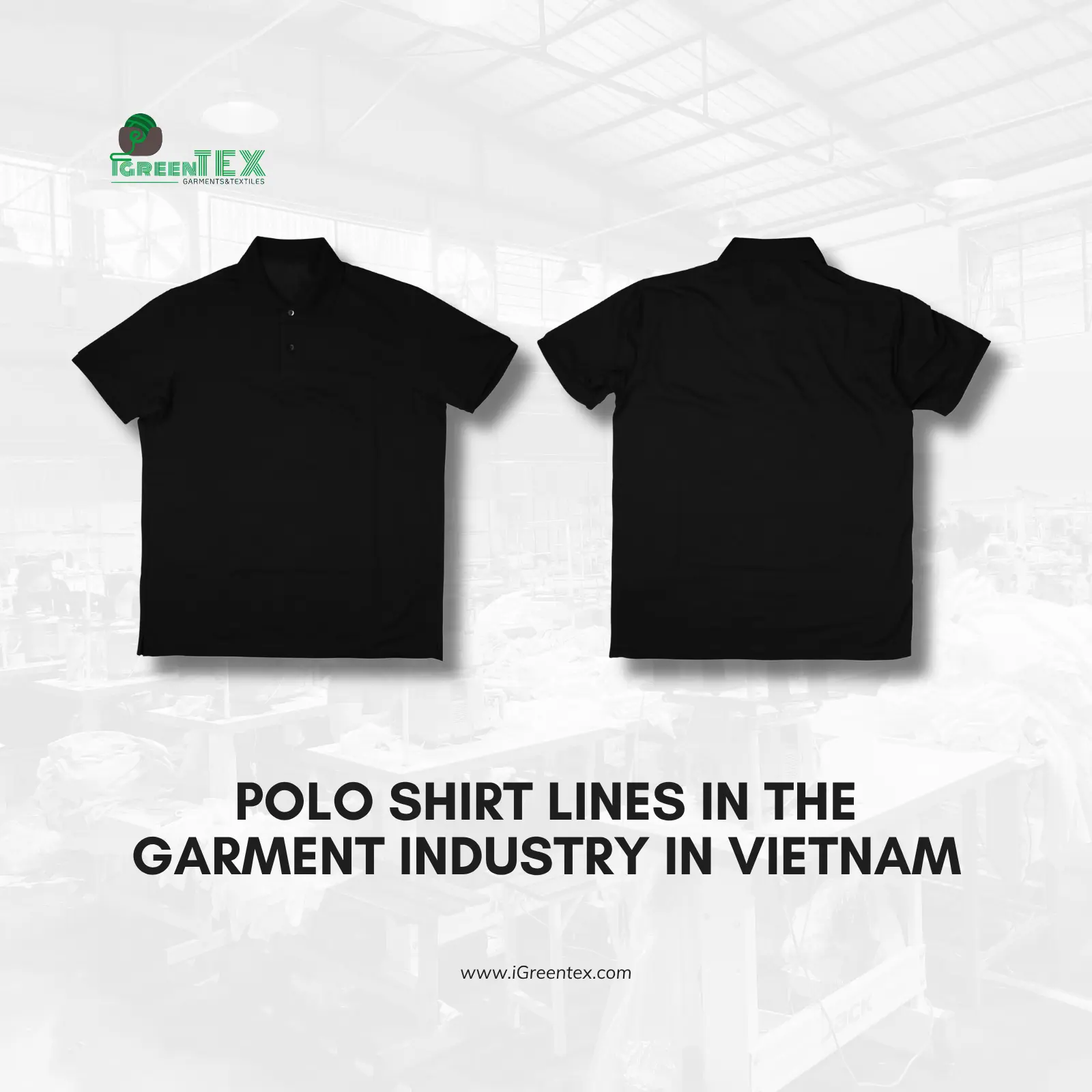
Polo shirts
Requiring higher precision in collars and plackets, finding a specialized polo shirt manufacturer is crucial for corporate and golf brands. Vietnam factories excel in jacquard collars, anti-pilling finishes, and custom mercerized cotton blends.
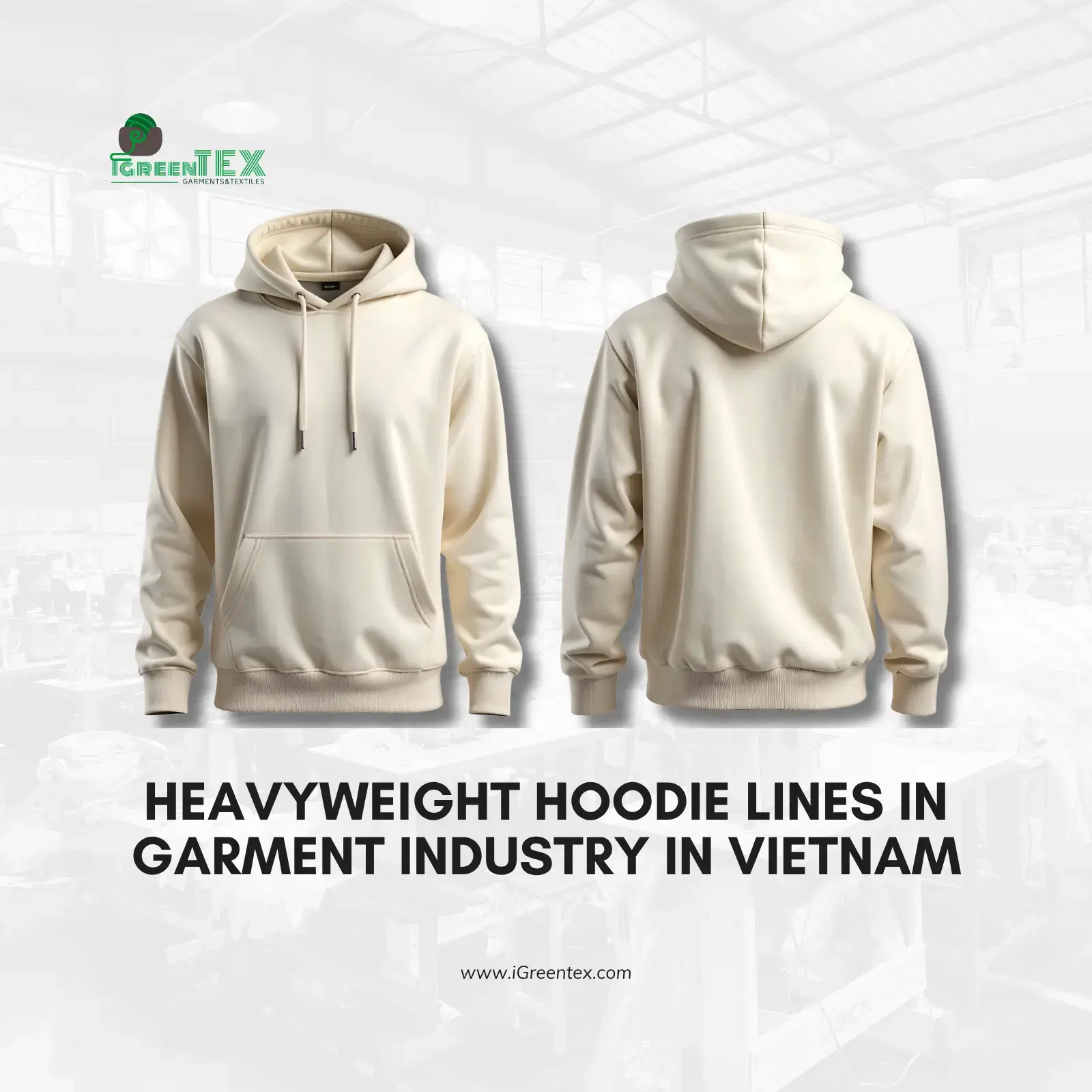
Hoodies
With a booming streetwear market, partnering with an experienced hoodie manufacturer ensures premium fleece handling, durable construction, and expert execution of heavy-weight French Terry fabrics (up to 450 GSM).
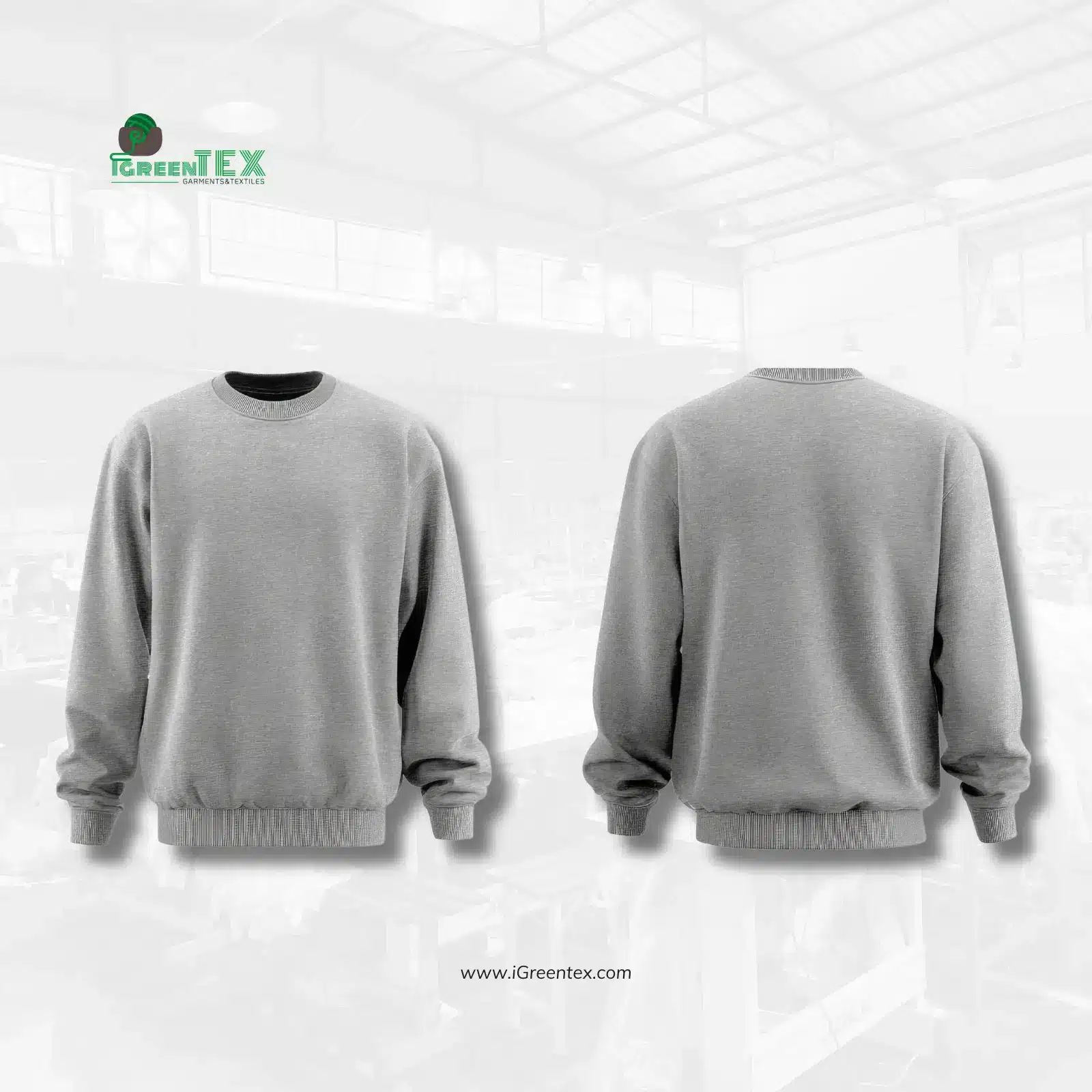
Sweatshirts
Closely tied to hoodies, this category requires excellent fabric sourcing for anti-pilling and shrinkage control. Experienced factories ensure double-needle stitching and robust ribbing at cuffs and hems.
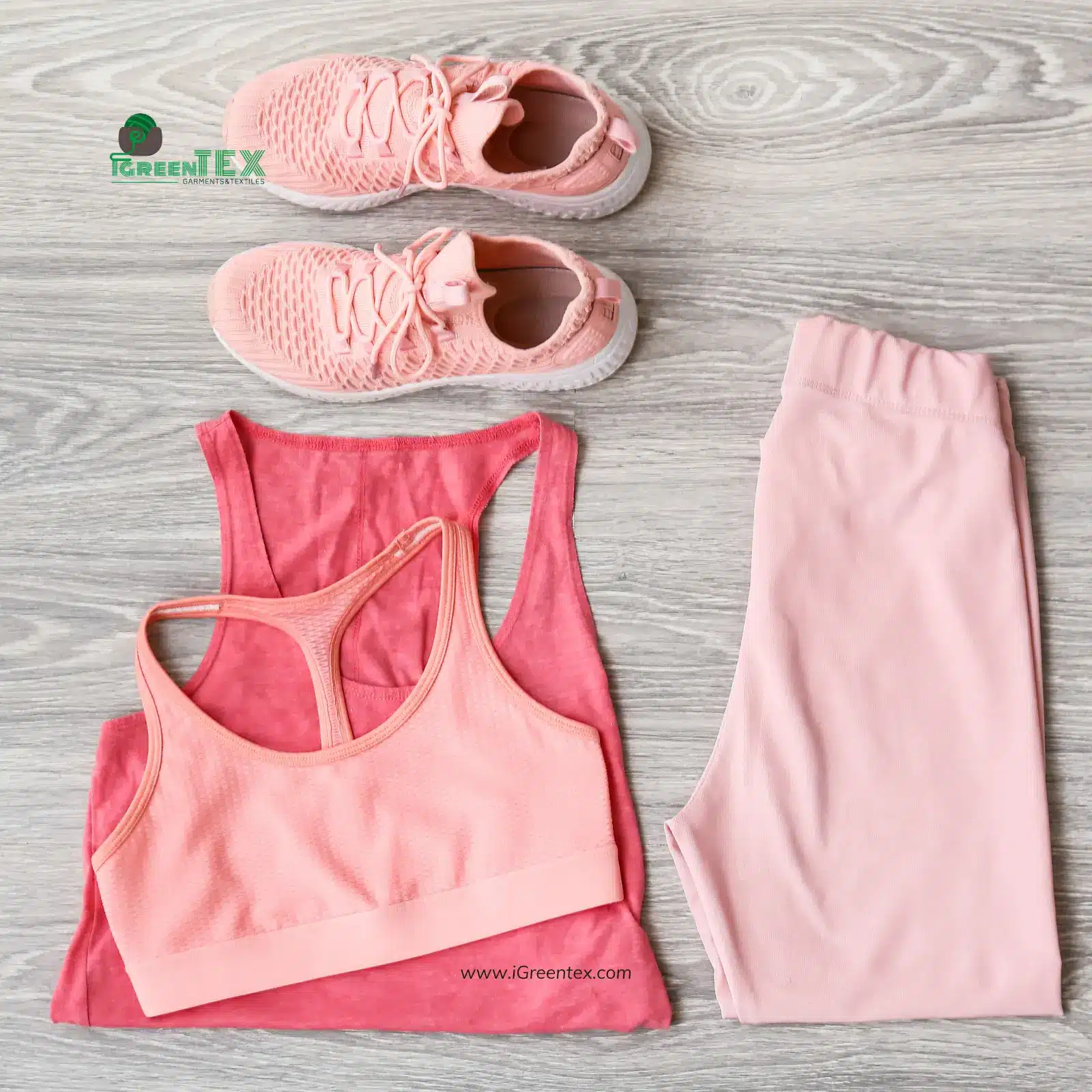
Sportswear
Performance fabrics require advanced machinery. A capable sportswear manufacturer in this region typically utilizes flatlock stitching, heat-sealed seams, and moisture-wicking, anti-bacterial technical fabrics (like spandex-polyester blends).
Uniforms
Highly standardized production meant for long-term durability, featuring industrial-grade sewing thread, colorfastness properties, and reinforced stress points for commercial use.
Workwear
Involving heavy-duty fabrics (like fire-retardant canvas and high-visibility reflective elements) and strict safety compliance standards.
Activewear
A rapidly growing segment driven by athleisure trends globally, utilizing specialized four-way stretch fabrics and high-density sublimation printing.
Fashion apparel
Fast fashion and mid-tier fashion lines requiring quick turnaround times, precise draping, and advanced pattern-making capabilities.
Sustainable clothing
Increasingly popular among eco-conscious brand owners prioritizing organic cotton, bamboo fibers, linen, and GRS-certified recycled polyester to align with international circular fashion mandates.
Manufacturing Capabilities of the Garment Industry in Vietnam
The garment industry in Vietnam offers a spectrum of production models to suit different operational needs:
- CMT (Cut, Make, Trim): The buyer supplies all fabric, accessories, and patterns, while the factory supplies labor and machinery.
- FOB (Free On Board): The factory sources raw materials (fabric, trims) internally, manages full production, and delivers the finished goods to the port.
- OEM/ODM (Full Package): The factory handles design/tech-pack development, fabric creation, manufacturing, quality control, and shipping.
OEM clothing manufacturing
Original Equipment Manufacturing allows brands to produce their unique designs at scale. For operations managers seeking a complete solution, our dedicated OEM clothing manufacturing service provides end-to-end execution, which you can evaluate alongside our extensive factory capabilities to ensure we meet your technical requirements.
Before sharing sensitive tech packs or original patterns for OEM production, securing a legally binding NDA for clothing manufacturers is an essential first step. This confidentiality agreement protects your intellectual property and structural designs prior to initiating development
ODM clothing manufacturing
Original Design Manufacturing, where factories provide ready-made designs for buyers to brand. This is ideal for e-commerce brands looking to launch fast without extensive design timelines.
FOB production
Free On Board means the factory handles everything from fabric sourcing to placing the goods on the shipping vessel. It drastically reduces the buyer’s logistics burden as the factory manages domestic logistics and customs clearance in Vietnam.
Cut and Sew manufacturing
The traditional CMT model where the buyer provides the materials and the factory provides the labor. Highly suitable for luxury brands that want absolute control over proprietary fabric sourcing.
Private label manufacturing
Ideal for retail chains wanting to put their own brand on pre-developed, high-quality garments with minor customizations like custom labels and packaging.
Full-package production
A comprehensive turnkey solution covering design, sourcing, manufacturing, and logistics. It provides a single point of accountability for international buyers.
Understanding Typical MOQ in Vietnam
Why MOQ matters
Minimum Order Quantity dictates your cash flow and inventory risk. For startups launching clothing lines, managing MOQ is critical, as larger volumes reduce unit costs but lock up operating capital.
Typical MOQ by factory type
Understanding factory tiering prevents sourcing managers from pitching small orders to massive conglomerates (which leads to instant rejection) or large orders to small workshops (which leads to quality and deadline failures).
| Factory Type | Typical MOQ | Focus Area & Machinery |
|---|---|---|
| Large Factory | 5,000–50,000 pcs | High-speed automated lines, bulk CMT/FOB, strict AQL standards. |
| Mid-size Factory | 1,000–5,000 pcs | Balanced flexibility, capable of complex designs and styles. |
| SME Factory | 300–1,000 pcs | Highly flexible, suitable for emerging brands and high-end collections. |
| Sample Development | 50–300 pcs | Dedicated prototype rooms, specialized pattern makers. |
MOQ by product category
| Product | Typical MOQ | Sourcing Drivers |
|---|---|---|
| T-shirt | 1,000 pcs/color | Driven by fabric dye-lot minimums (approx. 250-300 kg of yarn). |
| Polo | 1,000 pcs/color | Minimum yarn requirements for flat-knit collar weaving. |
| Hoodie | 800 pcs/color | Fleece fabric knitting and heavy weight dyeing requirements. |
| Sportswear | 1,000 pcs/style | High-technical spandex dye lots and specialized seam tape minimums. |
| Uniform | 500 pcs/style | Standardized twill and drill fabric minimum roll availability. |
Why MOQ in Vietnam is different from China
Unlike the massive fabric markets in Guangzhou, material sourcing here often relies on importing or larger minimum dye-lots, meaning the Vietnam garment market generally requires slightly higher MOQs than Chinese micro-factories, but compensates with superior consistency, lower defect rates, and a stable tariff environment.
Key Characteristics of Garment Orders in Vietnam
Medium-to-large production runs
The infrastructure is optimized for scale, making it ideal for established clothing brands seeking reliable, continuous supply pipelines.
Quality-focused manufacturing
The garment industry in Vietnam has built its reputation on low defect rates and premium stitching, stepping away from cheap, disposable fashion toward durable, high-value wear.
Strong compliance requirements
Most facilities maintain a WRAP certification or BSCI compliance, ensuring ethical labor practices, fair wages, safe working environments, and complete prohibition of child labor.
Longer relationship-based partnerships
Procurement managers will find that factories here prioritize long-term contracts over one-off transactional orders, offering better pricing and priority scheduling to loyal partners.
Higher customization capability
Factories in Vietnam are highly adaptable, allowing for complex washes (acid wash, silicone wash), intricate embroidery, and specialized printing (silkscreen, puff print, high-density print).
Sustainability-driven production
An increasing number of facilities operate as an OEKO TEX certified factory, utilizing green energy sources, zero-discharge wastewater treatments, and organic inputs.
Export-oriented factories
Over 80% of production capacity is dedicated strictly to international export, meaning management teams are highly fluent in global logistics, customs declarations, and international quality standards.
Standardized Clothing Manufacturing Process
The clothing manufacturing process in Vietnam is typically well-structured, following standardized workflows from fabric inspection and pattern making to cutting, sewing, quality control, and final packaging. This systematic approach helps ensure consistent quality, on-time delivery, and efficient production across medium and large-scale orders.
Top 7 Clothing Manufacturing Companies in Vietnam
Sourcing agents often benchmark these industry leaders within the Vietnam garment industry:
Duc Giang Corporation
A massive state-owned enterprise known for high-volume shirting, suits, and tailored garments, catering primarily to major international retail chains with massive MOQ requirements.
iGreen Tex Vietnam
iGreen Tex Vietnam positions itself as a premier partner for apparel brand owners needing flexible, high-quality OEM/ODM solutions. We bridge the gap between massive corporate factories and small workshops, offering scalable production with a strong emphasis on sustainability and strict quality control for international markets.
Garment 10 Corporation (May 10)
Renowned for formal wear, particularly high-end men’s dress shirts and suits, serving luxury and mid-tier global brands with rigorous sewing specifications.
Viet Tien Garment Corporation
One of the oldest and largest domestic players, dominating local retail while maintaining a massive export division for casual and formal wear.
Nha Be Garment Corporation
A powerhouse in outerwear, jackets, and tailored suits, known for advanced technical capabilities and large-scale workforce.
Thanh Cong Textile Garment Investment
A vertically integrated manufacturer handling everything from yarn spinning and knitting to final garment sewing, excellent for brands needing strict fabric traceability.
TAL Apparel Vietnam
A foreign-invested enterprise leading in technological innovation, smart manufacturing, and non-iron shirt technologies.
If you would like a more detailed comparison of production capabilities, certifications, pricing, and strengths of each supplier, explore our full analysis below.
Read more: Top 7 Clothing Manufacturers in Vietnam
Is Vietnam a Good Long-Term Investment for Apparel Manufacturing?
Population and workforce advantages
With a young, highly adaptable demographic, the labor pool remains deep and trainable. The literacy rate over 95% enables workers to adapt quickly to digital techpacks and advanced machinery.
Rising manufacturing expertise
The workforce is transitioning from basic sewing to complex product development, pattern grading, and 3D pattern modeling, shortening physical prototyping times.
Government support
Favorable tax incentives, corporate income tax (CIT) holidays in economic zones, and heavy industrial park development encourage continued investment in the Vietnam garment market.
Infrastructure development
Massive investments in highways, deep-water ports, and logistics corridors continue to slash domestic transit times and lower shipping costs.
Foreign direct investment (FDI)
Continuous capital inflow from Korea, Taiwan, and Hong Kong keeps technology upgraded. The continuous flow of capital has a highly positive structural impact on the Vietnam apparel industry.
Sustainability transformation
Government mandates are pushing the industry toward green energy, circular water systems, and carbon reduction schemes to meet future global trade regulatory requirements.
Risks investors in the Vietnam garment industry should consider
- Labor shortages: Increasing competition from the booming electronics and high-tech assembly sectors.
- Compliance costs: Stricter ESG apparel manufacturing laws and digital supply chain tracking requirements increase overhead.
- Energy transition: Pressure to adopt solar and biomass energy, requiring immediate capital investment.
- Competition from Bangladesh and India: Rival nations competing fiercely on basic apparel pricing, pushing Vietnam to move up the value chain.
Future Outlook of the Vietnam garment industry Through 2030
Shift from volume to value
The Vietnam clothing industry is deliberately moving away from cheap, high-volume CMT orders toward high-value, highly technical outerwear, activewear, and complex performance garments.
Sustainable manufacturing expansion
Traceable supply chains and circular textile production are becoming baseline requirements, not just premium add-ons, to comply with EU and US anti-greenwashing and supply chain due diligence laws.
Digital transformation
Integration of ERP systems and automated supply chain tracking. Currently, the garment industry in Vietnam is executing massive upgrades in enterprise software to provide real-time production updates to overseas buyers.
Smart factories
Adoption of automated cutting rooms, template-sewing robots, and AI-driven defect detection to counter rising labor costs and secure zero-defect manufacturing.
Circular textile production
Investments in fabric recycling facilities, pre-consumer waste collection systems, and water-efficient dyeing technologies to close the manufacturing loop.
Export target toward 2030
The long-term vision aims for an ambitious 64.5 billion USD in export value by 2030, maintaining an average growth rate of 6.5–7% annually. This solidifies the Vietnam garment market as an irreplaceable pillar of global fashion logistics.
How to Choose the Right Clothing Manufacturer in Vietnam
For sourcing managers, finding the right partner in the region often starts by exploring different procurement channels. Whether evaluating online suppliers via Alibaba or trade fair exhibitions, properly vetting a facility in the Vietnam garment industry requires assessing several core operational pillars.
For sourcing managers, vetting a partner in the Vietnam garment industry requires assessing several pillars:
Factory size
Ensure their capacity aligns with your growth trajectory. Large factories are efficient for huge runs but highly inflexible for small changes; mid-sized factories offer the best balance of scale and agility.
MOQ requirements
Match their minimums with your inventory strategy. Be prepared to discuss flexible MOQ options by consolidating fabric colors or utilizing stock-fabric programs.
Compliance certifications
Beyond reviewing active certificates, conducting an on-site garment factory audit allows procurement teams to independently verify working conditions, machinery capabilities, and inline quality control procedures before signing bulk contracts
Verify their social and environmental audit reports. Never rely on verbal assurances; always request active, verifiable copies of WRAP, BSCI, or OEKO-TEX certificates.
Lead times
Assess their efficiency in both sample development (typically 1-2 weeks) and bulk production (typically 45-60 days for FOB, depending on fabric availability).
Quality control systems
Inquire about their in-line and end-of-line AQL standards (typically AQL 1.5 or 2.5 for general apparel, and AQL 1.0 for premium brands).
Sustainability capabilities
Check for eco-friendly fabric sourcing (organic cotton, recycled poly) and energy-efficient operations to align your brand with global ESG mandates.
Communication and sourcing support
A responsive merchandising team fluent in English is critical for smooth operations. A reliable manufacturer should provide proactive updates, offer design solutions, and coordinate seamlessly with your logistics team to ensure a smooth flow through the vibrant ecosystem of the Vietnam clothing industry.
Partnering with iGreen Tex for Your Manufacturing Needs
Navigating global sourcing can be complex, but finding the right partner shouldn’t be. iGreen Tex stands ready to support sourcing managers, procurement teams, and apparel brand owners looking for a reliable, quality-driven production hub. Whether you are scaling up activewear, launching a premium streetwear line, or seeking sustainable OEM solutions, our team provides transparent communication, strict quality control, and flexible scaling options.
Ready to optimize your supply chain? Contact us today to discuss your next production run. Let us help you secure a stable, scalable supply chain within the rapidly evolving Vietnam garment industry.