Quality Metrics: Breaking down the technical differences in vietnam vs china export garment quality for international brands.
Selecting a manufacturing location is a critical decision for apparel brand owners today. Your choice impacts physical quality and final consumer satisfaction. When sourcing apparel, understanding the differences in Vietnam vs China export garment quality is critical for long-term success.
For any sourcing manager, performing a China vs Vietnam garment manufacturing comparison is a vital operational step. Our analysis will examine Vietnam vs China clothing manufacturing quality through a strict professional lens. We analyze Vietnam vs China export garment quality to provide actionable supply chain insights. This evaluation ignores external cost variables and focuses entirely on structural integrity. We focus strictly on the production processes that define industrial output. At iGreen Tex Vietnam, we believe that quality should be analyzed from the buyer’s perspective.
What Does Export Garment Quality Really Mean?
To define quality correctly, sourcing managers must look beyond surface-level metrics. True export garment quality is not about the cheapest production or the fastest delivery. Instead, it focuses on physical standards and the final consumer experience.
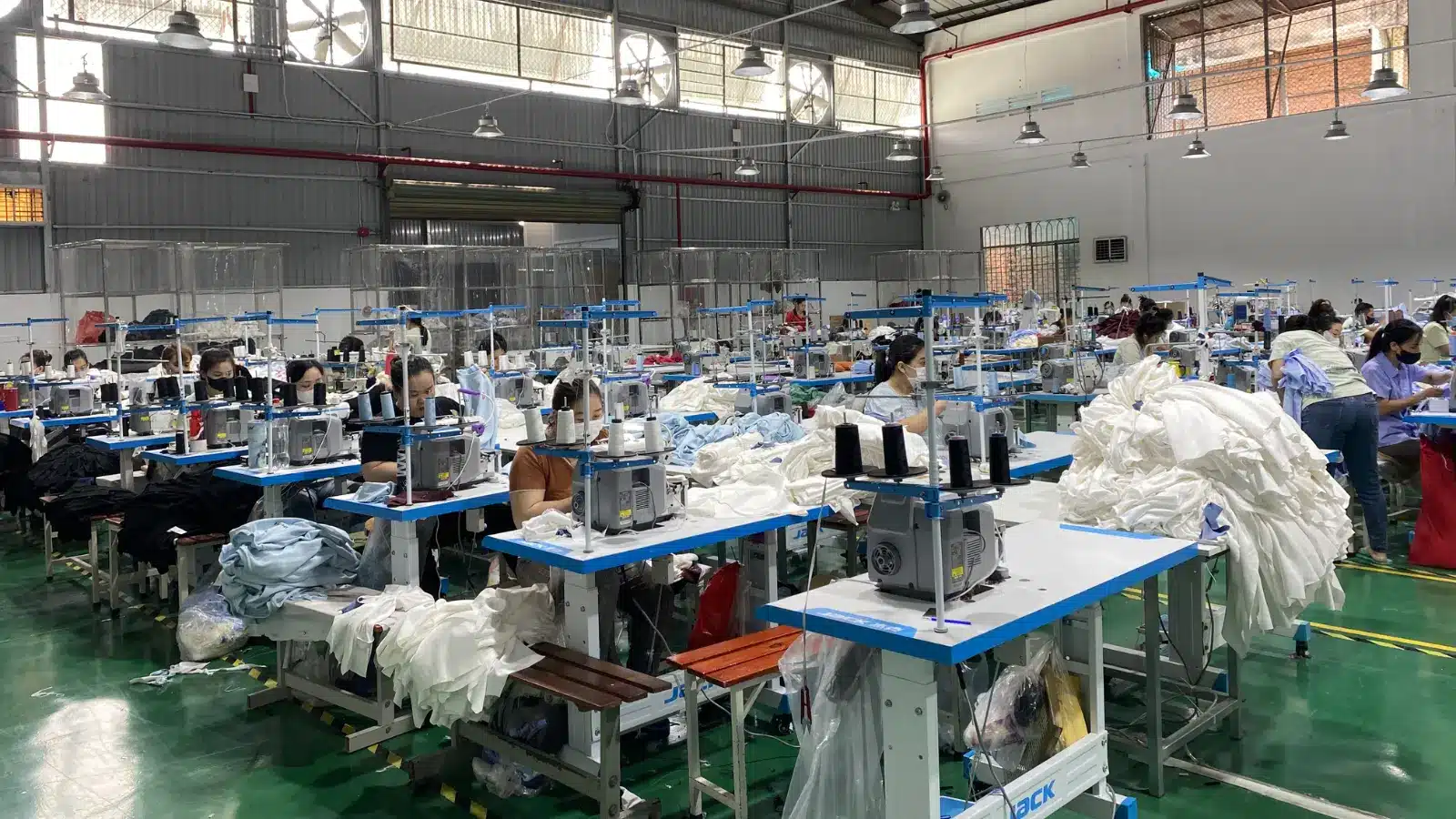
Precision Workmanship: How individual worker focus determines Vietnam vs China garment quality benchmarks.
Excellent garment manufacturing quality means delivering products that match your design tech pack exactly. We define Vietnam vs China clothing manufacturing quality by how well a garment performs after multiple wash cycles. Sourcing agents must understand that Vietnam vs China export garment quality is a multi-layered concept.
Our strict quality standards guide every operator on the factory floor. We control the entire manufacturing process to ensure zero errors. The first layer is the importer perspective, focusing on order uniformity. The second layer is the consumer perspective, focusing on daily comfort and product lifespan. Both layers must work together to maintain apparel manufacturing quality at every level.
How Importers Evaluate Export Garment Quality
For procurement teams, quality is evaluated through operational consistency. A single perfect sample does not guarantee a successful bulk production run. We need to deeply analyze Vietnam vs China export garment quality from the importer’s viewpoint.
Consistency Across the Entire Order
Achieving uniform output is the core challenge when discussing Vietnam vs China garment quality variations. High production consistency means every item in the box has identical measurements and seam quality. If a batch contains sizing deviations, retail distribution becomes impossible. Sourcing managers require high manufacturing consistency to protect their brand presence. We must evaluate Vietnam vs China export garment quality to secure uniform deliveries.
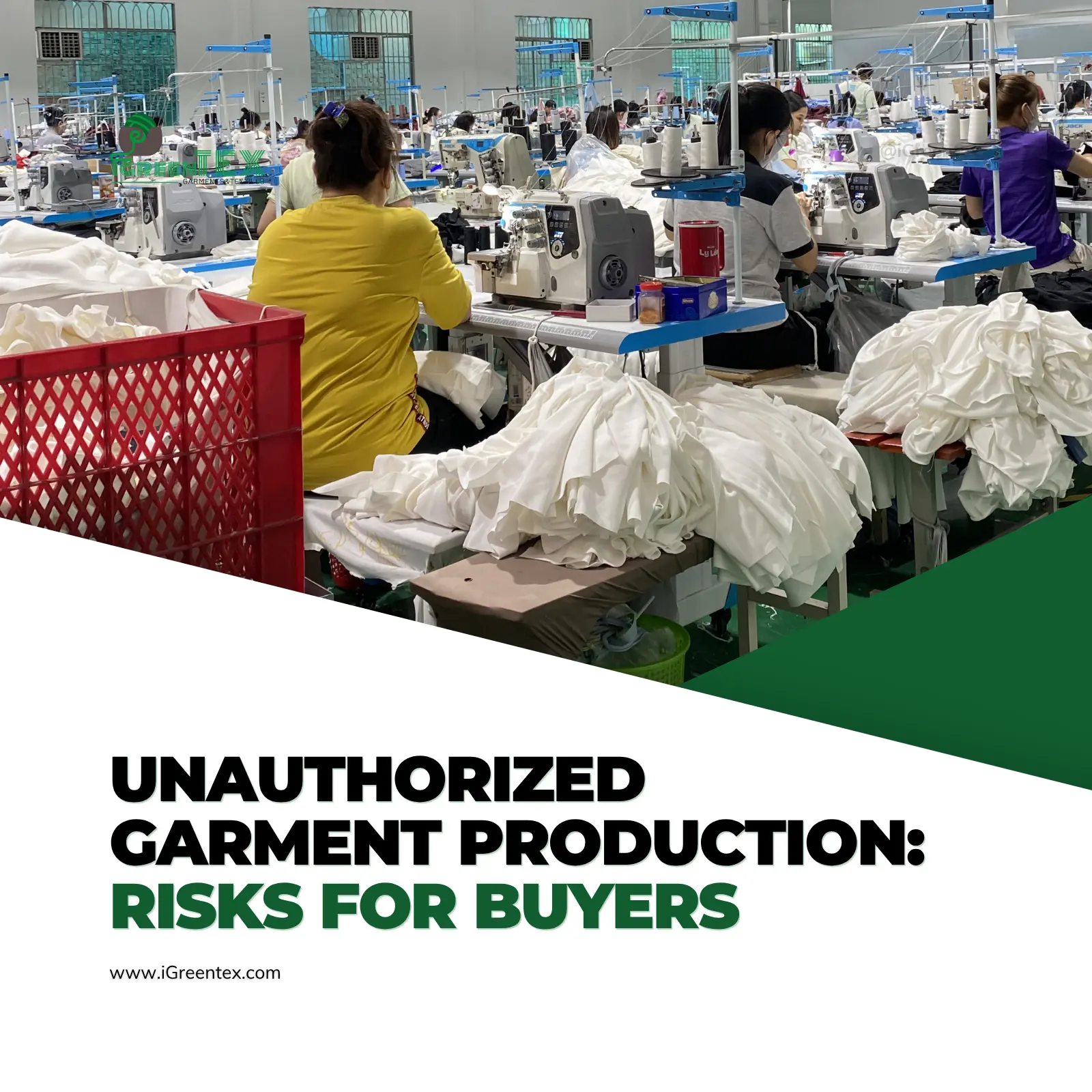
Bulk Consistency: How international buyers audit clothing manufacturing quality across different manufacturing countries.
Defect Rate in Bulk Production
A low defect rate is the primary goal of any professional apparel production facility. During bulk manufacturing, minor stitching issues or sizing deviations can ruin entire batches. Working with an experienced garment manufacturer in Vietnam helps brands systematically reduce defect rates. Rigorous quality inspection processes must be active on every floor.
Fabric Consistency Across Production Runs
Fabric quality must remain identical across different production lots. To evaluate Vietnam vs China export garment quality, we must look at how each country secures raw materials. Color shading differences between production runs can ruin a brand’s retail presentation. Sourcing agents require matching fabric weight, hand feel, and color consistency.
Reliability of Garment Quality Control
Importers need to know if quality control is actually practiced on the factory floor. An effective garment quality control system must be independent of the production team. A reliable clothing factory quality system must remain fully independent from production pressures. Implementing a strict quality control process ensures that defects are corrected before shipment. This step prevents faulty batches from reaching your warehouse.
Long-Term Manufacturing Consistency
A great first order is excellent, but the second and third orders must match that standard. Long-term clothing production quality requires stable factory workforces and updated machinery. Sourcing managers look for factories that maintain their standards over years of partnership. Establishing detailed production quality management protocols secures this consistency.
How End Consumers Evaluate Garment Quality
End consumers do not read technical specifications. They evaluate quality based on how the product looks, feels, and performs. Understanding Vietnam vs China export garment quality from their view helps brands grow.
First Impression and Visual Quality
When a consumer opens a package, they immediately assess the workmanship quality. Clean seams, aligned pockets, and loose-thread-free garments create immediate trust. Consumers notice differences in Vietnam vs China clothing manufacturing quality during their first visual inspection. High finishing quality shows that the manufacturer cares about the final product details. We also must compare Vietnam vs China garment quality to protect visual presentation.
Fit and Size Consistency
A garment must fit exactly as advertised on the size chart. Consumers can instantly detect Vietnam vs China garment quality through structural fitting inconsistencies. They evaluate garment construction quality by how well the clothing drapes on their bodies. Consistent sizing prevents high return rates and builds long-term brand loyalty.
Comfort During Daily Wear
Comfort is determined by fabric softness, breathability, and weight. End consumers determine Vietnam vs China export garment quality by assessing daily wear comfort. We ensure all materials comply with strict apparel quality standards for skin comfort. This standard is a key benchmark for Vietnam vs China apparel quality in everyday fashion.
Durability After Repeated Washing
A durable garment must survive the washing machine without losing its shape. Production samples must undergo testing against global garment testing standards. These tests measure shrinkage, seam twisting, and color bleeding. If a garment shrinks excessively after one wash, consumer trust is lost.
Appearance Retention Over Time
Consumers want their apparel to look new even after months of use. Excellent fabric quality prevents pilling, color fading, and structural stretching. Brands must focus on high-quality yarns that maintain their texture and rich color. This keeps your collection looking premium through extended wear cycles.
Product Satisfaction and Brand Trust
This assessment reveals how Vietnam vs China export garment quality impacts long-term customer loyalty. A high-quality garment builds trust, which directly reflects Vietnam vs China apparel quality in the retail market. Satisfied customers become brand advocates who repeat purchases and recommend your products. Protecting this trust requires unwavering focus on every production run.
Vietnam vs China Export Garment Quality Comparison
This core section provides a detailed breakdown of Vietnam vs China export garment quality across various technical areas. We analyze the manufacturing strengths of both regions. Sourcing agents often debate Vietnam vs China garment quality when placing high-volume orders.
Fabric Quality Comparison
When comparing Vietnam vs China export garment quality in fabric performance, both regions show distinct capabilities. China has an extensive domestic supply chain for synthetics and specialized performance fabrics. Vietnam has advanced rapidly in sourcing organic cotton, recycled polyester, and sustainable blends. Both countries provide exceptional raw material tracking for export brands. Our team understands how Vietnam vs China apparel quality is shaped by fabric sourcing.
Material Breakdown: Assessing textile durability and tensile strength in the vietnam vs china export garment quality comparison.
Stitching Quality and Sewing Workmanship Comparison
Stitching quality is the true test of a factory’s technical skill. We compare the sewing quality of both nations to help sourcing managers choose. Many apparel brand owners find that Vietnam vs China clothing manufacturing quality differs in stitching precision. Both countries show high standards, yet Vietnam vs China garment quality differences appear in localized stitching techniques.
Vietnam is highly regarded for its precision in clean, complex stitching patterns. The reliance on skilled workers ensures that Vietnamese factories excel at precision sewing. Our operators bring deep technical sewing expertise to every seam. We focus on stitching accuracy to prevent thread unraveling under physical tension.
Garment Construction Quality Comparison
Our China vs Vietnam garment manufacturing comparison helps you evaluate structural integrity. China excels in highly automated, high-volume construction processes. Meanwhile, Vietnam offers superior flexibility and careful workmanship for detailed designs. During sample development, we analyze fit and fabric behavior to ensure flawless garment construction.
Size Accuracy and Measurement Consistency Comparison
Sizing standards vary, making size accuracy a major factor in Vietnam vs China apparel quality evaluation. High-speed automated cutters ensure precise panel dimensions across thousands of garments. Our team uses computerized grading to meet global apparel manufacturing standards. We maintain strict production consistency to prevent any sizing discrepancies. This technical precision guarantees uniform sizing across all production batches.
Finishing Quality Comparison
Finishing touchpoints reveal the true level of Vietnam vs China export garment quality. This includes thread trimming, pressing, folding, and final packaging. Vietnam factories are known for their meticulous attention to these final steps. We adhere to strict production quality standards to ensure no loose threads remain on any item.
Bulk Production Consistency Comparison
Maintaining manufacturing consistency over large volumes is a common challenge. China has massive scale, but Vietnam offers excellent control over mid-to-high volume runs. Specialized automated machinery guarantees identical performance for activewear lines. Both regions actively deploy advanced technology to secure long-term uniformity.
If you want to customize your product lines with specialized fabrics and precision construction, explore our comprehensive OEM services. Our facilities support seamless horizontal scaling across key product categories. You can directly browse our targeted manufacturing capabilities to find the perfect fit for your collection:
Premium Basics: Partner with an experienced T-Shirt Manufacturer for high-grade weights.
Smart Casuals: Secure structured alignment by working with a certified Polo Shirt Manufacturer.
Streetwear & Knits: Construct heavy fleece layers with a dedicated Hoodie Manufacturer.
Performance Apparel: Align elasticity and compression through a specialized Sportswear Manufacturer.
Scalable Output: Inside iGreen Tex, a premier facility for clothing manufacturing in Vietnam, offering a monthly capacity of 150,000 units for new international clients.
Quality Systems Behind Export Garment Quality
Quality is never an accident. It is always the result of structured manufacturing quality assurance systems. All our processes are designed to meet strict export compliance standards.
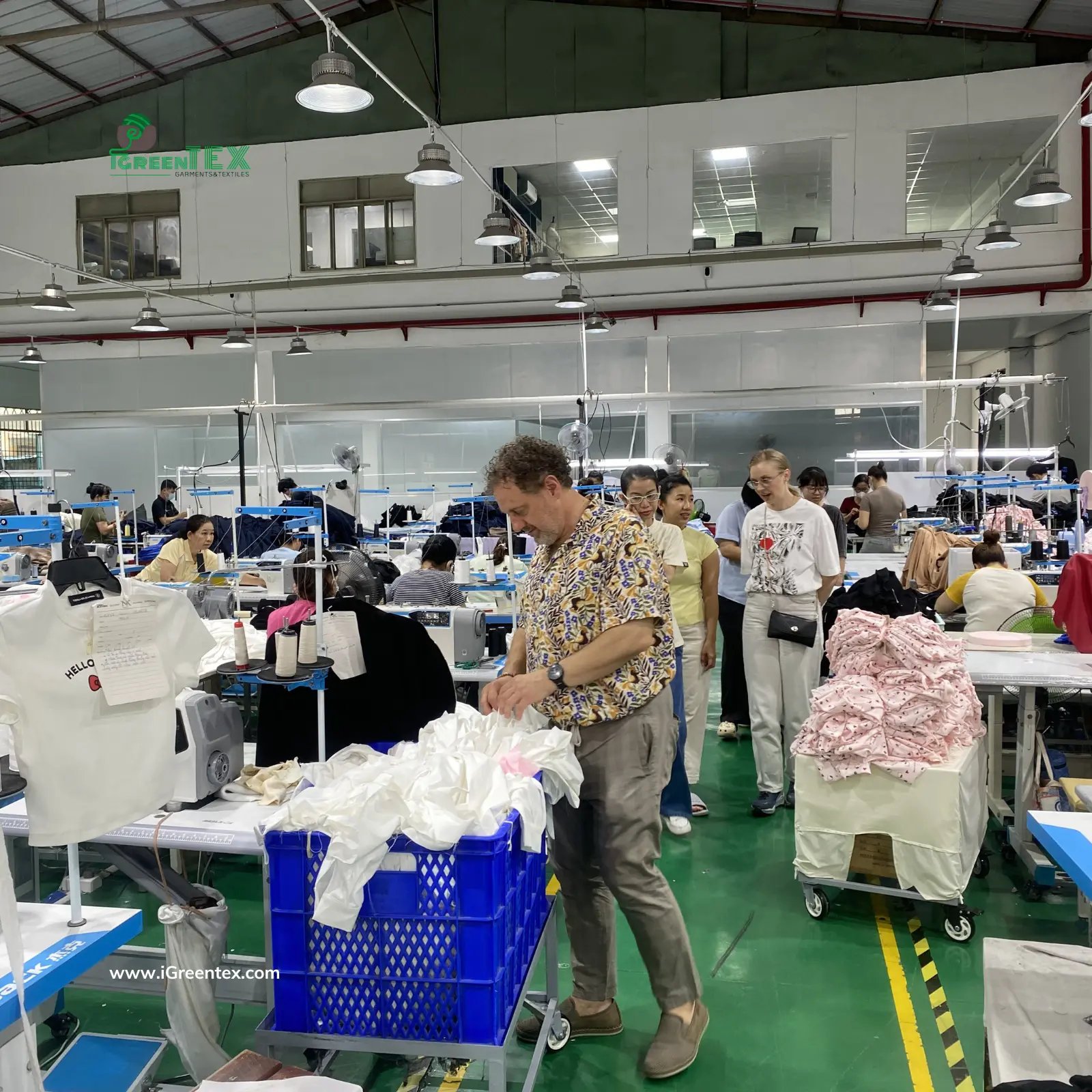
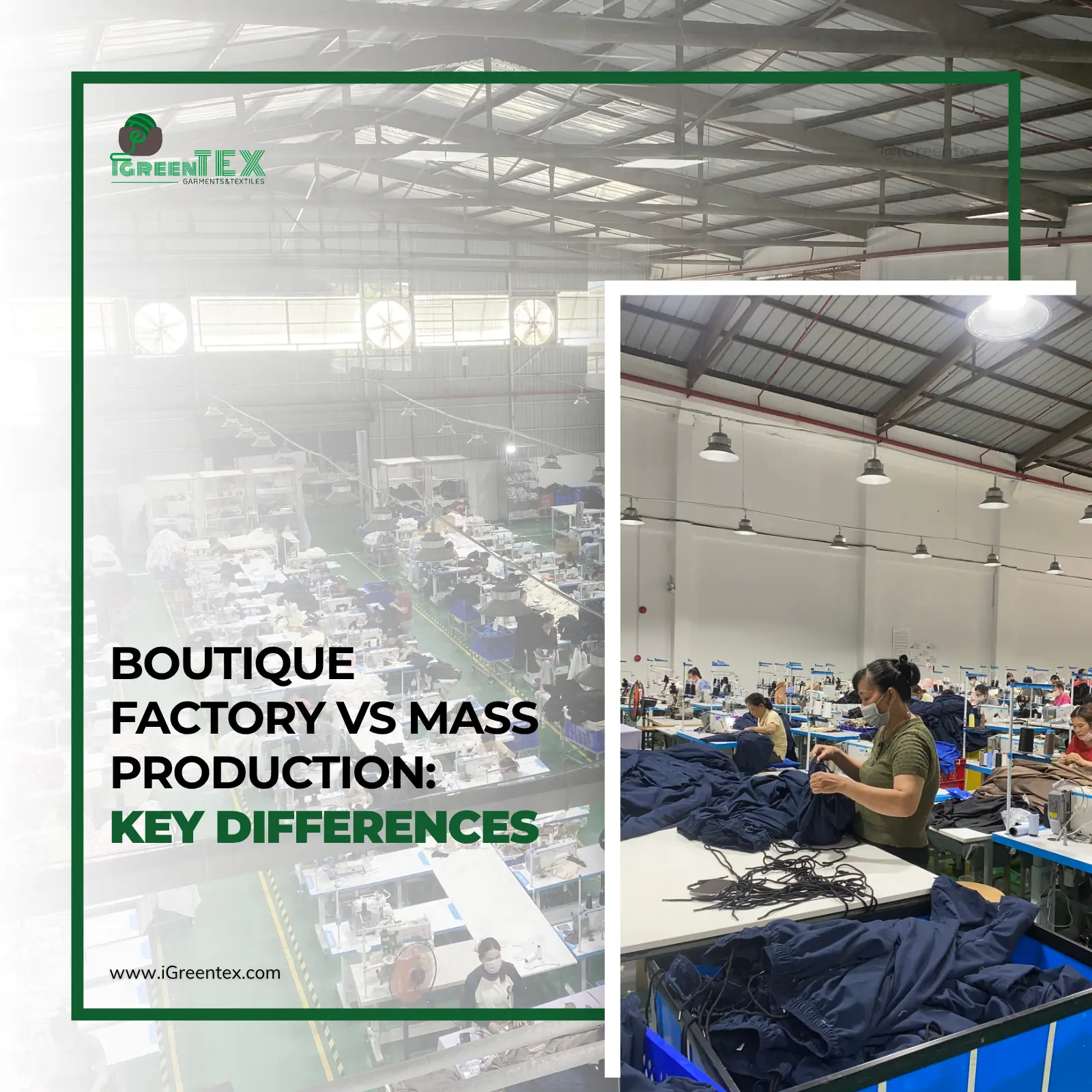
Global Trust: The active garment assembly floor at iGreen Tex, demonstrating high-capacity clothing manufacturing in Vietnam for international brands.
Inline Inspection
An inline inspection is conducted on the sewing floor daily. This step checks garments while they are still being assembled on the line. Our production line runs smoothly because each section has dedicated quality monitors. It allows sewing operators to catch and correct sewing errors immediately. This proactive step prevents mistakes from compounding into bulk defects.
Final Random Inspection
Before container loading, a final random inspection is performed to secure the shipment. This step uses the standard AQL inspection framework to evaluate the entire batch. Quality inspectors check measurements, packaging, and appearance across randomly selected cartons. Only batches that pass are approved for export production.
Manufacturing Quality Assurance
Providing comprehensive manufacturing quality assurance is vital for global brands. This system includes supplier audits, material testing, and process controls. We integrate rigorous factory quality management to monitor every production stage. A rigorous factory audit process ensures that our production lines comply with global standards. This structured assurance system guarantees reliable, market-ready products.
Garment Testing Standards
We test fabric durability according to international garment testing standards. Our laboratory tests focus on shrinkage, color fastness, and tensile strength. We make sure all accessories like zippers and buttons are transit-durable. This thorough testing protects your brand from costly post-purchase product failures. This is essential for maintaining premium export apparel quality.
Quality Inspection Throughout Production
A continuous quality inspection process is integrated into our entire workflow. We inspect materials upon arrival, during cutting, sewing, and final packaging. We map every step of the garment inspection process to ensure transparency. This continuous monitoring ensures that high standards are maintained at all times. It gives brand owners complete peace of mind during the production cycle.
To learn more about our rigorous testing facilities, you can view our factory capabilities portfolio.
Summary Table – Vietnam vs China Export Garment Quality
This matrix summarizes the essential parameters of export apparel quality across both nations. Sourcing teams can use this China vs Vietnam garment manufacturing comparison to evaluate production hubs. It highlights the differences that matter most to international brands.
Which Country Is Better for Export Garment Quality?
Sourcing managers must examine Vietnam vs China apparel quality across all production stages. Choosing the right partner for export apparel production depends on your specific product requirements. This detailed China vs Vietnam garment manufacturing comparison proves that both nations have advanced QC infrastructure. We must evaluate Vietnam vs China clothing manufacturing quality to determine the best fit for your brand.
Importer Perspective
From an importer perspective, China offers incredible speed for massive, highly standardized orders. However, Vietnam provides unmatched flexibility and rigorous attention to detail for premium and mid-to-high volume lines.
Sourcing agents often debate Vietnam vs China garment quality when placing high-volume orders. Vietnam’s structured factories offer highly transparent processes. This transparency makes it easier to track defects and implement custom corrective actions.
End Consumer Perspective
From an end consumer perspective, the choice comes down to comfort and aesthetic detailing. Consumers buying natural fibers, premium loungewear, and custom sportswear appreciate the soft hand feel and meticulous construction typical of Vietnamese production.
The gap in Vietnam vs China apparel quality often narrows during high-volume production. However, Vietnam remains a preferred hub for brands that prioritize refined sewing details and sustainable fabric choices. Our factory capability allows us to produce high-end apparel that stands out.
Overall Export Garment Quality Assessment
In summary, both countries possess highly sophisticated production capabilities. China remains a powerhouse for synthetic-heavy products. Vietnam has established itself as the premier hub for high-quality cottons, complex knits, and sustainable sportswear.
Sourcing teams looking for a China vs Vietnam garment manufacturing comparison will find distinct regional specializations. Our final assessment shows that Vietnam vs China clothing manufacturing quality excels across different product tiers. Ultimately, conducting this quality comparison is not about finding a single winner. To protect your brand reputation, choose the region that matches your product complexity.
Our assessment clarifies how Vietnam vs China apparel quality impacts different market segments. Ultimately, understanding the factors behind Vietnam vs China export garment quality helps brand owners make informed decisions.
If you are planning to expand your global sourcing footprint, exploring other global production hubs is highly beneficial. We recommend reading our strategic analysis of the Best Countries for Clothing Manufacturing in 2026 to discover alternative markets for your brand.
Partner with iGreen Tex Vietnam
Establishing a stable supply chain requires a trusted manufacturing partner. We operate as a premier clothing manufacturer based in Vietnam, serving top brands in the US, UK, and EU markets. Our team combines technical sewing expertise, modern equipment, and strict quality control systems. We focus purely on delivering export-ready garments that perform.
Fair Assessment: Evaluating the pros and cons of competitive clothing manufacturing countries in the current retail market.
Whether you need high-volume basic lines or intricate custom sportswear, our production floor ensures absolute uniformity. We maintain transparency across every phase of production, from fabric knitting to final shipping carton packaging.
Ready to Secure Your Apparel Quality?
Work with a factory that treats quality control as a core science. Get in touch with our team today to discuss your technical specifications, request custom samples, or review our detailed manufacturing protocols.
A comprehensive China vs Vietnam garment manufacturing comparison reveals that our localized QC systems offer superior batch reliability. contact our garment factory in Vietnam to schedule an initial technical consultation with our engineering team.
To provide the best experiences, iGreen Tex Vietnam uses technologies like cookies to store and/or access device information. Consenting to these technologies will allow us to process data such as browsing behavior or unique IDs on this site, helping us optimize and deliver accurate custom apparel manufacturing solutions. Not consenting or withdrawing consent may adversely affect certain features and functions.
Functional
Always active
The technical storage or access is strictly necessary for the legitimate purpose of enabling the use of a specific service explicitly requested by the subscriber or user, or for the sole purpose of carrying out the transmission of a communication over an electronic communications network.
Preferences
The technical storage or access is necessary for the legitimate purpose of storing preferences that are not requested by the subscriber or user.
Statistics
The technical storage or access that is used exclusively for statistical purposes.The technical storage or access that is used exclusively for anonymous statistical purposes. Without a subpoena, voluntary compliance on the part of your Internet Service Provider, or additional records from a third party, information stored or retrieved for this purpose alone cannot usually be used to identify you.
Marketing
The technical storage or access is required to create user profiles to send advertising, or to track the user on a website or across several websites for similar marketing purposes.