What Is a Clothing Tech Pack? Production Specification Workflow

Before starting production, building a detailed clothing tech pack is absolutely vital for success. This document bridges the gap between design and manufacturing. Sourcing managers and apparel brand owners rely on it daily. It ensures accurate communication with any clothing manufacturer in Vietnam.
Clear communication is the foundation of apparel product development. Misunderstandings lead to wasted time and lost money. A professional specification sheet prevents these critical errors. It serves as the master blueprint for your entire product line.
What Is a Tech Pack?
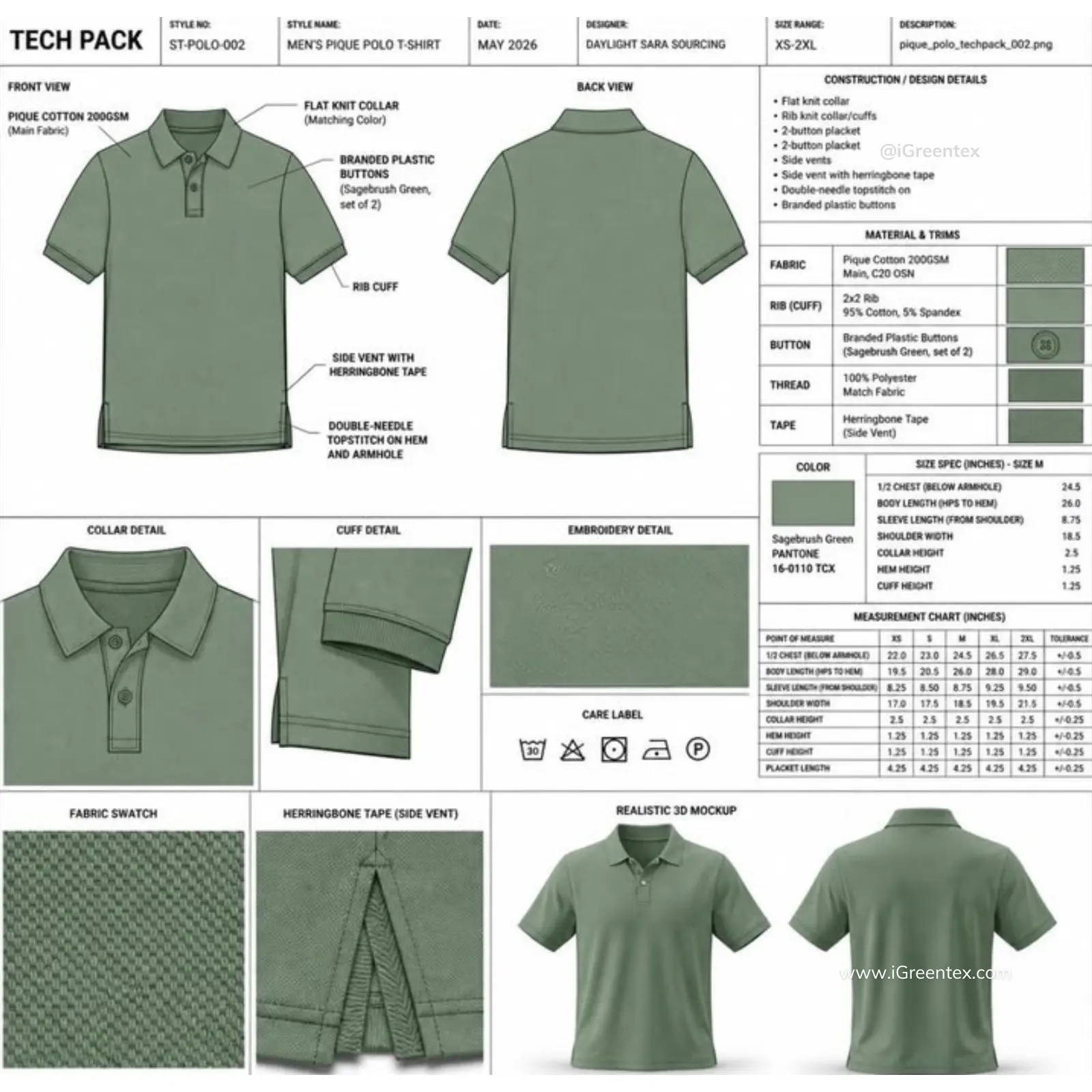
When procurement teams ask what is tech pack, the answer is straightforward. It is a comprehensive blueprint containing every detail about your garment. This document tells the factory exactly how to build your product. It removes all guesswork from the clothing manufacturing process.
Other Names for a Tech Pack
Industry professionals use several different terms for this document. You might hear these names depending on your specific region.
- Technical Package: The formal name for this production document.
- Garment Tech Pack: Used specifically in the apparel industry.
- Apparel Tech Pack: Another variation used by fashion brands.
- Product Specification Sheet: A general term across multiple manufacturing sectors.
- Clothing Specification Sheet: Focuses purely on garments.
- Technical Specification Document: Used heavily by quality control teams.
These terms all refer to the exact same critical production document.
What Industries Use Tech Packs?
Many people assume this document is only for fashion. However, multiple manufacturing sectors rely on this precise technical communication. A tech pack for clothing is just one specific application.
| Industry | Uses Tech Pack? | Common Name |
|---|---|---|
| Clothing | ✓ | Tech Pack |
| Footwear | ✓ | Footwear Tech Pack |
| Bags | ✓ | Bag Specification Sheet |
| Furniture | ✓ | Technical Drawing |
| Electronics | ✓ | Product Specification |
| Jewelry | ✓ | Product Spec Sheet |
| Toys | ✓ | Manufacturing Specification |
| Packaging | ✓ | Packaging Specification |
This table shows that technical documentation is a universal manufacturing language. It is the only way designers and factories can align perfectly.
Why Is a Tech Pack Essential in Clothing Manufacturing?
Apparel brand owners must understand the manufacturer’s objective perspective. Factories process hundreds of unique designs every single month. Without clear instructions, costly mistakes are absolutely inevitable.

Consider this common chain reaction when documentation is missing:
- Without Documentation: The buyer sends only a reference photo.
- Factory Guesses: Pattern makers estimate the dimensions and fit.
- Wrong Quotation: The production cost is calculated based on assumptions.
- Wrong Sample: The physical prototype fails to match the buyer’s vision.
- Production Delay: Endless revisions waste valuable time.
- Higher Cost: Material waste and lost time destroy profit margins.
Proper manufacturing documentation stops this negative cycle immediately. It creates a binding agreement on every physical detail.
Once your specifications are finalized, finding a factory capable of executing them flawlessly is your next critical step.
Read more: Top 7 Clothing Manufacturers in Vietnam
What Should a Clothing Tech Pack Include?
A comprehensive clothing tech pack requires specific, organized sections. Missing information forces the factory to make independent assumptions. Each section below plays a vital role in garment development.
Cover Page
This is the summary face of your entire document. It provides immediate context for the factory management team.
- Brand: Your official company name.
- Style Name: The marketing name for the product.
- Style Number: Your unique internal tracking code.
- Revision Date: Crucial for version control during updates.
- Season: Identifies the target launch period.
- Designer: The contact person for technical questions.
Without a cover page, factories cannot organize your files efficiently.
Technical Sketch
Technical drawings replace subjective photographs with objective geometry. They show the garment precisely how a pattern maker sees it.
- Front View: Shows the main structure and visual design.
- Back View: Details the rear construction and seams.
- Side View: Necessary for complex fits or asymmetrical designs.
- Zoom Detail: Highlights intricate stitching or hidden features.
- AI Image: Generative AI can assist, but lines must be precise.
If sketches lack detail, factories will construct seams incorrectly.
Measurements (POM)
POM stands for Point of Measurement. This is how you dictate the exact size of the garment. You must provide a specific measurement chart.
- Chest Width: Measured across the front, under the arms.
- Body Length: From the high point shoulder to the hem.
- Sleeve Length: From the shoulder seam to the cuff.
- Shoulder Width: Across the back from seam to seam.
Missing POM data guarantees your garment will not fit correctly.
Measurement Tolerance
No factory can cut and sew fabric with microscopic perfection. Tolerance defines the acceptable margin of physical error.
- ±0.5cm: Very strict tolerance for small details like collars.
- ±1cm: Standard tolerance for major body measurements.
If you skip tolerance, you cannot legally reject slightly varied garments.
Size Specification
You must define the exact grading for every size offered. This expands your base measurements into a full grid.
- XS, S, M, L, XL: Standard sizing breaks.
- Grading Rules: The mathematical difference between each size step.
Failing to provide this forces the factory to use generic grading.
Bill of Materials (BOM)
The BOM is the heart of production costing. It lists every single physical component required to make one unit.
- Fabric: The primary textile material.
- Rib: Material used for cuffs and necklines.
- Thread: Stitching material, including color and thickness.
- Zipper: Specific length, material, and tooth size.
- Button: Size, material, and exact color.
- Label: Woven or printed branding tags.
- Hangtag: Retail display cards.
- Elastic: Width and tension specifications.
- Packaging: Materials used for final presentation.
- Carton: Shipping box specifications.
- Polybag: Individual plastic wrapping.
An incomplete BOM leads directly to hidden costs and material shortages.
Fabric Information
Fabric selection dictates the entire feel and performance of the product. You must define the technical parameters clearly.
- Composition: E.g., 100% Cotton or 80% Cotton / 20% Polyester.
- Weight (GSM): Grams per Square Meter defines fabric thickness.
- Width: The total usable width of the fabric roll.
- Shrinkage: Acceptable percentage of size loss after washing.
- Finish: Special treatments like silicone wash or brushing.
Without this, you risk receiving garments made from unstable materials.
Color Specification
Colors on a computer screen never match physical reality exactly. You must use universal color systems for accurate dyeing.
- Pantone: The global standard for textile color matching.
- CMYK: Used primarily for paper printing and packaging.
- RGB: Only for digital screens; never use for production.
- Lab: Advanced colorimetric data for exact dyeing.
- Color Code: Your internal naming convention.
Using screen colors instead of Pantone guarantees massive color variations.
Print Details
Apparel printing requires high technical precision to execute properly. Each method yields a completely different visual result.
- Screen Printing: Best for large, solid color graphics.
- DTG: Direct to Garment for complex, multi-color images.
- DTF: Direct to Film for versatile fabric applications.
- Embroidery: Thread stitching for premium logos.
- Silicone: Raised, rubber-like printing.
- Puff: Expanding ink for a 3D texture effect.
- Heat Transfer: Applied via heat press.
If you do not specify the method, the factory will guess.
Artwork Placement
Having the artwork file is only half the battle. The factory must know exactly where to place it.
- Distance: E.g., 5cm down from the front collar.
- Location: Center chest, left pocket, or full back.
- Size Logo: Exact width and height of the printed area.
- Center Line: The vertical axis for symmetrical placement.
Vague placement instructions result in crooked or off-center graphics.
Label Information
Compliance and branding require strict label placement. Missing labels can cause legal issues during customs clearance.
- Main Label: Brand identity, usually at the back neck.
- Size Label: Indicates the garment size clearly.
- Care Label: Washing instructions and material composition.
- Country of Origin: Legally required for international trade.
- RN Number: Registered Identification Number for US businesses.
Incorrect care labels can ruin your product’s reputation after washing.
Packaging Requirement
How the product leaves the factory determines how it arrives. Detailed packaging instructions protect your inventory during transit.
- Polybag: Thickness and warning text requirements.
- Master Carton: Corrugated box strength and dimensions.
- Barcode: Scannable tags for inventory management.
- Carton Marking: Essential details printed on the outer box.
- Shipping Mark: Destination and routing information.
Poor packaging leads to damaged goods and warehouse scanning failures.
Special Construction Notes
Every garment requires specific sewing techniques to ensure durability. You must define how the fabric pieces join together.
- Double Stitch: Adds strength to critical seams.
- Bartack: Reinforces high-stress areas like pocket corners.
- Reinforcement: Extra fabric for structural integrity.
- Needle Count: Defines the needle type for the fabric.
- SPI: Stitches Per Inch controls seam density and strength.
Ignoring construction notes results in garments that tear easily.
Revision History
Product development is an iterative process requiring constant updates. You must track every single change made to the document.
- Version: Tracks the current iteration (e.g., V1, V2).
- Date: When the document was last updated.
- Updated By: Who made the specific changes.
- Reason: Why the change was implemented.
Without a history log, factories often produce the wrong version.
For apparel brands seeking faster sampling turnarounds and direct access to major international shipping ports, Ho Chi Minh City is Vietnam’s premier production hub.
Read more: Top 5 Ho Chi Minh City Clothing Manufacturers
How Manufacturers Use Your Tech Pack
A well-crafted clothing tech pack moves through multiple factory departments. It is not just for the sewing floor. Here is the operational workflow:
- Sales: Reviews the document to assess overall project feasibility.
- Merchandising: Sources the specific materials listed in the BOM.
- Pattern Maker: Drafts the physical templates based on POM data.
- Sampling: Cuts and sews the first physical prototype.
- Costing: Calculates exact material consumption and labor time.
- Production: Follows the construction notes for bulk manufacturing.
- Quality Inspection: Uses tolerances to approve or reject units.
- Packing: Follows your polybag and carton instructions exactly.
- Shipping: Applies correct shipping marks for export logistics.
Every single department relies on this document to function efficiently.
Why Manufacturers Need a Tech Pack Before Giving a Quote
Many brand owners ask for pricing based on a photograph. However, a reliable tech pack for manufacturers is strictly required for accuracy.
If you do not provide detailed technical specifications, risk increases exponentially. The factory must guess the fabric yield and sewing complexity. This leads to inaccurate pricing. They might quote too high to cover unknown risks. Alternatively, they quote low but secretly substitute cheaper materials later.
Furthermore, detailed documents clarify the production timeline. They also help determine the appropriate MOQ (Minimum Order Quantity). Without data, factory quotation processes are fundamentally broken.
Benefits of Having a Professional Tech Pack
Investing time in this document yields massive operational returns. It protects every stakeholder involved in the apparel production cycle.
- For the Brand: Protects intellectual property and guarantees product consistency.
- For the Factory: Provides clear instructions, reducing reworks and material waste.
- For Quality Control: Establishes objective standards for accepting or rejecting goods.
- For Supply Chain: Streamlines material sourcing and accurate delivery forecasting.
It removes emotion and ambiguity from the entire business relationship.
How to Create a Clothing Tech Pack
You have two primary paths to generate this critical documentation. The choice depends on your budget and technical expertise.
Method 1: Hire a Professional Tech Pack Designer
Technical designers specialize in creating production-ready documentation. They understand factory requirements deeply.
- Pros: High accuracy, industry-standard formatting, saves you significant time.
- Cons: Requires upfront financial investment.
- Cost: Typically ranges from $50 to $300 per style.
- When to use: When you lack technical apparel engineering knowledge.
Method 2: Create It Yourself
Building a tech pack for clothing yourself is entirely possible. It requires dedication, precision, and a structured workflow approach. Modern tools make this process more accessible than ever before.
Step-by-Step Process to Creating Your Own Tech Pack
If you choose the DIY route, follow this logical sequence. Do not skip any steps in this product development workflow.
Step 1: Decide Your Product
Start with a clear, singular vision. Define the exact garment type, target demographic, and intended price point.
Step 2: Draw Technical Sketch
Create flat, 2D black-and-white vector illustrations. You can use generative AI to assist this process.
- AI Prompt Example: “Flat lay technical sketch of a men’s hoodie, front and back view, vector style, black outline only, no shadows.”
- Crucial Note: AI often hallucinates seam lines. Always review and manually correct AI-generated sketches for technical accuracy.
Step 3: Determine Every Measurement
List all necessary Points of Measurement (POM). Think about how the garment should drape on the body. Include chest width, body length, shoulder width, and sleeve openings.
Step 4: Measure Existing Garment
Find a garment that fits exactly how you want. Lay it completely flat on a table. Do not measure garments while they are hanging. Record the numbers meticulously to build your baseline sizing.
Step 5: Build Measurement Table
Organize your POM data into a clean, easy-to-read spreadsheet. Create columns for each size and define the allowed tolerance.
Step 6: Choose Fabric
Select the primary textile based on performance needs. Consider breathability, stretch, and durability. Ensure you clearly state the fiber composition.
Step 7: Specify GSM
Define the fabric weight. For example, a heavy winter hoodie might require 400 GSM fleece. A lightweight summer t-shirt needs 160 GSM cotton.
Step 8: Select Trim
List every piece of hardware required. Specify the exact zipper brand, button size, and thread thickness. These small details drastically impact the final product quality.
Step 9: Define Color
Assign an official Pantone® code to every fabric and trim. Never rely on descriptive words like “navy blue” or “dark red.”
Step 10: Create Artwork File
Provide high-resolution digital files for all prints and embroideries. Use vector formats like AI, EPS, or SVG whenever possible. High-quality PDF files are also widely accepted by printing departments.
Step 11: Add Print Placement
Draw physical guidelines on your flat sketch. Indicate the exact distance in centimeters from a fixed point. For example, “Logo centered 10cm below the front neckline.”
Step 12: Add Sewing Notes
Specify the garment construction techniques. Note where topstitching is required. Indicate if seams should be overlocked or bound with tape.
Step 13: Packaging Instruction
Detail how the factory must fold and bag the final product. Specify barcode placements and master carton dimensional requirements.
Step 14: Version Control
Date your document clearly. If you update the fabric or a measurement, create a new version number. Record the specific reason for the change.
Step 15: Export PDF
Always lock your final document into a PDF format. This ensures fonts, images, and formatting remain identical on any computer.
Symbols and Special Characters Used in Tech Packs
Technical specification sheets use universal shorthand to save space. You must understand these common symbols to communicate effectively.
- Ø: Diameter (used for buttons and eyelets).
- ±: Plus or minus (used for defining measurement tolerance).
- %: Percentage (used in fabric composition blends).
- ” or ‘: Inches or feet (though metric is globally preferred).
- mm / cm: Millimeters and centimeters.
- GSM: Grams per Square Meter.
- SPI: Stitches Per Inch.
- POM: Point of Measurement.
- BOM: Bill of Materials.
- CF / CB: Center Front / Center Back.
- HPS: High Point Shoulder.
- SS: Side Seam.
- DNP: Do Not Press.
- TBD: To Be Determined.
- NTS: Not To Scale.
- Pantone®: The standard color matching system.
Using these symbols correctly proves your industry competence to factories.
Common Tech Pack Mistakes
Procurement managers often encounter costly delays due to poor documentation. Avoid these frequent and expensive errors.
- Missing POM Data: Prevents accurate pattern making.
- No Tolerance Specified: Leads to endless quality control disputes.
- Missing Artwork Files: Halts the printing and embroidery process.
- No Pantone Codes: Results in unacceptable color variations.
- Incomplete Fabric Details: Causes unexpected shrinkage or poor draping.
- No Revision Tracking: Creates confusion over which version is final.
Reviewing your document for these errors saves weeks of wasted time.
Can You Manufacture Clothing Without a Tech Pack?
Technically, some factories will attempt production based on a reference sample. However, this is highly discouraged for serious apparel brands.
Working without proper documentation is slow and extremely expensive. Prototypes will frequently fail inspection. You will waste capital on shipping incorrect samples back and forth. Precision is impossible without a standardized manufacturing agreement. To find the best clothing manufacturers, you must present yourself as a professional buyer.
Free Tech Pack Checklist Before Contacting a Manufacturer
Before you verify garment suppliers in Vietnam, audit your files. Use this exact checklist to ensure your documentation is production-ready.
- [ ] Detailed technical flat sketches provided.
- [ ] Comprehensive Points of Measurement (POM) listed.
- [ ] Specific fabric composition and GSM defined.
- [ ] Complete Bill of Materials (BOM) finalized.
- [ ] Print and embroidery techniques specified.
- [ ] Packaging and labeling requirements detailed.
- [ ] Label placement instructions included.
- [ ] Exact Pantone color codes assigned.
- [ ] High-resolution artwork files attached.
- [ ] Full size specification grading chart built.
- [ ] Measurement tolerances clearly defined.
- [ ] Special construction and sewing notes added.
FAQ
What is a Tech Pack?
When beginners ask what is tech pack, they are asking for the blueprint. It is a comprehensive document detailing every specification of a garment. It ensures the factory produces exactly what the designer envisioned.
What should a Tech Pack include?
It must include technical sketches, POM, BOM, fabric details, and grading. It also requires color specifications, artwork files, and packaging instructions. Every physical detail of the product must be documented.
How many pages should a Tech Pack have?
There is no strict rule for page count. Simple t-shirts might require only three pages. Complex jackets could easily exceed ten pages of detailed instructions.
Can I make a Tech Pack in Excel?
Yes, many professional sourcing managers use Excel or Google Sheets. Spreadsheets are excellent for organizing BOM data and measurement charts efficiently.
Can I use Canva for a Tech Pack?
Canva is useful for basic visual layouts and cover pages. However, it lacks the technical precision required for accurate flat sketches.
Can ChatGPT create a Tech Pack?
AI can generate text structures and basic formatting outlines. However, it cannot replace the critical human logic needed for exact measurements.
Can AI generate a Tech Pack?
AI tools can draft initial sketches and suggest fabric properties. Yet, technical experts must strictly verify all AI outputs before production.
How much does a Tech Pack cost?
Hiring a freelance technical designer generally costs between $50 and $300. Complex outerwear garments will sit at the higher end of that scale.
Can manufacturers create a Tech Pack?
Some factories offer this service, especially under ODM agreements. When considering ODM vs OEM, remember OEM requires you to provide the documentation.
Can I manufacture clothing without a Tech Pack?
Yes, but the risks of failure and financial loss are massive. Reliable production requires strict technical guidelines.
What file format should a Tech Pack be?
Always export your final documentation as a locked PDF file. This prevents formatting errors when the factory opens the document.
Is a Tech Pack the same as a pattern?
No. The specification document provides the data. The pattern maker uses that data to cut the physical fabric templates.
Is a Tech Pack legally required?
It is not mandated by international law. However, it serves as a legally binding contract regarding quality expectations.
How detailed should a Tech Pack be?
It should be detailed enough that factory workers need zero verbal instructions. Every question should be answered within the document itself.
Who creates a Tech Pack?
Typically, a technical fashion designer or product developer builds the file. Sourcing teams then distribute it to potential manufacturing partners.
What is BOM in a Tech Pack?
The Bill of Materials lists every physical component needed for production. It includes exact quantities for fabric, thread, buttons, and zippers.
What is POM in a Tech Pack?
Point of Measurement indicates exactly where and how to measure the garment. This guarantees consistency across different sizes and production runs.
What does tolerance mean?
Tolerance is the acceptable margin of error in physical garment measurements. It acknowledges that microscopic perfection is impossible in sewing.
Can one Tech Pack be used for multiple factories?
Yes, a professional specification sheet is universally understood. You can send the exact same document to different global suppliers.
How often should a Tech Pack be updated?
You must update it every time a sample is revised. Strict version control is crucial for maintaining production accuracy.
iGreen Tex Vietnam understands the pressures of international sourcing. We know that working with overseas partners requires immense trust. Our systems are built to ensure your total peace of mind. We protect your intellectual property with strict NDAs and secure data handling. Even when managing production remotely, our transparent processes keep you fully informed.
We utilize your specifications to execute rigorous, multi-stage quality control checks. From fabric sourcing to final container loading, we operate as your strategic partner. Your success in remote production depends entirely on the accuracy of your clothing tech pack.