NDA for Clothing Manufacturers: Key Confidentiality Clauses Every Clothing Brand Should Understand
A clothing brand works hard to develop a new design. Eventually, they need a garment manufacturer to produce it. To receive an accurate quotation or start development, the brand must share sensitive data. They share designs, measurements, materials, samples, and production specifications.
But what happens if that information is shared with another party without permission?
This exact risk is why confidentiality is a critical consideration. Working with a factory requires trust, but trust should be backed by a clear agreement. You must control how your confidential information is handled. A simple handshake is not enough to secure your valuable product details.
This article explores what an NDA for clothing manufacturers is and why it matters. We will break down exactly how you can protect your technical specifications and clothing design protection strategies.
Why Should Clothing Brands Protect Their Information Before Manufacturing?
Understanding the risk is the first step in protecting your business. Sourcing managers and brand owners must realize that information is an asset.
What information does a clothing brand typically share with a manufacturer?
To produce garments accurately, apparel brand owners must share comprehensive details. You cannot manufacture a product without giving the factory the exact recipe.
Typically, you will share:
- Clothing designs and sketches
- Technical drawings
- Tech packs
- Measurements and grading rules
- Patterns and templates
- Material specifications
- Construction details
- Samples and prototypes
- Production requirements
- Pricing or commercial targets
- Brand development plans
Why can this information be valuable?
This information is valuable because it holds the technical blueprint of your product. It is not just about a pretty design.
Your product files help another party understand exactly how the product is constructed. They reveal the specific materials used and the exact technical specifications required. They show how the product was developed from concept to reality. Furthermore, these files expose the specific production requirements of your brand.
If this data falls into the wrong hands, someone else skips the costly development phase.
What could happen if confidential information is disclosed?
Failing to secure your data can lead to severe business consequences. Procurement teams must anticipate these risks before sending any files.
Potential consequences include:
- Unauthorized sharing of your tech packs.
- Unauthorized use of your unique patterns.
- Direct design copying by unverified factories.
- Information reaching your direct competitors.
- Use of your product specifications for another client’s project.
- Total loss of control over sensitive product information.
This is exactly why you need an NDA for clothing manufacturers. It sets legal boundaries before any sensitive files change hands.
Read more: How to Find the Best Clothing Manufacturers
How Can a Clothing Brand Protect Its Designs When Working With a Manufacturer?
Apparel brands need a proactive strategy. You must know how to protect fashion designs when manufacturing overseas or locally.
Protecting a design is more than keeping the final artwork private
Design protection is not just about hiding a logo or a print. A garment design NDA must cover multiple layers of technical information.
Protection involves your original design concepts and early technical drawings. It must secure your patterns, measurements, and specific construction details. Even your material selection and physical prototypes require strict confidentiality. The goal is to protect the entire system that makes your garment unique.
Why should brands think about protection before sending designs?
The logic is simple. You need a manufacturer to scale your business. Therefore, you need to share information. Because that information has immense commercial value, it requires strictly controlled access.
Once an email is sent, you cannot unsend it. Thinking about an NDA for apparel design after a leak occurs is too late.
What should a brand do before sharing sensitive design information?
Before sending files, sourcing managers should take practical steps.
First, clearly identify what specific information is confidential. Control exactly who receives this information. Use an appropriate confidentiality agreement before starting discussions. Keep detailed records of exactly what was shared and when. Limit unnecessary access to your core files. Finally, use written manufacturing agreements where appropriate.
These steps build a secure foundation for production.
How Does an NDA Help Protect Clothing and Apparel Designs?
A legal document helps formalize the trust between you and your factory.
What is an NDA?
NDA stands for Non-Disclosure Agreement. It is a legally binding contract. Sometimes, it is simply called a confidentiality agreement. It establishes a confidential relationship between the person sharing information and the person receiving it.
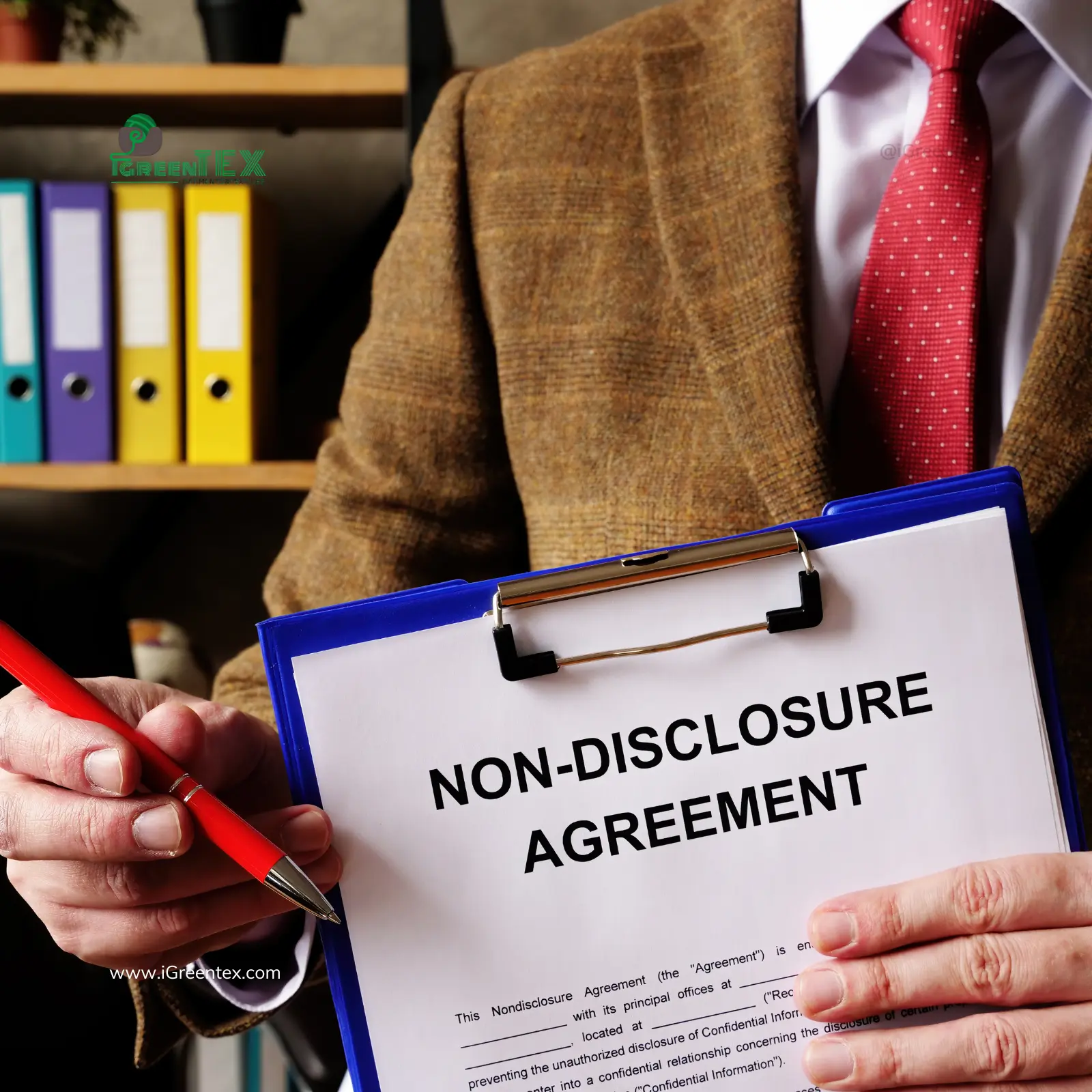
What does an NDA actually do?
An NDA for clothing design establishes clear, written rules.
It defines exactly what information is considered confidential. It dictates who is allowed to access this information. It outlines exactly how the information can be used. It specifies when, if ever, it can be disclosed to others. Finally, it details what happens when the agreement is breached.
What does an NDA not automatically do?
This is a critical point to understand. An NDA for clothing manufacturers does not automatically prevent all copying.
An NDA creates contractual confidentiality obligations. However, it is only one part of a broader intellectual property protection strategy. It does not replace a patent, a trademark, or a copyright. It is a deterrent and a legal tool for recourse, not a magical shield.
Read more: How to Verify Garment Factory Vietnam: Avoid Scams Fast
What Should a Clothing Manufacturer NDA Include?
A strong NDA for apparel design must be specific to the garment industry. Generic templates often fail to protect technical production details.
1. Definition of Confidential Information
What is it? This clause defines exactly what information is protected. It should specifically list designs, tech packs, patterns, samples, and technical specifications. It also includes production data and product development information.
Why it matters: If you do not define it clearly, parties will argue over what was actually secret.
What risk does it address: It prevents the factory from claiming they did not know a specific file was confidential.
2. Permitted Use of Confidential Information
What is it? This states exactly why the information is being shared. For example, it is shared solely for manufacturing, sampling, quotation, or product development.
Why it matters: The manufacturer must understand the limits. They cannot use your tech pack to produce goods for someone else.
What risk does it address: It stops unauthorized secondary use of your data in OEM clothing manufacturing.
3. Restrictions on Disclosure
What is it? This sets strict rules against sharing information with unauthorized parties. It must specifically mention employees, contractors, subcontractors, and third parties.
Why it matters: Information is rarely leaked by the factory owner. It is usually leaked by lower-level staff or outside vendors.
What risk does it address: It mitigates the risk of widespread unauthorized sharing.
4. Access to Designs and Technical Specifications
What is it? This clause dictates who gets to see the files. It covers designs, tech packs, patterns, measurements, and technical specifications.
Why it matters: It clarifies that technical data is highly restricted. It is not just about protecting the visual artwork.
What risk does it address: It ensures only essential personnel see the technical blueprints.
5. Protection of Tech Packs, Samples and Prototypes
What is it? This section highlights physical and technical assets.
Why it matters: A tech pack is highly sensitive. It contains measurements, construction details, materials, trims, labeling, and finishing requirements. Physical samples also reveal exactly how a product is made.
What risk does it address: It prevents factories from reverse-engineering your physical prototypes.
6. Duration of Confidentiality
What is it? An NDA for clothing manufacturers must state how long the obligations last.
Why it matters: Protection should not end just because a production run finishes. Trade secrets often require indefinite protection.
What risk does it address: It stops factories from using your designs a year after you stop working together.
7. Return or Destruction of Confidential Information
What is it? This dictates what happens when the project ends. It covers files, samples, prototypes, documents, and technical information.
Why it matters: Ending a partnership does not mean your files magically disappear. You must demand their return or certified destruction.
What risk does it address: It prevents old factories from holding onto your blueprints permanently.
8. Subcontractor and Third-Party Access
What is it? This explains how subcontractors are handled.
Why it matters: Garment production involves many steps. Sometimes, factories outsource printing or embroidery. You need to know exactly who has your data.
What risk does it address: It lowers the risk of unauthorized disclosure down the supply chain.
9. Breach and Remedies
What is it? This details what happens if the agreement is broken.
Why it matters: A garment design NDA cannot just say “keep this secret.” It must have teeth. It must outline financial or legal consequences.
What risk does it address: It provides a clear legal path if your data is stolen.
10. Governing Law and Dispute Resolution
What is it? This identifies which country’s laws apply if a dispute arises.
Why it matters: This is vital when the brand and the manufacturer are in different countries. You must agree on where a legal fight would take place.
What risk does it address: It prevents confusing legal battles over jurisdiction.
Can an NDA Prevent a Clothing Manufacturer From Copying a Brand’s Design?
Many apparel brand owners wonder if a document truly stops theft. You must understand the reality of legal contracts.

What an NDA can help establish
An NDA for clothing manufacturers is highly effective at establishing ground rules. It clearly sets confidentiality obligations. It creates firm restrictions on use and disclosure. Furthermore, it outlines the agreed consequences for a breach. This makes a reliable factory respect your boundaries.
What an NDA cannot guarantee
Signing a document does not create an impenetrable wall. Signing an NDA does not guarantee that confidential information can never be misused. Bad actors exist in every industry. If a factory intends to steal, a piece of paper might not physically stop them in the moment.
Why NDA should be part of a broader protection strategy
This is why an NDA for clothing design is just step one. It leads to general confidentiality. This should be backed by formal intellectual property protection. Later, this connects to a comprehensive manufacturing agreement. Finally, you must use practical access control. Do not send all files at once.
Read more: What Is a Tech Pack? Clothing Tech Pack Guide
Should a Clothing Brand Sign an NDA Before Sending a Tech Pack?
The short answer is yes. Sourcing managers should always protect their most valuable assets early in the process.
Why is a tech pack sensitive?
A tech pack is the ultimate instruction manual. It contains highly sensitive design details and precise measurements. It lists specific materials and construction specifications. It also provides detailed production instructions. It is everything a competitor needs to replicate your product flawlessly.
What should a brand consider before sharing a tech pack?
Before hitting send, ask yourself key questions.
Who will actually receive this file? Why do they need it right now? What specific information inside is confidential? How will they use this data? Will any third parties, like dye houses, have access to it?
If you cannot answer these confidently, you need an NDA for clothing manufacturers first.
Should every file be treated the same way?
Not necessarily. You do not always need to send the full tech pack for a basic quote. You can share low-resolution sketches or general material needs first. Evaluate the sensitivity and purpose of the information. Only share what is absolutely necessary for that specific stage of discussion.
Once your confidentiality framework is in place, the next step is sharing just enough structured information to receive clear, detailed pricing. Knowing how to present your product requirements safely ensures you get reliable cost estimates without unnecessarily exposing your entire tech pack too early.
Ready to request pricing safely?
Read more: How to Prepare a Clothing RFQ That Gets Accurate Quotes
What Happens If a Manufacturer Leaks or Misuses a Brand’s Design?
Even with a strong garment design NDA, leaks can happen. Knowing how to react quickly is vital for brand survival.
Step 1: Document the suspected disclosure
Do not panic; gather evidence. You must preserve relevant emails and messages. Save all file-sharing records and access logs. Document the exact dates of the suspected leak. Retain original versions of your designs. Keep strict evidence of what was originally shared with the factory.
You must prove what was shared, when, with whom, and under what agreement.
Step 2: Review the NDA and relevant agreements
Pull up your signed documents immediately. Check the definition of confidential information to ensure the leaked data is covered. Review the permitted use and disclosure restrictions. Check the breach provisions and outlined remedies. Review your overarching manufacturing agreement. Finally, check the governing law to see your jurisdiction.
Step 3: Determine whether the information was actually used or disclosed
You must accurately classify the event. Was it an accidental disclosure by a careless employee? Was it deliberate unauthorized disclosure? Is it unauthorized use of your pattern for another brand? Or is it suspected copying?
Not every similarity proves a breach. You need clear evidence of misused data.
Step 4: Seek appropriate legal advice
Do not try to be a lawyer. If you suspect a serious breach, consult qualified legal counsel. Ensure they have experience with apparel manufacturing and international jurisdictions. They will help you navigate the complex process of enforcing an NDA for apparel design across borders.
Step 5: Review the broader protection process
After addressing the immediate threat, look inward. Why did this happen?
Who had access to the files? Was your access policy too broad? Were unchecked subcontractors involved? Was the information clearly marked as confidential? Were your files properly controlled?
The goal is to build a robust process that reduces unnecessary exposure of trade secrets.
Read more: OEM vs ODM Clothing Manufacturing: Which to Choose?
Is an NDA Enough to Protect a Clothing Design?
Relying on a single document is a common mistake among new clothing brands.
NDA vs. Intellectual Property Protection
An NDA focuses strictly on confidentiality between two signing parties. Intellectual property protection is much broader. IP laws (like trademarks, copyrights, and design patents) protect your assets against the general public. IP gives you exclusive rights to use and sell the design, regardless of who signed a contract.
NDA vs. Manufacturing Agreement
An NDA protects secrets before and during discussions. However, a manufacturing agreement governs the actual production. It covers payment terms, quality standards, delivery dates, and liability. While an NDA handles secrets, the manufacturing agreement handles the entire commercial relationship.
If you are exploring ODM clothing manufacturing, both documents are critical.
Why brands should not rely on one document alone
An NDA for clothing manufacturers is one layer of protection. It is not your entire defense system. Think of it like locking your front door. It keeps honest people honest and deters casual thieves. However, you still need alarms (IP protection) and a solid foundation (manufacturing agreements) to be truly safe.
What Should Brands Consider When Using an NDA With an Overseas Garment Manufacturer?
Producing overseas offers great margins, but it requires careful legal navigation. You must understand how to protect fashion designs when manufacturing abroad.
Different countries may have different legal considerations
Laws vary wildly between regions. What is enforceable in the US might be difficult to enforce elsewhere. It is crucial to understand the legal climate of the manufacturing country. For example, comparing a Vietnam vs China garment manufacturing strategy often involves reviewing different IP enforcement histories.
Make the confidentiality scope clear
Never use vague language. If you want a specific embroidery technique protected, name it. Overseas factories handle hundreds of clients. If you are not explicit about what is secret, they might assume it is standard industry knowledge. Clarity prevents accidental leaks.
Consider who can access the information
Language barriers can complicate access. Ensure the factory management understands that files cannot be freely distributed to floor workers on personal devices. Establish clear protocols for how digital files are viewed and stored on the factory floor.
Keep documentation of what was shared
Maintain a digital paper trail. When working across time zones, verbal agreements are useless. Send files via trackable links. Require email confirmation when sensitive documents are downloaded. This creates an undeniable record of receipt.
Understand the agreement before signing it
Never sign a factory’s template NDA without reading it. Sometimes, factories insert clauses that give them rights to your patterns if you cancel an order. Always ensure the NDA for clothing manufacturers protects your interests, not just the factory’s time.
Read more: Clothing Manufacturing Process: Standard Step-by-Step
Practical Checklist Before Sharing Your Clothing Design With a Manufacturer
Use this checklist to ensure you are protected before sending files to a clothing manufacturer in Vietnam or anywhere else.
- Identify highly sensitive designs and core product information.
- Identify technical specifications that require strict confidentiality.
- Review exactly how your tech pack will be transmitted.
- Understand who at the factory will access the information.
- Consider whether outside subcontractors will be involved.
- Review the NDA’s permitted-use provisions carefully.
- Review all disclosure restrictions in the contract.
- Check the confidentiality duration (it should survive the project).
- Understand the breach provisions and legal remedies.
- Consider broader intellectual property protection strategies.
- Keep strict records of all documents and samples shared.
Frequently Asked Questions
What is an NDA for clothing manufacturers, and why does it matter?
It is a legal contract that forces a factory to keep your product details secret. It matters because it prevents unauthorized sharing and copying of your valuable designs before production begins.
How can a clothing brand protect its designs when working with a manufacturer?
Brands should limit access to files, use a strong NDA for apparel design, register their intellectual property, and carefully vet factories before sharing technical data.
Can an NDA prevent a clothing manufacturer from copying a brand’s design?
It creates a strong legal deterrent and establishes rules, but it cannot physically stop a bad actor. It must be paired with careful factory selection and IP registration.
Should a clothing brand sign an NDA before sending a tech pack to a manufacturer?
Yes, absolutely. Tech packs contain the complete recipe for your product. Sharing this without an NDA exposes your entire development process to immense risk.
Once your confidentiality framework is in place, the next step is sharing just enough structured information to get clear pricing. Learning how to format your product requirements safely ensures accurate cost estimates without risking your entire tech pack too early.
Ready to request pricing safely?
Read more: How to Prepare a Clothing RFQ That Gets Accurate Quotes
What information should be treated as confidential when sharing designs with a clothing manufacturer?
You should protect tech packs, original design files, custom patterns, grading rules, unique material sourcing data, and any proprietary construction methods.
What should a clothing manufacturer NDA include to protect designs and technical specifications?
It must include clear definitions of confidential data, strict use limitations, rules on subcontractor access, duration of secrecy, and clear penalties for any breach.
Is an NDA enough to protect a clothing design?
No. An NDA for clothing design only covers confidentiality. You also need a comprehensive manufacturing agreement and official intellectual property protection (like trademarks or patents).
What happens if a manufacturer discloses or misuses confidential design information?
You should immediately document the leak, review your contract, assess the actual damage, seek specialized legal counsel, and halt further file sharing with that facility.
What is the difference between an NDA and intellectual property protection?
An NDA is a private contract preventing a specific factory from sharing secrets. IP protection (trademarks/patents) gives you legal rights against anyone in the public who copies you.
What should a brand consider when using an NDA with an overseas garment manufacturer?
Brands must consider the governing law of the contract, the local enforcement climate, and how language barriers might affect the understanding of confidentiality rules. Understanding why manufacturing clothing in Vietnam often involves appreciating the region’s growing respect for international IP standards.
Conclusion — Protect the Information Before It Becomes a Manufacturing Risk
A clothing manufacturer needs enough information to produce your product correctly. At the same time, you need to control how your sensitive information is accessed and used. Balancing these two needs is the secret to a successful production run.
An NDA for clothing manufacturers is one vital layer of confidentiality protection. Broader IP laws provide overarching defense. A detailed manufacturing agreement secures your commercial relationship. Ultimately, practical information control reduces your daily risks.
When evaluating a partner, look beyond capacity and price. Consider how they handle your data. You need a partner that gives you peace of mind, knowing your files are secure even when manufacturing remotely. Whether you meet them at an Alibaba vs trade fair or online, trust matters.
At iGreen Tex Vietnam, we understand that your designs are your most valuable asset. We position ourselves as a strategic manufacturing partner, not just a cheap factory. We prioritize transparent processes, secure file handling, and strict confidentiality protocols. Our clients enjoy complete peace of mind, knowing their intellectual property is respected from the first sample to final delivery.
If you are looking for a secure, high-quality production partner, Contact iGreen tex today to discuss how we safely bring your designs to life. Evaluating our standards through a garment factory audit will show you exactly how seriously we take your privacy. We are also happy to discuss how Vietnam garment industry standards compare favorably in a Vietnam vs India garment manufacturing analysis regarding IP safety.