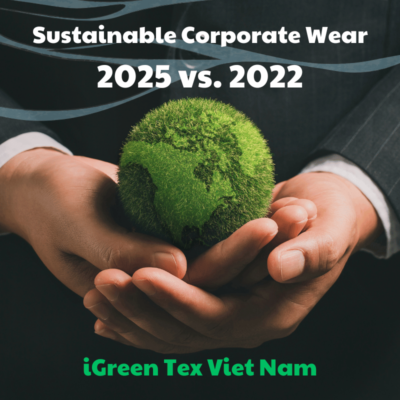
Sustainable Corporate Wear: Top 5 Trends Comparison (2025 vs. 2022)
Introduction
In today’s rapidly evolving business landscape, sustainability is no longer a buzzword—it’s a necessity. Companies worldwide are integrating sustainable practices into their operations, and one area that has seen significant transformation is sustainable corporate wear. This shift isn’t just about environmental responsibility; it’s about aligning corporate identity with values that resonate with employees, clients, and stakeholders eco-friendly corporate wear 2022 vs. 2025.
From trendy clothing to cutting-edge innovations, the evolution of eco-friendly corporate wear 2022 vs. 2025 highlights how businesses are adapting to meet sustainability goals while maintaining professionalism and style. This blog will explore the Top 5 Trends Comparison (2025 vs. 2022) in sustainable corporate wear, offering insights for B2B decision-makers looking to stay ahead in the competitive market.
See more: Knitting fabric from iGreenTex Vietnam – iGreen Tex Vietnam
See more: The Production Process of Modal Fabrics – iGreen Tex Vietnam
See more: Silk and polyester: Which is the right choice? – iGreen Tex Vietnam
See more: Women’s Clothing for Different Body Types – iGreen Tex Vietnam
See more: 6 Types of Kate Fabric Are Commonly Used Today – iGreen Tex Vietnam
See more: Natural Fibers or Synthetic Fibers: Have You Made the Right Choice? – iGreen Tex Vietnam
I. The Growing Importance of Sustainable Corporate Wear
1. Why Sustainable Corporate Wear Matters
Sustainable corporate wear plays a pivotal role in addressing global challenges like climate change, resource depletion, and ethical labor practices. For businesses, adopting sustainable practices in corporate attire offers several advantages:
- Environmental Impact: The fashion industry is one of the largest contributors to pollution, producing over 92 million tons of waste annually. By choosing Sustainable Corporate Wear, companies can significantly reduce their carbon footprint and waste output.
- Corporate Social Responsibility (CSR): Customers and employees increasingly expect businesses to demonstrate social and environmental responsibility. Sustainable corporate wear is a visible and impactful way to showcase these values.
- Brand Differentiation: Companies that prioritize sustainability stand out in a crowded marketplace, attracting clients and partners who value ethical practices.
2. The Shift from 2022 to 2025
In 2022, sustainable corporate wear was still in its infancy, with limited adoption and innovation. Fast forward to 2025, and it has become a cornerstone of corporate identity, driven by advancements in technology, materials, and design.
- 2022: The focus was on basic eco-friendly materials like recycled polyester and organic cotton. While these were steps in the right direction, they lacked scalability and innovation.
- 2025: The industry has embraced circular economy principles, gender-neutral designs, and digital fashion, making sustainable corporate wear more accessible, customizable, and impactful.
This evolution reflects not only the growing demand for trendy clothing but also the increasing pressure on businesses to lead by example in sustainability.
II. Top 5 Trends Comparison (2025 vs. 2022)
1. Recycled Materials: From Basics to Circular Economy
- 2022:
- Recycled materials like PET bottles and post-consumer textiles were used in limited quantities.
- The focus was on reducing waste, but the quality and variety of products were restricted.
- Many companies hesitated to adopt these materials due to concerns about durability and cost.
- 2025:
- Advanced recycling technologies, such as chemical recycling and closed-loop systems, have revolutionized material reuse.
- Companies now produce high-quality, durable fabrics from old garments, creating a circular economy where waste becomes a resource.
- Brands offer eco-friendly corporate wear that is stylish, durable, and indistinguishable from traditional materials.
Example: A leading uniform manufacturer in Europe has launched a program where employees return old uniforms to be recycled into new ones, reducing waste by 80% and cutting costs by 30%.
2. Vegan Alternatives: The New Standard
- 2022:
- Vegan alternatives like Piñatex (pineapple leather) and mushroom leather gained traction but were expensive and limited in availability.
- These materials were primarily used for accessories like bags and shoes.
- 2025:
- Innovations in lab-grown leather and plant-based fabrics have made vegan materials more affordable and scalable.
- Companies now use these materials for a wide range of corporate wear, including jackets, shoes, and belts.
- Vegan alternatives are not only sustainable but also cruelty-free, aligning with the values of ethically conscious businesses.
Example: A tech company in Silicon Valley has switched to vegan leather for all employee accessories, reducing their environmental impact while promoting ethical practices.
3. Gender-Neutral Designs: Personalization Takes Over
- 2022:
- Gender-neutral corporate wear was limited to simple, unisex designs that prioritized functionality over style.
- There was little room for personalization, and many employees felt the designs lacked individuality.
- 2025:
- Advances in AI and 3D printing have enabled personalized, gender-neutral designs that cater to individual preferences and body types.
- Companies now offer trendy clothing that is inclusive, stylish, and tailored, fostering a sense of belonging among employees.
- This shift reflects a broader cultural movement towards diversity and inclusion in the workplace.
Example: A global consulting firm uses AI to create custom-fit uniforms for employees, ensuring comfort and style while reducing fabric waste by 25%.
4. Local Production: Sustainability at the Core
- 2022:
- Local production was seen as a niche trend, with high costs and limited scalability.
- Companies focused on reducing transportation emissions but faced challenges in sourcing materials locally.
- 2025:
- The rise of on-demand manufacturing and 3D knitting has made local production more viable and cost-effective.
- Businesses now produce corporate wear closer to home, supporting local economies and reducing their carbon footprint.
- Local production also enables faster turnaround times and greater flexibility in design.
Example: A Canadian apparel company uses 3D knitting machines to produce custom corporate wear locally, cutting lead times by 50% and transportation emissions by 40%.
5. Digital Fashion: Beyond the Physical World
- 2022:
- Digital fashion was primarily used for virtual meetings and events, with limited application in the corporate world.
- Designs were basic, and the concept was more experimental than practical.
- 2025:
- Digital fashion has expanded into the metaverse, with companies creating virtual uniforms and branded avatars.
- Employees can now “wear” corporate attire in virtual meetings and events, enhancing brand visibility without physical production.
- Digital fashion reduces waste and offers infinite customization options, making it a game-changer for eco-friendly corporate wear.
Example: A multinational corporation has developed virtual uniforms for employees attending conferences in the metaverse, saving on production costs and showcasing their commitment to innovation.
III. Why Sustainable Corporate Wear Matters for B2B Decision-Makers
1. Enhancing Brand Value
Sustainable corporate wear reinforces a company’s commitment to environmental and social responsibility, strengthening its reputation among clients and stakeholders.
2. Attracting and Retaining Talent
Employees increasingly prefer to work for companies that align with their values. Providing sustainable corporate wear demonstrates a commitment to ethical practices, boosting employee satisfaction and loyalty.
3. Meeting ESG Goals
Environmental, Social, and Governance (ESG) criteria are becoming essential for investment and partnership decisions. Sustainable corporate wear helps businesses meet these criteria, enhancing their appeal to investors and partners.
IV. How iGreen Tex Can Help
At iGreen Tex Vietnam, we specialize in providing high-quality, sustainable corporate wear tailored to the needs of B2B clients.
- Eco-Friendly Materials: Our products are made from recycled and renewable materials, ensuring durability and style without compromising sustainability.
- Custom Solutions: We offer personalized designs and local production options, helping businesses create unique, sustainable corporate wear.
- Innovation-Driven: From vegan alternatives to digital fashion, we stay ahead of trends to deliver cutting-edge solutions for our clients.
Explore our offerings at iGreen Tex Vietnam and join us in shaping a more sustainable future.
See more: Streamline Your Fashion Supply Chain with Clothes Making in Vietnam – iGreen Tex Vietnam
See more: Sourcing City Clothes: A Guide for Global B2B Buyers – iGreen Tex Vietnam
See more: How iGreen Tex Reduces the Environmental Impact of Clothing Manufacturing
As businesses continue to prioritize sustainability, selecting the right manufacturing partner is essential for turning long-term goals into successful products. iGreen Tex Vietnam supports brands with reliable OEM apparel production, helping businesses develop sustainable corporate wear that meets international quality standards.
As an experienced clothing manufacturer in Vietnam, we provide custom garment manufacturing solutions, from material sourcing and product development to bulk production and export. If you’re planning your next sustainable apparel project, reach out to the iGreen Tex Vietnam team to discover how our custom OEM garment manufacturing services can support your brand’s growth.