Incoming Material Inspection: Where Does Garment Quality Really Begin?
High-quality garments are essential. They build your brand’s image. They ensure customer satisfaction. Achieving this quality requires diligence. It begins at the very first step. It starts before cutting or sewing. It involves checking the materials we receive. Fabric, thread, buttons, and zippers are critical. Their quality determines the final product. We cannot create excellent garments with poor materials. This fundamental principle guides us. We place immense importance on one process. That process is Incoming Material Inspection. It is the true beginning of quality control.
Why Raw Material Inspection is Non-Negotiable
Ignoring material quality leads to problems. These problems surface during production. They can appear in the finished garment. Issues caught later are costly. They cause significant delays. They impact your bottom line directly. This is a risk we eliminate proactively. A robust Incoming Material Inspection is not optional for us. It is a mandatory quality gate. It protects the integrity of your order. It prevents problems from starting.
See more: Reputable Vietnam Clothing Suppliers: 5 Tips on Finding
See more: Ensure Consistent Garment Quality: 10 Most Common Measures
See more: Where are Sports Clothing Manufactured? Trust Your Choice.
See more: Corn Fiber: Properties, Manufacturing, Benefits and Uses
See more: Top 8 Fabrics for Making Shirts with Beautiful Shape and Few Wrinkles
See more: Choosing the Right Fabric for Your Athletic Apparel
The Domino Effect: How Poor Materials Impact Production & Final Product
Imagine fabric arrives with defects. These could be weave irregularities. There might be unacceptable color variations. If used, this flawed fabric enters production. It is cut and sewn by skilled workers. Time and labor are invested in these pieces. Defects might only be noticed much later. This could be during in-line checks. It is often during final inspection. At that point, the entire garment is often defective. These garments must be rejected or reworked.
Rejecting finished goods is expensive. It wastes all materials used. It wastes all labor hours spent. Reworking garments adds labor costs. Both scenarios disrupt the planned workflow. They slow down the entire production line. This can cause significant manufacturing delays. Your planned shipping dates are missed. Late shipments can impact your sales. They might lead to penalties from retailers.
Consider faulty garment trims. A zipper that jams is useless. A button that breaks quickly is unacceptable. The thread that snaps under normal tension is a failure point. If these enter production, problems arise. Sewing machines stop frequently due to thread breaks. Operators struggle with difficult zippers. Finished garments are flawed because of bad trims. These issues consume valuable time. They reduce production efficiency significantly. They also contribute to garment failure during wear. A garment failing soon after purchase reflects poorly on your brand. It leads to customer returns and complaints. This damages consumer trust. The negative impact on your brand’s reputation is real. All these issues can stem from poor Incoming Material Inspection.
Without strict checks, these scenarios become likely. Your production becomes unpredictable. Costs can skyrocket due to waste and rework. Delivery schedules become unreliable. Your brand faces the risk of shipping substandard products. This chain of events is avoided by focusing upfront. By implementing thorough Incoming Material Inspection, we mitigate these risks effectively. We prevent small material issues from becoming large problems.
Our Proactive Approach: Catching Issues Early
Our factory embraces a proactive quality strategy. We believe in preventing problems, not just fixing them. Incoming Material Inspection is the perfect example of this. Identifying material defects at the very beginning is powerful. Incoming Material Inspection can save significant time compared to finding defects later. It saves considerable cost compared to scrapping finished garments. It is much faster to replace faulty material rolls early on. This is better than trying to fix defects after sewing.
Early detection reduces material waste immediately. It prevents using valuable labor on defective goods. It stops flawed components from entering assembly lines. This keeps our production floor running smoothly. It minimizes interruptions and delays. Our team understands the value of this first step. They are trained to be vigilant. This upfront vigilance is crucial for efficiency.
Finding material issues early gives us time to react. We can coordinate with suppliers for quick replacements. We can adjust cutting plans if needed. This agility is possible because of timely information. The Incoming Material Inspection process provides this information. It ensures we can stay on track with your order. It supports reliable production lead times. This proactive mindset benefits your schedule and budget. It is a fundamental practice for reliable garment manufacturing.
Our Comprehensive Incoming Material Inspection Process
Our process is systematic and detailed. It is designed to be thorough. Every incoming material shipment goes through specific steps. This structured approach ensures consistency. It guarantees nothing is overlooked. Our Incoming Material Inspection system is a core operational function.
Receiving and Verification
The process begins upon arrival of materials. Shipments are received at our designated receiving area. Our trained receiving personnel manage this. They carefully count all cartons or rolls. They compare these counts against the supplier’s packing list. They verify that item codes match your Purchase Order. Quantities of each item are checked. They also confirm color names or codes. Any lot numbers provided are recorded. This ensures we have received exactly what was ordered.
A quick visual check is performed simultaneously. Staff look for external signs of damage. Are boxes crushed or ripped? Are fabric rolls visibly soiled or wet? Any external issues are noted on the receiving documents. All accompanying paperwork is reviewed. This includes the supplier’s invoice and packing list. Any quality certificates or test reports from the supplier are checked. Accuracy at this initial step is vital for traceability. It is the absolute starting point for effective Incoming Material Inspection. This careful verification prevents initial mix-ups.
Sampling Methodology
Inspecting every single piece of every trim item is time-consuming. Examining every inch of every fabric roll is not practical. We use a standard sampling method. This balances efficiency with thoroughness. We typically apply the Acceptance Quality Limit (AQL) standard. This is a widely accepted international standard for inspection. AQL tables determine the sample size. The number of units or length of material inspected depends on the total shipment size. It also depends on the agreed-upon AQL level.

For fabric rolls, we select a specific percentage for inspection. This percentage is determined by the AQL sampling plan. For trims like buttons or zippers, we select a specific number of boxes or pieces from the lot. The sample must be representative of the entire shipment. If the chosen sample fails the inspection criteria defined by the AQL, the entire lot may be rejected. This statistical approach provides a high confidence level. It helps us make informed decisions about accepting or rejecting a material lot. Our Incoming Material Inspection sampling is based on proven methodology.
Visual Inspection at Receiving
An initial visual scan occurs during receiving. This is a quick but important check. As cartons or rolls are unloaded, they are briefly examined. Staff look for any immediately obvious issues. Large stains on fabric rolls are highly visible. Severely damaged packaging is easily spotted. Materials that are clearly the wrong color might be noticed. This helps flag potentially problematic shipments early. Materials with obvious defects are immediately set aside. This prevents them from entering the main warehouse area. It provides an initial filter for incoming goods. This rapid visual check is an initial part of Incoming Material Inspection.
Dedicated Inspection Area & Environment
Detailed material inspection requires specific conditions. Our factory has a dedicated inspection area. This area is designed for accurate evaluation. Consistent lighting is crucial for color matching. We use standardized light boxes in this area. These boxes provide different controlled light sources. This includes D65 (simulating daylight) and TL84 or CWF (simulating store lighting). Checking colors under multiple light sources helps detect metamerism.
Inspection tables are designed for easy material handling. Fabric inspection machines allow efficient unrolling and reviewing of fabric. Calibrated measuring tapes and rulers are readily available. Weighing scales for fabric weight are also in this area. The inspection area is kept clean and organized. This prevents materials from becoming dirty during inspection. A clean environment supports accurate visual checks. The environment is designed to optimize the Incoming Material Inspection process.
Diving Deeper: What We Inspect
Our Incoming Material Inspection is comprehensive. We check a wide range of characteristics. We look for numerous types of defects specific to each material type. Our inspectors are highly trained. They follow detailed specifications. They use standard testing methods.
Fabric Inspection: More Than Just Color
Fabric is the largest component by volume. Its quality is paramount. Our fabric Incoming Material Inspection is very detailed.
- Color & Shade Consistency: Color accuracy is critical. We compare the fabric received against your approved color standard or swatch. This comparison is done inside a light box under different standard light sources. We check that the color matches precisely. We also look for any shading differences within a single roll of fabric. Furthermore, we check for shade variation between different rolls of the same color. Even slight shade differences can cause major issues during cutting and sewing. Consistent color is essential for garment production.
- Fabric Defects: Identifying defects is a major part of fabric Incoming Material Inspection. Our inspectors visually examine the fabric surface. They look for manufacturing flaws. Common fabric defects include:
- Holes: Actual gaps in the fabric structure.
- Stains: Marks caused by oil, dirt, or other substances.
- Weaving/Knitting Faults: Like slubs, thick/thin places, dropped stitches, or pulled threads.
- Dyeing/Printing Faults: Including streaks, patches, uneven color, or print misalignment.
- Yarn Variation: Inconsistent yarn size or type.
- Selvage Defects: Damaged or irregular edges of the fabric roll.
- Crease Marks: Permanent wrinkles from improper handling or winding.
- Bow or Skew: Distortion of the fabric grain. This makes straight lines or patterns look curved or angled in the finished garment. It severely impacts fit and appearance.
We grade fabric defects using a standardized system. The 4-Point System is widely used and effective. Points are assigned based on the size or severity of the defect. Shorter defects get fewer points, longer defects get more. A roll fails if its total penalty points per 100 linear yards exceed a defined limit. This system provides an objective measure of fabric quality. It guides the decision to accept or reject a roll. Our Incoming Material Inspection includes this detailed defect grading.
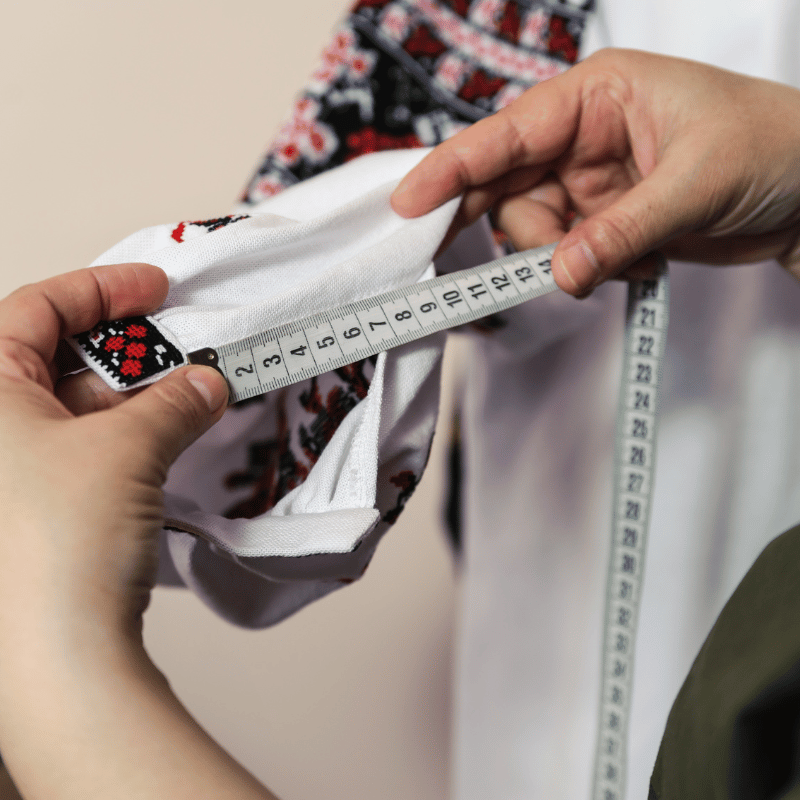
- Width and Length: Correct fabric dimensions are vital. We measure the usable width of the fabric roll. This excludes the selvage and any damaged edges. The usable width must meet the specification. Incorrect width leads to inefficient use of fabric during cutting. This increases material cost. We also measure the total length of fabric on each roll. Short lengths can disrupt cutting markers. This causes shortages for the planned production quantity. Accurate measurement is part of our Incoming Material Inspection.
- Weight/GSM of Incoming Material Inspection: Fabric weight impacts drape, feel, and cost. We measure the weight per unit area (GSM or Ounces/Sq. Yard). This is compared against the standard specification. Significant variation in weight can affect the garment’s look and performance. It also impacts material yield calculations. We use calibrated scales for this check.
- Handfeel: Handfeel is how the fabric feels to the touch. Is it soft, stiff, smooth, rough? Does it have the correct drape or body? This is assessed subjectively but consistently. The handfeel must match the approved sample. It contributes to the comfort and aesthetic of the final garment.
- Specific Properties (Lab Testing): Beyond visual checks, fabrics require performance testing. Some tests are done in our in-house lab. Others are sent to independent accredited laboratories.
- Colorfastness to Washing: How well does the fabric color resist fading or bleeding when washed? This test checks color change and staining of other fabrics. Poor wash fastness ruins garments and can damage other clothes.
- Colorfastness to Rubbing (Crocking): Does the color transfer when rubbed? Tested in both dry and wet conditions. Poor crocking can stain skin or adjacent garment parts.
- Colorfastness to Light: How resistant is the color to fading from light exposure? Relevant for outdoor wear or items displayed under strong lights.
- Shrinkage: How much does the fabric shrink after washing or steaming? Predictable and controlled shrinkage is necessary for correct sizing after laundering. We test both length and width shrinkage.
- Tensile and Tear Strength: How strong is the fabric? Can it withstand pulling forces without breaking? How easily does it tear? These tests relate to garment durability and seam integrity.
- Pilling Resistance: How well does the fabric resist forming small balls of fiber on the surface? Pilling makes garments look old and worn quickly.
- pH Level: The acidity or alkalinity of the fabric finish. Incorrect pH can cause skin irritation or affect dye stability.
- Restricted Substances: Ensuring compliance with chemical regulations is critical for export. We verify materials do not contain harmful substances. Regulations like EU’s REACH, US’s CPSIA, and standards like OEKO-TEX are examples. We check supplier certifications and test reports. We can also arrange third-party lab tests if required. This verifies the absence of forbidden chemicals. This is a vital part of Incoming Material Inspection for market compliance.
Trim and Accessory Inspection: The Small Details Matter
Trims and accessories complete the garment’s function and appearance. Buttons, zippers, labels, threads, elastic, drawcords, rivets, snaps, buckles, interlining, care labels, hangtags – all are important. Their quality directly impacts the final product. Our Incoming Material Inspection extends to all these components.
- Quantity & Size Check: We count the number of items in each shipment. This ensures the supplier delivered the correct quantity ordered. We also measure dimensions. Buttons must have the correct diameter and thickness. Zippers must be the specified length. Labels must have the correct measurements and folding. Drawcords must be the correct length and diameter. Incorrect quantities or sizes lead to delays in production.
- Color Matching: Trims must match the required color. We compare trims against the approved color swatch. We also check if the trim color matches the main fabric harmoniously. Consistent color across all components is vital for the garment’s aesthetic appeal. This color check is part of Incoming Material Inspection.
- Functionality: Trims must work correctly. Zippers are tested by opening and closing them multiple times. They should glide smoothly without snagging. Buttons should fit through buttonholes properly. Snaps or press studs must fasten securely with appropriate force. Buckles should latch correctly. Elastic should have the specified stretch and recovery. Drawcord stoppers should function effectively. We test the practical use of each trim type.
- Durability: Trims must be robust enough for the garment’s expected lifespan. We test the strength of zipper pullers. We check how securely buttons are attached to shanks. The breaking strength of sewing thread is assessed. Rivets and snaps should withstand reasonable pulling force. Trims should not fail prematurely during wear. This ensures the overall durability of the garment.
- Compliance: Many trims must meet safety and environmental standards. Metal trims often need to be tested for nickel content. Certain plastics might need phthalate testing. Dyes used in labels or printed trims can be restricted. We request and review supplier compliance certificates. We can also arrange independent lab testing for specific regulations if required. Ensuring trims are compliant is a critical aspect of Incoming Material Inspection for export markets, especially for children’s wear.
What Happens When Materials Fail Inspection?
Despite supplier quality control, materials sometimes do not pass our checks. This is why our inspection process exists. It is designed to identify and manage such situations effectively. Discovering failed materials early allows for planned responses.
Isolation and Identification
When materials fail any part of our Incoming Material Inspection, they are immediately segregated. They are moved to a designated “Hold” or “Rejected Material” area. This area is physically separate from our main material warehouse. These materials are clearly marked. Special labels indicate they are “On Hold” or “Rejected”. This prevents any possibility of them accidentally entering the production line. Proper identification and storage of failed goods are crucial. It ensures only approved materials are used for your order. This physical separation is a standard procedure.
Reporting and Communication
When materials fail inspection, a detailed report is generated. This Incoming Material Inspection report documents all findings. It specifies the material type, quantity affected, and lot number. It provides a clear description of the defects found. This includes the type of defect, its location, and severity. We include clear photographic evidence of the issues. This report is distributed internally to relevant departments. This includes purchasing, planning, and production.
Most importantly, this report is shared immediately with you, our customer. We believe in complete transparency regarding your materials. You are informed promptly of any non-conforming goods. This allows for rapid discussion and decision-making regarding the next steps. Clear and timely communication is essential at this stage. It ensures everyone is fully aware of the material status.
Decision Making and Rectification
Based on the Incoming Material Inspection report, we collaborate with you. We discuss the severity and extent of the material failure. We evaluate the potential impact on your production schedule. Together, we determine the most appropriate course of action. What are the available options to resolve this?
- Return to Supplier: If the defect is significant, the best option might be to return the entire lot to the supplier. We manage the logistics of this return.
- Replacement: We work with the supplier to arrange for a replacement shipment of compliant material. We push for expedited delivery of replacements.
- Sorting/Repair: For certain minor or localized defects, it might be possible to sort through the material. Defective parts are removed. This is an option if the yield loss is acceptable and agreed upon.
- Acceptance with Concession: In some cases, for very minor defects that won’t impact performance or appearance significantly, you might agree to accept the material with a price adjustment. This is always your decision.
- Disposal: If the material is unusable and cannot be returned, it is disposed of properly.
We guide you through these options. We provide our professional assessment. We manage the necessary steps with the material supplier. Our goal is to resolve the issue efficiently. We strive to minimize any potential delays to your order. This collaborative process ensures solutions meet your requirements. Effective resolution is possible because of our timely Incoming Material Inspection.
The Benefit to You, The Buyer
Partnering with a factory that emphasizes Incoming Material Inspection provides significant advantages. It offers tangible benefits for your brand and business operations. Choosing a factory with robust QC processes is a strategic decision.
Reduced Risk of Product Defects
The most direct and valuable benefit is a lower finished product defect rate. Our meticulous checks catch material flaws early. This prevents these defects from being incorporated into your garments. This leads to fewer rejected garments during final inspection. You will have less need for costly rework. This means fewer defective units shipped to your customers. This directly improves the quality consistency of your product line.
Ensured Consistency Across Your Order
Consistency is crucial for brand reputation and customer loyalty. Customers expect the same fit, feel, and appearance every time. Our rigorous Incoming Material Inspection helps ensure consistency. It verifies that materials meet specifications repeatedly. Fabric color, handfeel, and properties are checked against standards for every batch. Trims are verified for size, color, and function consistently. This means garments from different production runs will match. Consistency builds trust in your brand identity. It meets customer expectations reliably.
More Reliable Delivery Timelines
Material issues are a frequent cause of production delays. Discovering major material problems late in the manufacturing cycle can halt production completely. This leads to missed deadlines and late shipments. Our proactive Incoming Material Inspection identifies potential material problems early. This allows us time to address them. We can work with suppliers for replacements or find alternative solutions promptly. This significantly reduces the risk of delays caused by materials. Reliable delivery timelines help you manage your inventory effectively. It ensures products are in stores when your customers expect them.
Protection of Your Brand Reputation
Delivering high-quality, consistent products enhances your brand’s image. It fosters positive reviews and repeat business. Conversely, shipping products with material defects (like faulty zippers or poor stitching due to bad thread) can severely damage your reputation. Dissatisfied customers return items and share negative experiences. By preventing material flaws, we help ensure the quality of your finished garments. This protects your brand’s standing in the market. Our diligent Incoming Material Inspection is an investment in your brand equity.
Long-Term Cost Savings
Implementing rigorous Incoming Material Inspection requires upfront investment. However, it leads to significant long-term cost savings. Preventing defective production avoids costs associated with rework. It eliminates expenses from rejecting and disposing of flawed goods. It reduces costs related to customer returns and warranty claims. It minimizes delays that can lead to rushed, expensive shipping. Choosing a factory with strong Incoming Material Inspection capabilities is a cost-effective strategy over the lifecycle of your orders. It reduces hidden costs and improves efficiency.
Peace of Mind
Partnering with a manufacturing factory you trust is invaluable. Knowing that your materials undergo rigorous checks provides confidence. You can trust that the fabrics and trims meet your quality standards. You can be confident that materials are checked for compliance. This peace of mind allows you to focus on marketing, sales, and design. You have less need to worry about potential manufacturing issues stemming from material quality. This trust in your manufacturing partner is built through transparency and proven processes like Incoming Material Inspection.
Conclusion
Quality in garment production is a culmination of many steps. The very first step is undeniably critical. Incoming Material Inspection forms the bedrock of our quality assurance system. It is where the quality journey of your garment truly begins. Our investment in trained inspectors, standardized procedures, and necessary equipment ensures thoroughness. We commit to using only materials that meet stringent quality and compliance standards. This early control point is essential for manufacturing reliable export-quality apparel.
We take pride in our comprehensive quality control framework. The Incoming Material Inspection process is a vital component. We believe in open communication with our clients. Understanding our process builds trust. Our focus on meticulously checking materials provides direct benefits to your brand. It reduces risks effectively. It ensures valuable consistency. It builds long-term reliability. This is how we consistently deliver high-quality garments for export.
Are you ready to partner with a factory prioritizing quality from the start? Experience the difference our rigorous Incoming Material Inspection makes.
Contact us today to discuss your specific garment production needs. Learn more about our detailed quality control procedures. Let us show you how our commitment to quality benefits your brand. We are prepared to be your trusted manufacturing partner. Your garment quality starts here, with our dedicated Incoming Material Inspection.
About IGREEN TEX
IGREEN TEX is a provider of fashion and textile products, offering a wide range of both domestically and internationally. Our commitment to quality ensures that our products not only meet the highest standards but also promote eco-friendly practices, in Vietnam sportswear manufacturing.
To view product information click here
Visit our website to learn more about our products and services: IGREEN TEX
IGREEN TEX VIETNAM CO LTD
Address: No. 83, A4 Street, Ward 12, Tan Binh Dist, HCMC
E-mail: info@igreentex.com
WhatsApp/Viber/Zalo: +84938.045.900